Jacqueline Jackson, 15, and Amya Easton, 16, paint a mural at the 2025 Violence Intervention Symposium on July 8, 2025, in East Liberty. (Photo by Caleb Kaufman/PublicSource)
Violence prevention has been a hot topic in Pittsburgh in recent weeks. At an anti-violence symposium, four youth voices highlighted their personal experiences and thoughts on how to create a safer city.
“PublicSource is an independent nonprofit newsroom serving the Pittsburgh region. Sign up for our free newsletters.”
Through June of this year, eight teens were murdered in Allegheny County, out of 33 total homicides. It takes one-on-one work to lower that number.
“We see a lot of individuals that are turning their lives around because they’re … being able to learn different ways of coping with things and how to deal with their anger and their frustrations and their grief and their loss,” said Staci Ford, a trauma intervention and resource specialist and founder of Kyle’s Hope, an organization that connects those in need with quality care. “It makes a difference.”
Amid a wave of reported South Side gunfire, and as Pittsburgh City Council passed a contentious resolution to revamp the city’s $15 million Stop the Violence fund, area youth had much to say on the topic. PublicSource spoke to four young people at the symposium about their views on violence prevention in Pittsburgh.
Brianna Kline-Costa-Chavez, North Side, 23

Kline-Costa-Chavez was involved in Youth Enrichment Services [YES], the nonprofit that cosponsored the symposium, when she was in high school. Now, she serves as YES’ violence prevention coordinator, and emphasized the symposium’s role as a safe space for Pittsburgh youth to talk about how violence has affected them.
Kline-Costa-Chavez said she remembers first seeing a gun when she was eight years old. She watched two middle school-aged boys hold the weapon to an old woman’s head in the North Side.
At the time, she couldn’t understand what drove such young children to threaten someone who was clearly vulnerable. She said her perspective changed as she grew into adulthood and spent time working with YES.
“That’s not anything that is natural, or not the product of something a lot deeper. And it’s not something that’s individual,” Kline-Costa-Chavez said. “It’s not one or two people. If we’re seeing it happen on this massive scale like we are, then there’s clearly a systems issue.”
Emarion Gaston, Homewood, 17

Rising high school junior Gaston highlighted the community he’s gained from participating in YES. He and his twin brother got involved with the organization after their godmother recommended it two years ago.
“Me and my brother, we both are indoor kids, so we didn’t really go out,” Gaston said. “But now, since we’ve joined the program, I got to know so many people, and make some new friends.”
Gaston said he’s been near shootings in Pittsburgh. He said he thinks that YES and the Violence Prevention Symposium do a great job at working to prevent similar incidents.
Van Le, Garfield, 17
Le didn’t see much violence around him when he was younger. He said his parents, having grown up in a “harmful environment” in Vietnam, kept him away from violence in his community.
“But the thing is, I have heard stories,” Le said. “And the thing is, when I first really witnessed violence myself around my neighborhood, I really had to think, ‘wow, I have been living in such a bubble.’”
Le got involved with Learn and Earn, a summer youth employment program, in an effort to make a difference. Through that program, he’ll be helping to clean neighborhood streets with Garfield Jubilee.
“Most of the time, if something … looks pretty, like a diamond, no one would want to break it. No one wants to act violently around that,” he said. “If we make value within the neighborhood, I feel like people would be able to respect that space more, so likely there wouldn’t be so much violence.”
Cameron Jones, West Oakland, 19
Jones will be a freshman at University of Pittsburgh’s Frederick Honors College this fall, where he plans to pursue a bachelor of philosophy degree, majoring in public policy and computational social science.
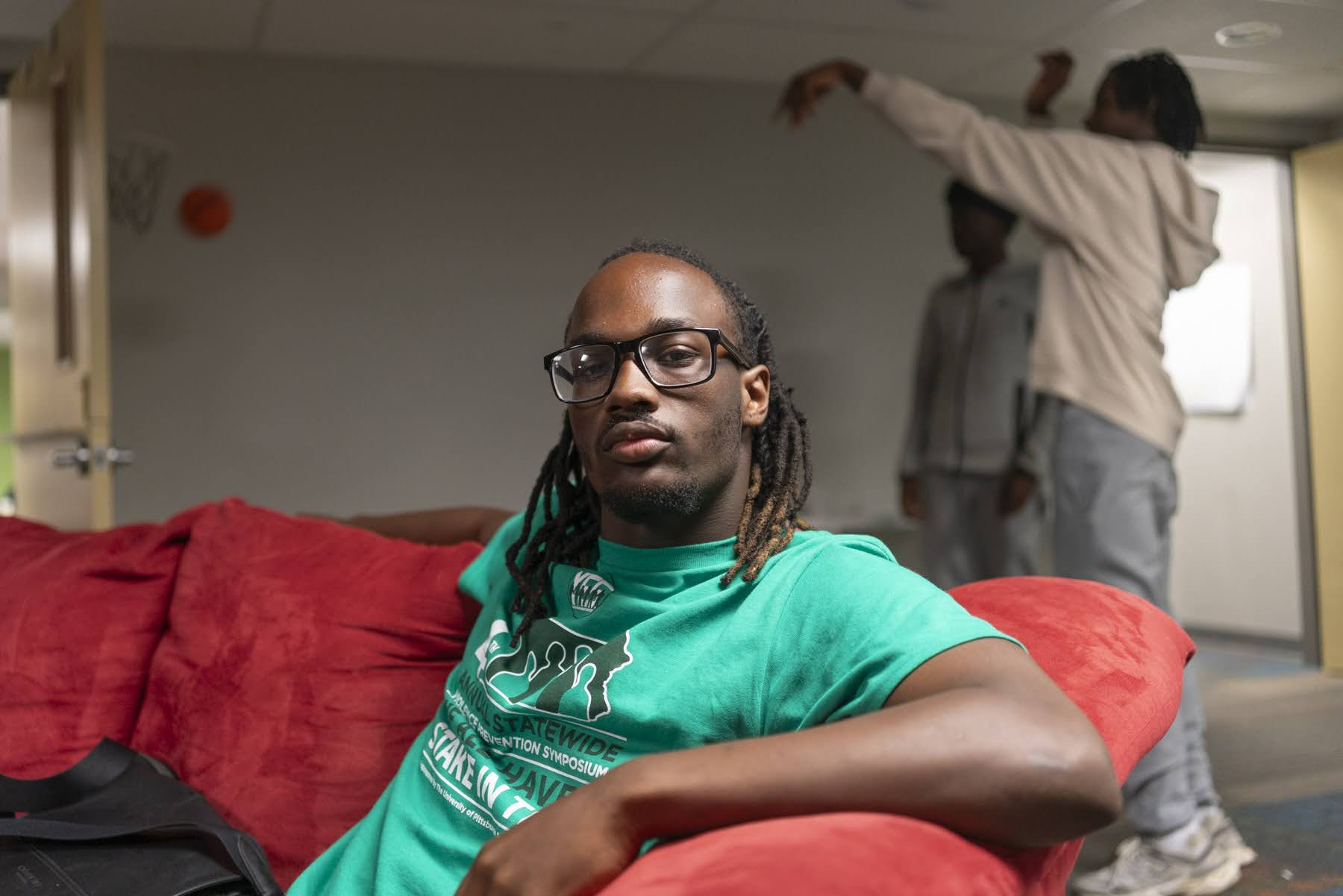
Last week, Jones spoke on behalf of YES at a council meeting. Councilors were preparing to vote on proposed amendments to the Stop the Violence Fund.
“They really put you in those positions to advocate not only for yourself, but for the meaning of our work,” he said.
Jones was part of a large crowd. Advocates of the Stop the Violence Fund packed into council chambers for over three hours of public comment. This happened alongside controversy surrounding the fund, with some claiming that it lacks transparency and clear evidence that the groups it supports have helped decrease violence.
The amendments were approved on Tuesday.
According to YES Executive Director Dennis Floyd Jones, organizations like his, which are supported by the fund, make powerful differences for youth in the city.
“They begin to talk and to share and to open up. They begin to care again. They begin to cry, to laugh, to look forward to going to college,” he said. “Don’t let anybody tell you that we have not made an impact on violence prevention.”
Femi Horrall is an editorial intern at PublicSource. She can be reached at femi@publicsource.org.
This article first appeared on Pittsburgh’s Public Source and is republished here under a Creative Commons Attribution-NoDerivatives 4.0 International License.
About Post Author
