UPMC says federal guidance is behind its decision to cut care for trans patients under 19. Protesters and providers — including nearly 400 staff who signed an open letter — call the move dangerous and unnecessary.
“PublicSource is an independent nonprofit newsroom serving the Pittsburgh region. Sign up for our free newsletters.”
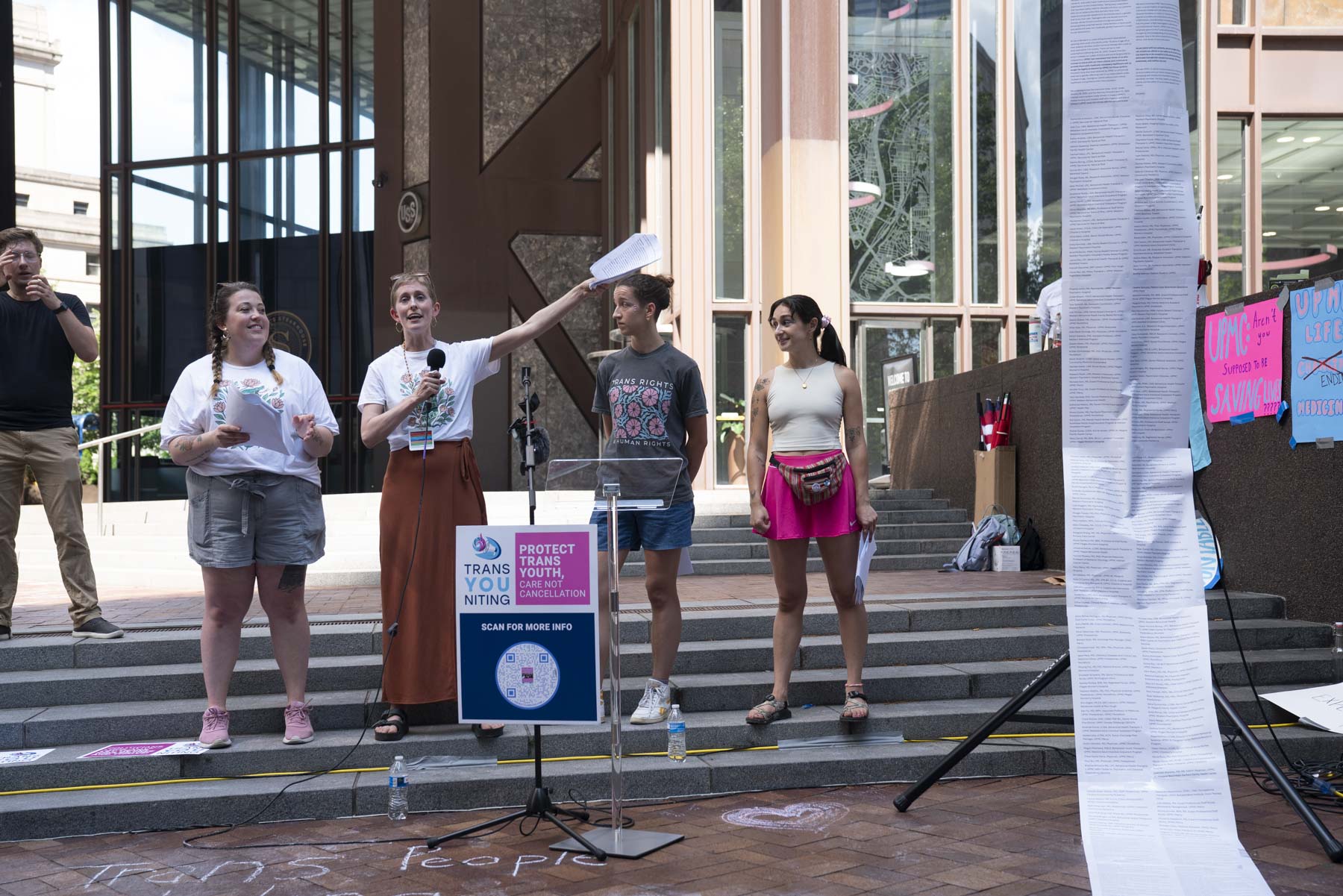
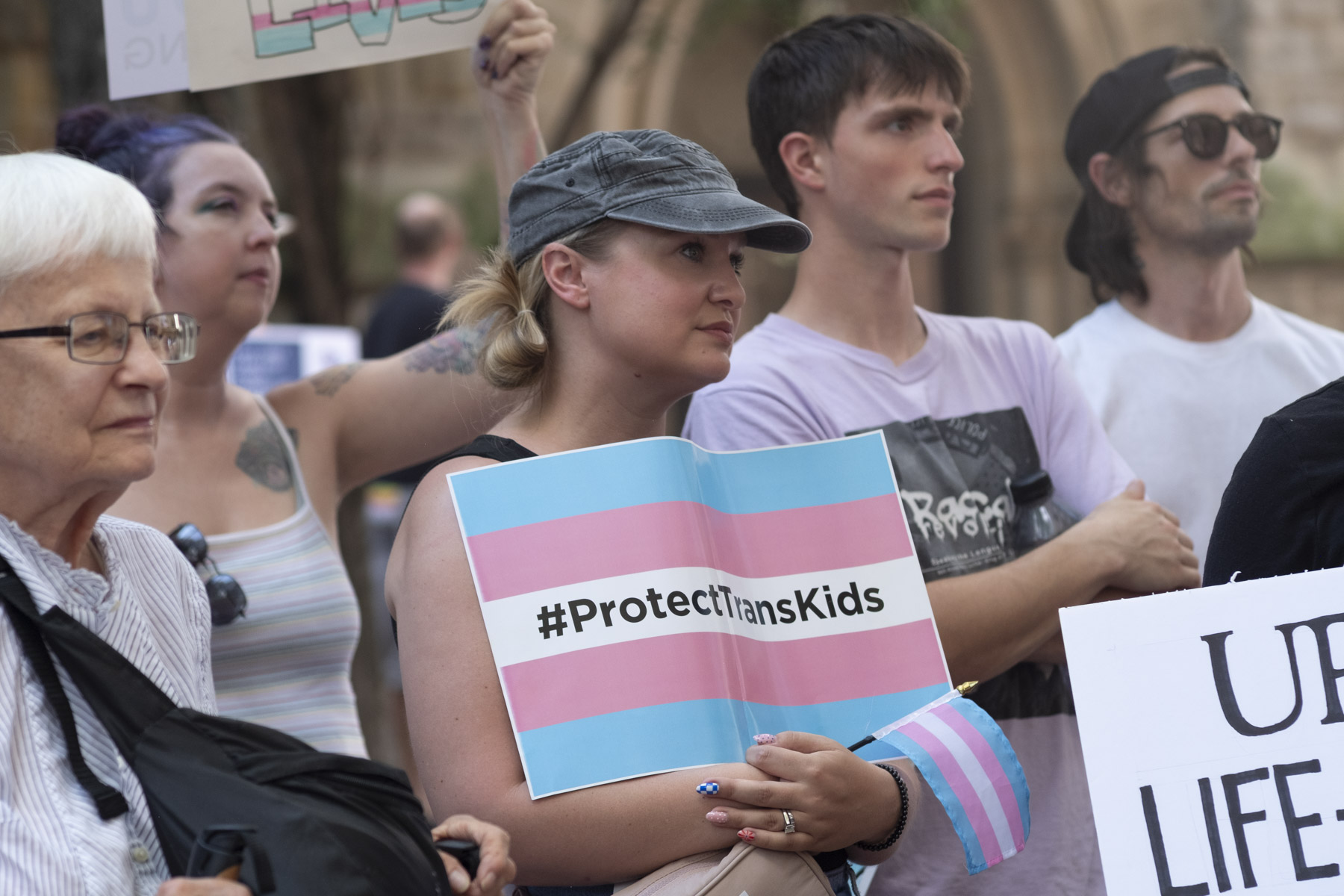
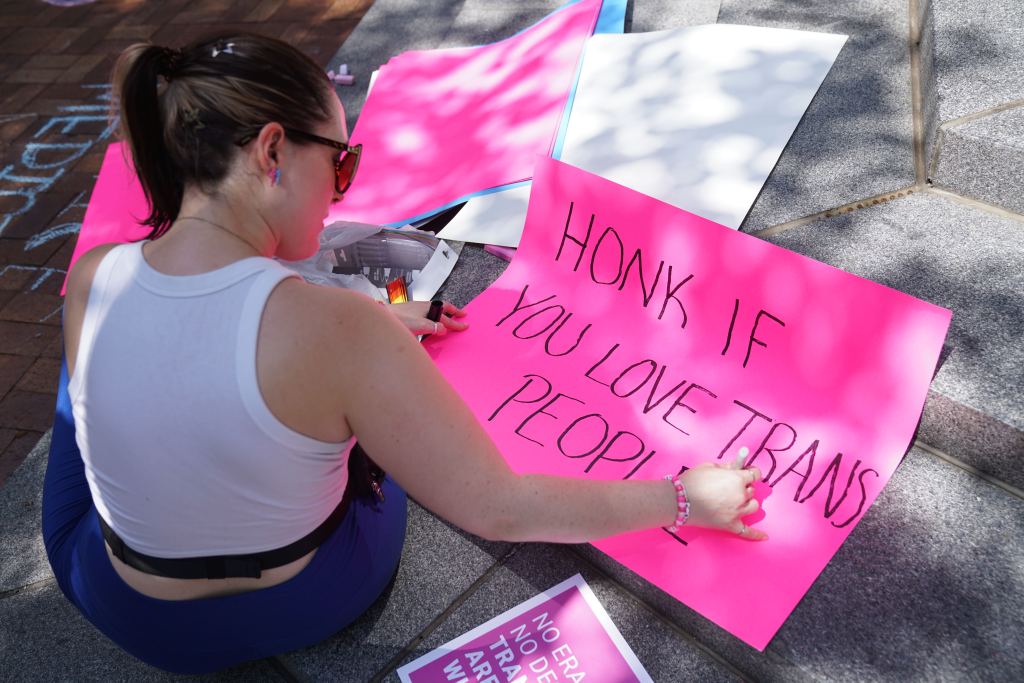
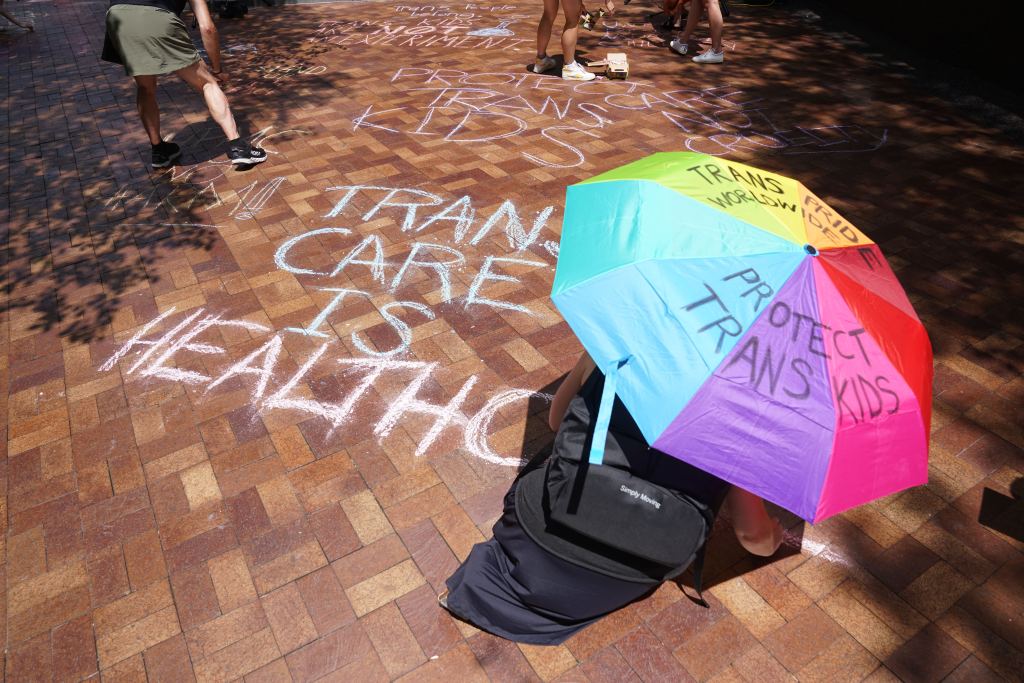
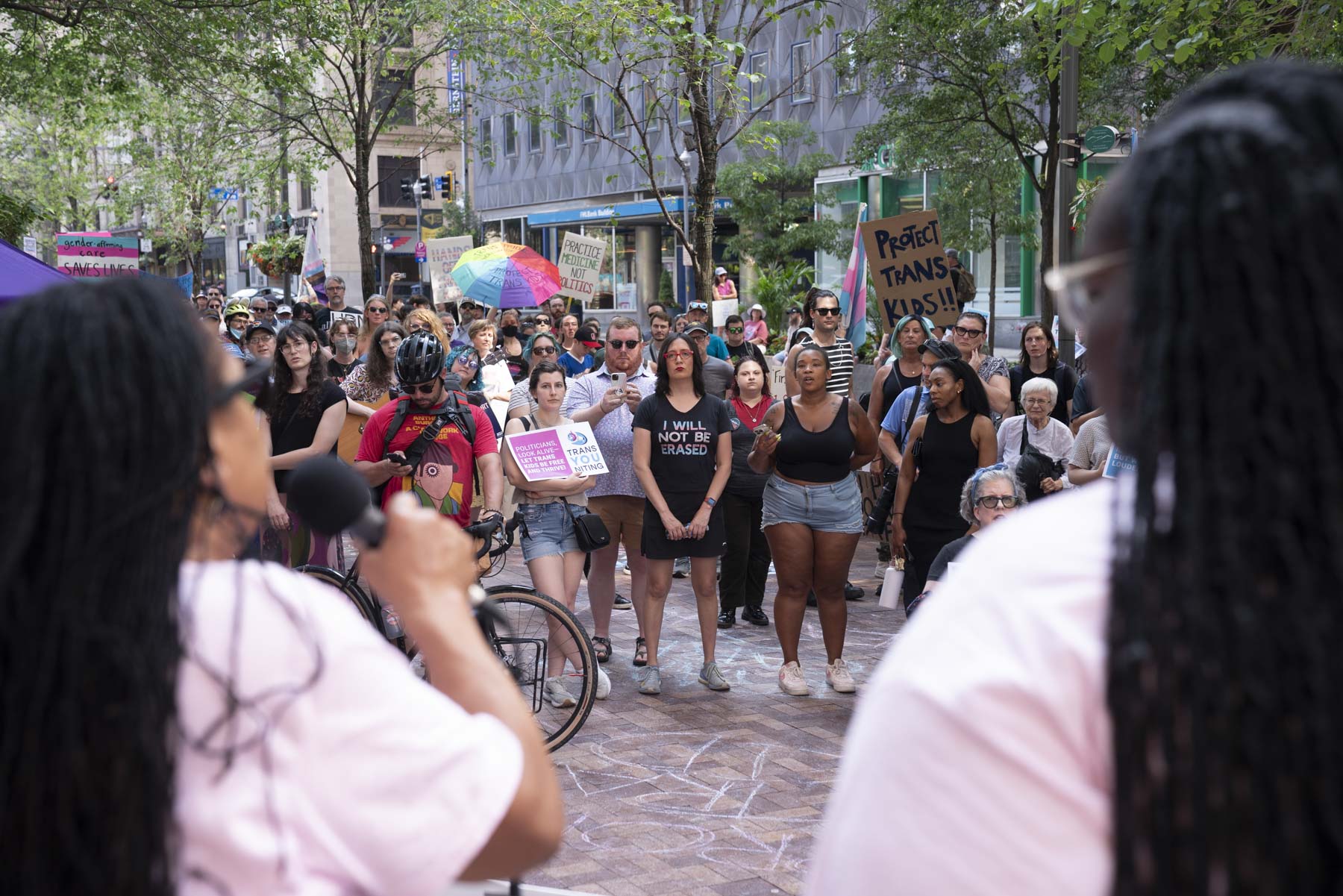
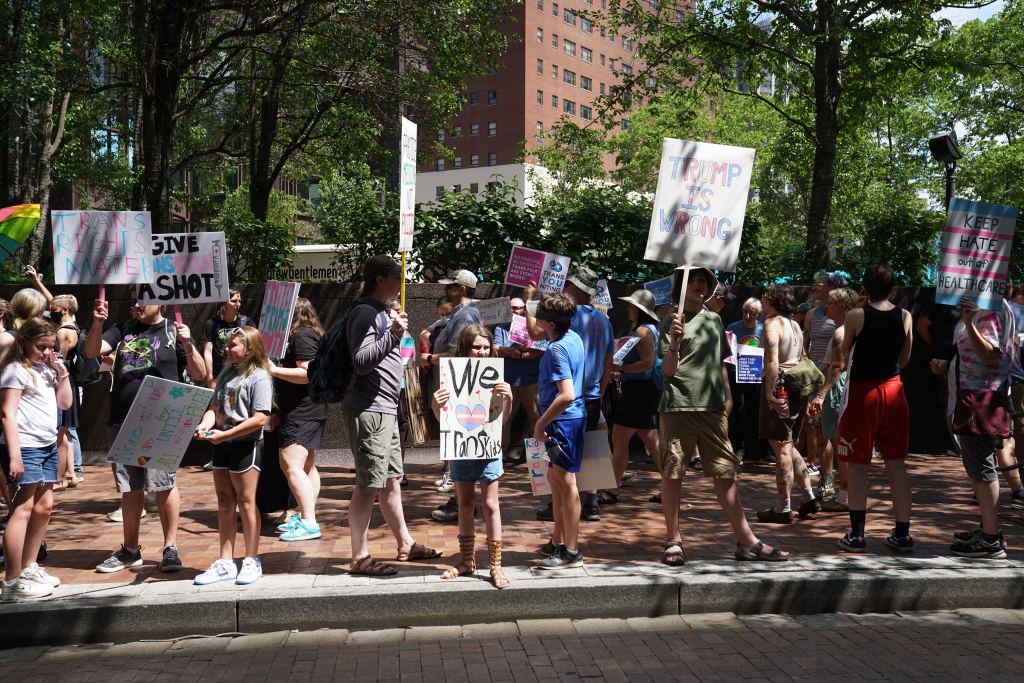
Around 200 people gathered outside UPMC’s corporate offices in Downtown Pittsburgh on Sunday to protest the health system’s decision to cut gender-affirming care for patients under 19. The policy will reportedly go into effect on June 30 and, according to some providers, UPMC has told medical staff not to refer patients to other institutions still providing services.
Mayor Ed Gainey was among the activists, families of impacted patients and UPMC employees at the protest outside the U.S. Steel Building, organized by TransYOUniting, a Pittsburgh organization that advocates for transgender rights. “It’s not enough to say you’re the health care that cares when your actions say, ‘I don’t give a damn’,” said Gainey.

People demonstrate outside of UPMC’s corporate offices in Downtown during a protest against a new policy that cuts gender-affirming care for patients under 19 on June 29, 2025. (Photo by Caleb Kaufman/PublicSource)


Katherine Anderson, a Behavioral Health Therapist working at UPMC Services for Teens at Risk, presented and read out loud an open letter to UPMC leadership, signed by nearly 400 UPMC staff members, including doctors, social workers and nurses, urging them not to end hormone therapy treatment and puberty blockers for patients.
UPMC has confirmed that it will stop prescribing puberty blockers and hormone therapy to patients under 19, citing recent federal directives and concerns about potential criminal liability or loss of federal funding. Legal experts, including the ACLU of Pennsylvania, have noted that these federal directives do not carry the weight of law and that such preemptive rollbacks could signal a broader chilling effect on trans-related care in states without formal bans.
@publicsource Happening now: protestors gather outside UPMC’s Downtown headquarters to demand the health system reinstate gender-affirming care for patients 19 and younger.
In an emailed statement, a UPMC spokesperson wrote that recent federal actions “have made it abundantly clear that our clinicians can no longer provide certain types of gender-affirming care without risk of criminal prosecution.”
Gainey said the health care giant is “on the wrong side of humanity” for capitulating to the Trump administration.
Dena Stanley, executive director of TransYOUniting, said UPMC is changing course to protect their federal funding, not because of concern for the law. “This is all preemptive,” she said.
Stanley said UPMC’s policy change is creating a ripple effect across the state. “Other health care agencies are doing the same thing,” she said. “They are rolling back their care for trans individuals under 19.” Penn State Health has also significantly cut gender-affirming care for patients under 19. Other health systems, such as Allegheny Health Network, have not directly addressed potential policy changes, only stating that they will work within the law.
Also looming over the protest was the recent Supreme Court decision in United States v. Skrmetti, which upheld Tennessee’s statewide ban on gender-affirming care for minors. The case has set a precedent for other states to enact similar bans.
Stanley’s biggest concern is that young patients who are denied coverage will suffer from severe negative mental health consequences. “We’re gonna see a lot more of these kids taking their lives,” she said. “This is not protection for children. This is the complete opposite.”
Caleb Kaufman is a photojournalist at PublicSource and can be reached at caleb@publicsource.org and on instagram at @caleb_kaufman_photography
This article first appeared on PublicSource and is republished here under a Creative Commons Attribution-NoDerivatives 4.0 International License.
About Post Author
