

From left, Benji Potter, 8, Brooke Bray, 8, Skyii Scott, 7, and Charmjai Mitchell, 7, do hair together after eating a meal during afternoon programing at Rankin Christian Center, Tuesday, May 27, 2025, in Rankin. The children also do art, music, gym and other activities as part of the center’s after-school program, which mainly supports families from the Woodland Hills School District. (Photo by Stephanie Strasburg/PublicSource)
After-school organizations and schools brace for loss of funding and staff, which could impact hundreds of students in the region.
“PublicSource is an independent nonprofit newsroom serving the Pittsburgh region. Sign up for our free newsletters.”
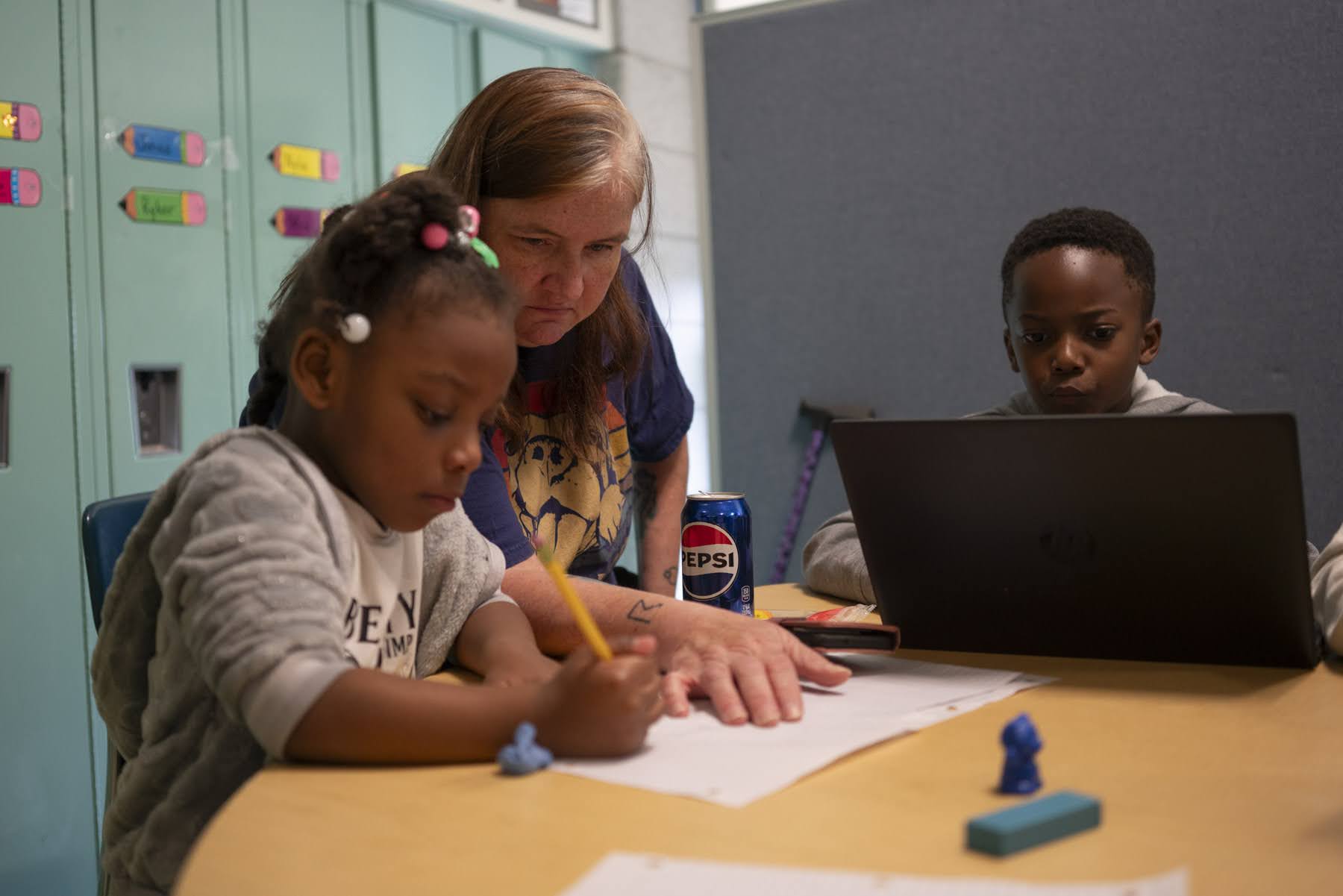
A local nonprofit teaching arts and tech to Black girls in Pittsburgh recently lost a five-year federal grant from the National Science Foundation [NSF] less than two years in.
The $50,000-a-year grant was a partnership between nonprofit Assemble and the University of Pittsburgh to empower Black girls to create AI tools plus equip educators and out-of-school time providers to teach AI through a lens of racial equity.
In April, recipients were notified via email that the grant had been terminated and no expenses incurred beyond that date would be reimbursed. Now, the organization is unable to continue this partnership and is facing layoffs.
“With every executive order, with every cut, it is not only the money, but the continual increase of fear and erasure,” said Nina Barbuto, executive director of Assemble.

The cut came as part of federal funding reductions driven by President Donald Trump and initiatives led by the Elon Musk-inspired Department of Government Efficiency, which aim to eliminate what they consider “wasteful grants and contracts.”
The White House did not respond to a request for comment.
Many local after-school providers are now scrambling to adjust as federal funding cuts hit the region.
“I really feel that a lot of these decisions, even if they’re a direct cut or an indirect cut, are tremendously harmful to our next generation,” Barbuto said.
More cuts anticipated
The NSF has seen more than 1,650 grants terminated since Trump took office, with nearly 50% of those cuts targeting education programs. According to The Hechinger Report, all but two grants terminated in the first week of May were in the education division. Most focused on advancing equity by increasing the participation of women and Black and Hispanic students in STEM fields.
AmeriCorps is another federal agency facing a funding loss of $400 million.
Locally, the Homewood Children’s Village is at risk of losing 11 AmeriCorps members, who are working in four schools to provide one-on-one academic intervention. The summer and after-school programs offered by the organization support over 1,000 students across different schools in the region.
Walter Lewis, president and CEO of Homewood Children’s Village, said it would be difficult to replace the AmeriCorps members because they require training to provide interventions. The organization, which already saw a round of layoffs in December, is reeling from a $279,000 AmeriCorps grant loss.


While some organizations like Homewood Children’s Village and Assemble have lost a significant chunk of funding, others are bracing for potentially severe cuts to come — particularly those tied to the 21st Century Community Learning Centers grant program.
This federally funded grant is designed to establish community learning centers between schools and nonprofits that provide academic, artistic and cultural enrichment opportunities. The proposed federal budget for 2026 eliminates funding for these grants.
The Neighborhood Learning Alliance relied on more than $300,000 from the 21st Century Learning grants to run after-school and summer learning opportunities centered around math, reading and STEM at Pittsburgh Concord, Roosevelt and Wilkinsburg Kelly elementary schools.
With every executive order, with every cut, it is not only the money, but the continual increase of fear and erasure.
Nina Barbuto
“Right now, we are still funded, but that’s the day-to-day based on the new, current situation of how we look at evaluations of decision making,” said Kashif Henderson, executive director of the Neighborhood Learning Alliance.
Contrell Armor, director of the Pennsylvania Statewide Afterschool Youth Development Network, said the 21st Century Learning grants are essential to many schools, community, faith-based and higher education institutions in the state. Eliminating these programs would not just result in learning loss but could contribute to increases in food insecurity, crime, high school drop-outs and a loss of social supports for students, he added.
Sunsetting of pandemic relief hits schools
Federal cuts on the heels of pandemic funding expirations present additional challenges for schools already struggling to maintain programming started during four years of unprecedented government spending.
The Propel Schools Afterschool Program laid off a quarter of its front-line staff and half of leadership positions when pandemic relief funding from American Rescue Plan Elementary and Secondary School Emergency Relief [ESSER] expired. These staffing constraints have forced them to limit the enrollment at each site to 45 students — down from 60 — and reduce the number of sites that offer these programs from 12 to 9.
Though Propel had received the 21st Century Learning grants for the last three years, it was not selected in the next funding cohort. This year, the program had to put several families on a waitlist because the school does not have the capacity to accommodate them.
“The recent cuts have strained our ability to deliver those high-quality experiences that our scholars and our families expect and that they deserve,” said Deanna Dugan, assistant director of the after-school program at Propel.
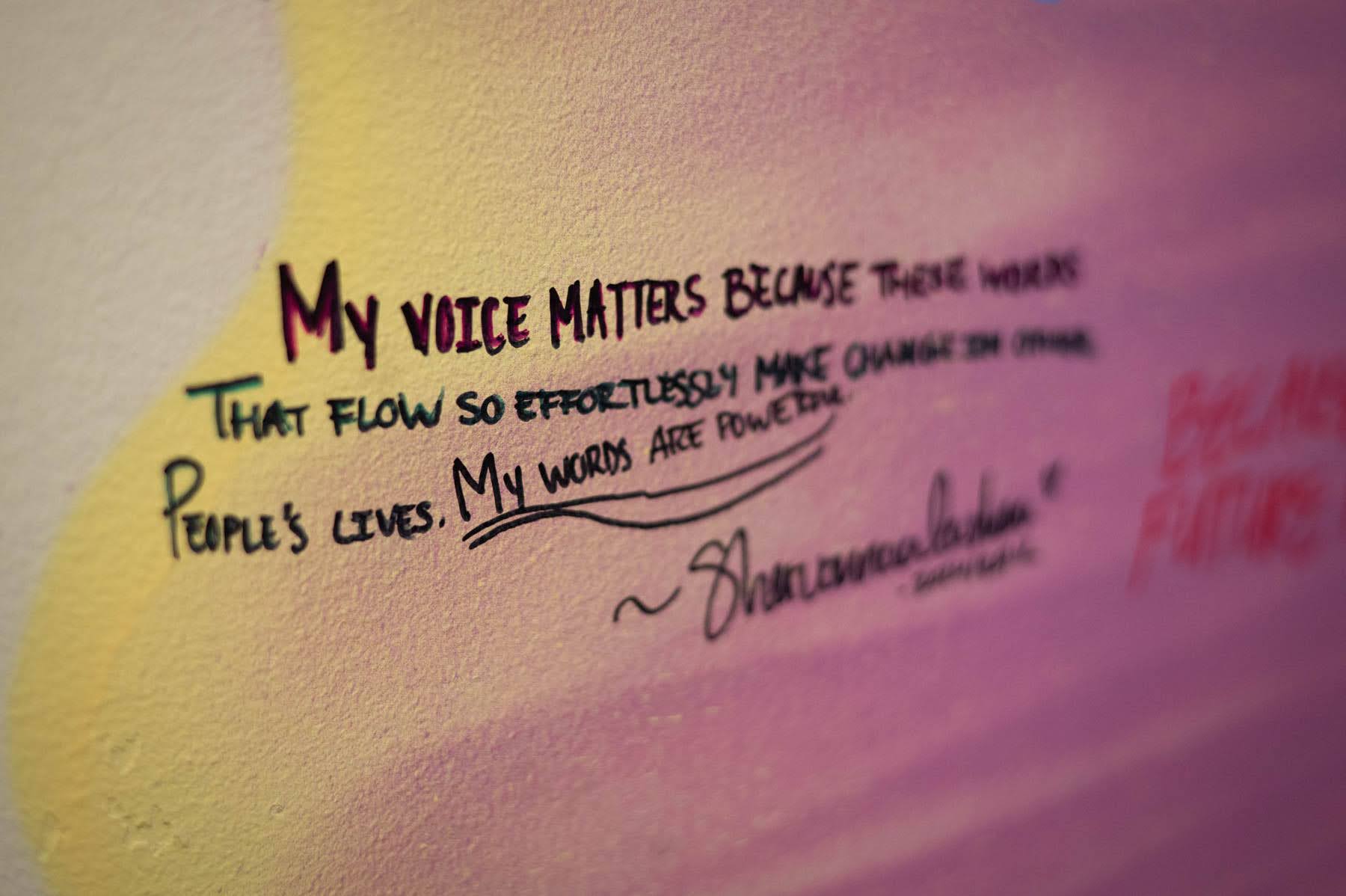
The Woodland Hills School District also relied on ESSER funds to pay for various summer camp programs in the last three years. With the expiration of those funds in September last year, the district can no longer afford to offer those programs, which had served some 180 families.
Eddie Willson, an assistant to the superintendent at Woodland Hills, acknowledged that the district had known the funds were temporary and added that it does not have enough funds in the budget to offer those services now.
While the district is exploring new funding opportunities, none have materialized to cover the cost of these programs.
“We continue to come back to: The bottom line is simply too expensive right now with the resources we have,” said Willson.
Families seeking summer camps will have to look to other local organizations.
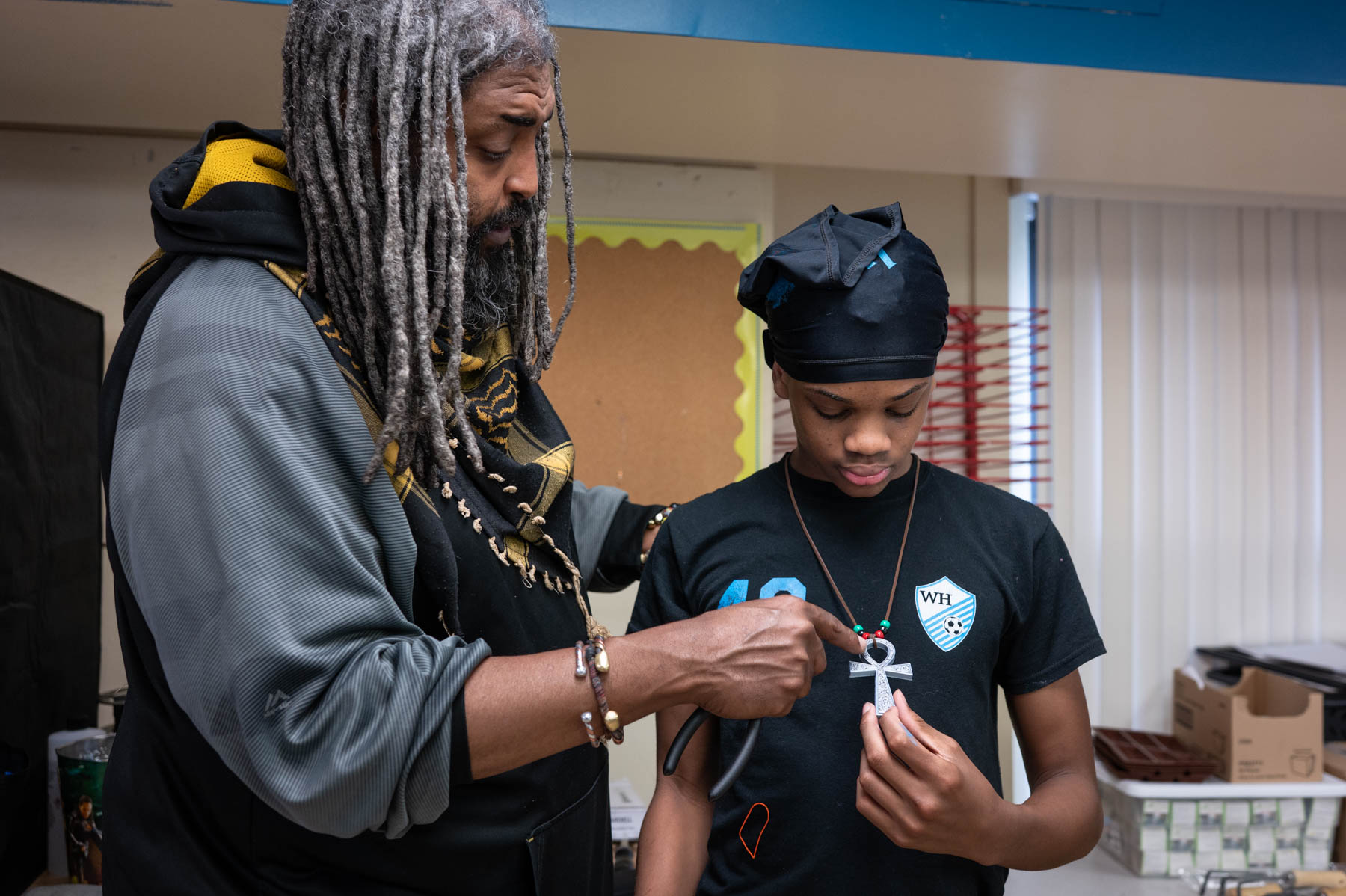
Sterling Stone, youth and families services director at Rankin Christian Center, said the organization has been overwhelmed because many Woodland Hills families are now turning to them for services. The center is also facing challenges of its own, having recently lost two AmeriCorps members and operating with a stretched staff.
Pittsburgh Public Schools [PPS] used the pandemic relief funding to provide summer learning opportunities through its summer B.O.O.S.T. program. Earlier this year, the district announced it would no longer offer the program, citing low attendance and inefficient outcomes.
Now, after-school programs at many PPS schools are in jeopardy as local partners grapple with funding cuts. The district recognizes the value of the programs, but doesn’t have the resources to fill the gaps left by federal cuts, according to PPS spokesperson Ebony Pugh.
The district is partnering with organizations that can offer services at low- or no cost and encouraging parents to look for alternative summer learning opportunities by providing information on the district website.
Funding cuts have cascading effects
Many of the programs facing cuts operate in under-resourced communities and schools with higher populations of low-income students and students of color.
After-school providers warn that losing these out-of-school supports could add challenges for those students.
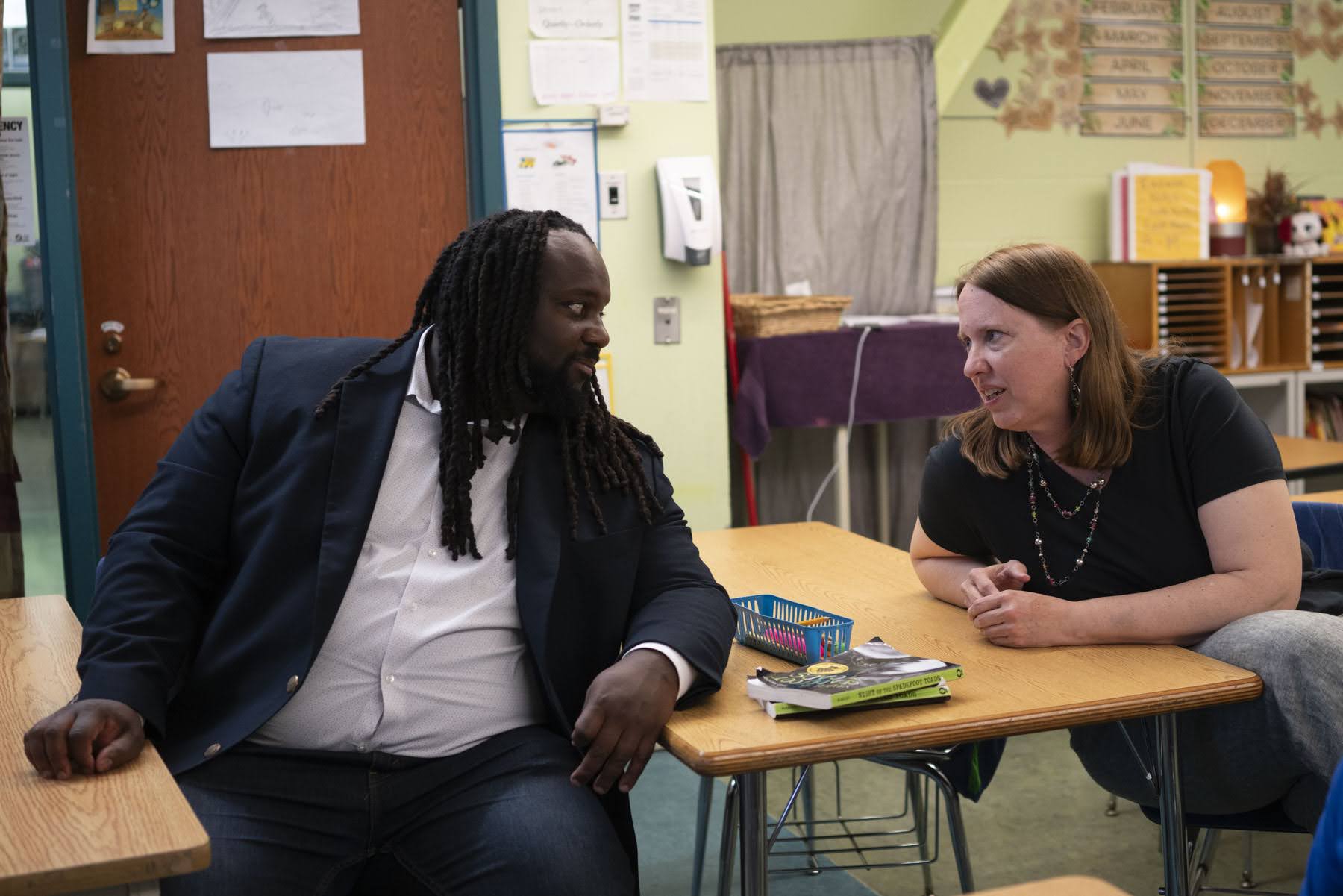
Karen Dreyer, executive director of Allegheny Partners for Out-of-School Time [APOST], said such funding cuts could have trickle-down effects, including:
- Significant learning declines
- Increased food insecurity because many after-school providers offer meals
- Loss of social-emotional skills with the reduction in safe spaces to make friends or connect with an encouraging adult
- A rise in behavioral issues.
Henderson said such programs provide an enriching space for kids whose parents are at work. Funding cuts could upend an entire system of teachers, paraprofessionals, volunteers or seniors in the community, he added.
“We’re talking about families who are working, families who know where their children are and have a safe space and so that they continue to work and provide for their families and don’t have to worry where their child is at,” he said.
Organizations prepare for the future
In the face of federal funding cuts, many organizations are relying on community partners and local foundations to keep after-school programs running.
The Homewood Children’s Village has launched an $80,000 fundraising campaign in hopes of retaining some staff.
Armor said he hopes the state would add another $10 million to the Building Opportunity through Out-of-School Time [BOOST] bill, which would bring the total allocation to $21.5 million. That increase is reflected in Gov. Josh Shapiro’s proposed budget. The BOOST initiative awarded 46 grants to support after-school programs aimed at providing structured activities for at-risk, school-age youth across the state. With additional funding, the initiative could double the number of programs it supports.

Meanwhile, some organizations have found temporary relief. The Rankin Christian Center has managed to replace some staff loss and continues offering programs. Stone said the organization aggressively applied for grants in the last year to prepare for potential budget cuts.
Still, uncertainty looms over the future of federal support for after-school learning programs.
“This is probably the most deliberate and blatant attempt to break whatever educational cycles that these kids are in,” he said. “The impact that these changes are going to make on our kids are going to be felt for a long time.”
Lajja Mistry is the K-12 education reporter at PublicSource. She can be reached at lajja@publicsource.org.
This story was fact-checked by Ember Duke.
This article first appeared on PublicSource and is republished here under a Creative Commons Attribution-NoDerivatives 4.0 International License.

