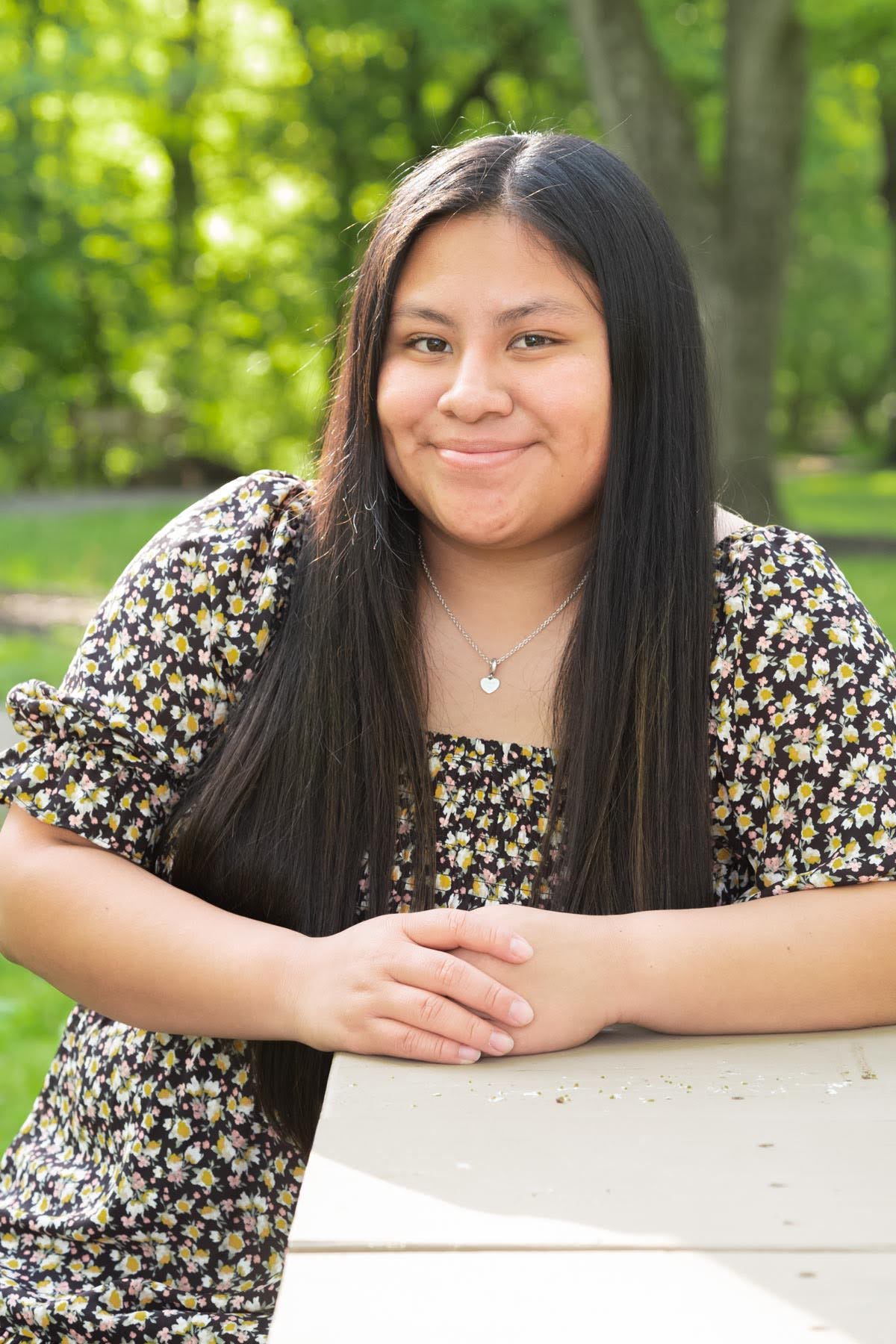
Natalia Connor, communications fellow at the World Affairs Council Pittsburgh. (Photo by Ben Brady/PublicSource)
Growing up in a diverse household, I quickly learned that young people have to speak out to be understood. I’ve carried that message from Taylor Allderdice to Texas.
“PublicSource is an independent nonprofit newsroom serving the Pittsburgh region. Sign up for our free newsletters.”
Adopted from Guatemala at six months old, I am racially different to my single mom and grew up knowing there are different kinds of families. The structure of my family and my eagerness to stay connected with my Guatemalan heritage helped shape my interest in world affairs.
In third grade, I believed everyone knew that lived experiences and families can be different, so I was surprised when I noticed a girl being picked on because she didn’t have a dad. She lived in a house where it was just her and her mom, just like me. To me, that made sense, but to other third graders, it seemed implausible.
I approached my teacher, and together we took the opportunity to share that families come in various shapes and sizes. This third grade experience would end up being the first of many times that I would find myself advocating for the perspectives and varied experiences of young people.
I have always been eager to participate in opportunities surrounding global learning and ways to uplift youth voices and strive for equitable youth-adult partnership.
After transferring to Taylor Allderdice High School at the beginning of my sophomore year, I struggled to find leadership opportunities and felt as though I was behind on making friends and networking. I began to find my place at the school in the business club DECA (formerly the Distributive Education Clubs of America), which encourages students to engage in entrepreneurial pursuits. DECA helps foster teamwork, professional skills and collaboration with adults.
Working with peers under the mentorship of our advisor, we opened the Dragon’s Den, our student-run school store. I led the process of getting Gold-Star Certified by DECA for the store and ran social media accounts for our club. The club allowed me to work with school administrators, meet new people and gain leadership experience.

Seeing a need and stepping up
Although as a youth in DECA I had a lot of agency, I felt as though throughout the school there was a lack of space for youth input. This prompted me to search for opportunities to enhance youth voices in decision-making spaces.
In 2023, I was accepted to the World Affairs Council of Pittsburgh’s Youth Board. At the council, I hoped to gain a better understanding of global issues and cultural understanding, and amplify the voices of high schoolers and college students.
Through the board, I’ve given feedback and advice on the council’s programs and goals, and I’ve worked with my peers to develop training for adults on the importance of including youth, like us, in decision-making spaces.
The 16 students, including myself, who made up the Youth Board and youth fellows, were provided with opportunities through the council to learn about and discuss power imbalances within youth-adult partnership on a variety of global issues, and how, in some cases, youth may be included or represented in tokenistic or manipulative ways. In general, youth aren’t being sufficiently represented in decision-making spaces where the perspectives of different generations could lead to better outcomes for all.
In this training, which we’ve been developing and refining since 2023, youth facilitators lead adult participants through interactive simulations exploring power, decision making and systems change. We then debrief participants and invite them to examine how the inclusion or exclusion of different groups in the decision-making process impacted outcomes, drawing parallels to our real-world systems.
For example, for decades, Indigenous people living near the Amazon rainforest have been fighting to protect their land from deforestation, mining and agriculture. In recent years, governments and international organizations have begun to include these Indigenous groups in decision-making and conservation efforts. These communities were given land rights, integrated into environmental policy and offered seats on international climate panels to directly negotiate with governments. As a result, studies show deforestation rates near the Amazon are lower, and more effective and sustainable conservation outcomes have emerged.
Adult leaders see need for youth voices
After the gameplay and debrief, a short presentation builds on the takeaways and demonstrates why youth voice is important for equitable dialogue and decision making. We also provide resources to amplify youth voices. This is followed by breakout groups discussing what steps participants will take to improve their work.
Our cohort began presenting to adults around the Pittsburgh area from all different sectors. The feedback we received revealed that many companies and organizations want to include youth or improve their inclusion of youth in their work, and there is a need for resources, such as our training, to create a more connected Pittsburgh.
In March 2024, I reapplied to the council, for a fellowship that would allow me to keep developing our training, present to a greater audience and learn more about communications. I created new content for our social media and improved our presentation based on participant feedback.
During that summer, two other returning youth fellows and Youth Board members and I decided to submit a proposal to present at SXSW EDU, hosted in Austin, Texas. We were thrilled to hear that we were accepted, and began to practice and improve our presentation. When we arrived, we found we were among a small handful of high school students who were attending the conference, let alone presenting.
Presenting at SXSW was an amazing opportunity to reach a larger, more diverse audience to share why youth voice is important, and how we can uplift youth voice and increase their participation in decision-making spaces. It also allowed those who came to our session to hear right from youth about how they could best work with us and our peers.
The feedback we received from our audience was truly remarkable. From the moment we introduced ourselves as high schoolers, the positive responses began and it continued after the presentation ended. Numerous adults approached me and my fellow presenters to tell us about how impactful they found the training. Many shared their hope that this program would reach a wider audience and that every adult would have the opportunity to participate in it.
History shows the kids are all right
In preparation for SXSW EDU, we presented to local organizations including the Pittsburgh Parks Conservancy. The park-boosting nonprofit hosts youth programs such as summer camps, year-round programs and a paid internship program open to high school students. They approached us seeking advice on how to engage youth for a new leadership program.
There are many examples throughout history where youth have led movements, speaking out for what they believe in and creating change. In 1954, the U.S. Supreme Court ruled racially segregated schools unconstitutional in Brown v. Board of Education. That case, though, was boosted by another lawsuit filed after 16-year-old Barbara Rose Johns and approximately 450 of her classmates walked out of their segregated school in protest of its poor conditions. In 2018, students organized one of the largest youth-led marches in 50 years, and then again in 2022. March for Our Lives has helped pass more than 250 gun violence prevention laws. These examples are just some of the larger-scale movements with youth at the forefront.
As we face the challenges of today, the past examples of youth-led change show their voices must help shape our approach to climate change, education, water and health care access, rising inequality and more.
Natalia Connor is a student who will be studying public health. She can be reached at connornataliam@gmail.com
This article first appeared on PublicSource and is republished here under a Creative Commons Attribution-NoDerivatives 4.0 International License.
About Post Author
