The Somers Drive section of Bedford Dwellings on July 25, 2023, in the Hill District. Funding for a massive revamp of the housing community would be cut under the Trump administration’s budget blueprint. (Photo by Stephanie Strasburg/PublicSource)
Rental and utility assistance and funds for water infrastructure, public broadcasting and refugee support could be slashed.
“PublicSource is an independent nonprofit newsroom serving the Pittsburgh region. Sign up for our free newsletters.”
Pittsburgh and Allegheny County could lose out on $25 million annually under President Donald Trump’s proposal to slash a 50-year-old grant program, part of a White House plan to cut domestic spending by more than 20% while increasing defense spending.
The Community Development Block Grant [CDBG], established under President Gerald Ford in 1974, has long funded housing, infrastructure and economic development projects led by city and county governments, but Trump’s proposal for next year’s federal budget would eliminate the program entirely.
Trump’s plan calls for steep cuts to child care, disease research, renewable energy and peacekeeping abroad — many already underway through Elon Musk’s Department of Government Efficiency — all while pumping up billions for the administration’s mass deportation agenda.
The areas in which the president recommends spending increases:
The Trump plan could impact
- Defense
- Border security
- Rail, highway and shipbuilding infrastructure
- Aviation safety
- Some veterans health programs
- Exploration of the moon and Mars.
Local charter schools could get a boost, as federal support for them would rise by $60 million, to $500 million.
White House budget proposals do not become law. But the plan can serve as a guide for Trump’s Republican allies in Congress, who control both chambers, as they craft spending bills for the next fiscal year beginning Oct. 1. With Trump’s proposal in hand, Congress will begin debating and crafting the 2026 budget, a lengthy process that leads up to, and often runs past, the Sept. 30 end of the federal fiscal year.
“It is important to note that President Trump made similar proposals in his first term in office that were rejected by Congress, so it remains unclear whether this proposal will be seriously considered,” city Press Secretary Olga George said.
The proposed spending cuts could impact Pittsburgh-area residents in a variety of ways, with a proposed $26 billion cut to rental assistance and total elimination of the Low Income Home Energy Assistance Program [LIHEAP]. The proposed elimination of the National Endowment for the Arts and major cuts to the National Institutes of Health and the National Science Foundation could hit Pittsburgh’s cultural institutions, hospitals and universities.
More than 25,000 Allegheny County households paid some of their heating bills with LIHEAP money during the 2023-24 winter season, according to a program spokesperson. Those households received a total of $10.3 million in benefits that year.

Pittsburgh Mayor Ed Gainey said in a May 3 press release that the proposed budget would damage ongoing efforts to boost long-neglected Pittsburgh neighborhoods.
“Trump’s budget would mean federal investments in affordable housing and community development in neighborhoods from the Hill District to Homewood are torn away,” Gainey said. “… I will take every possible action to advocate against these cuts and leverage every tool at my administration’s disposal to protect the people of Pittsburgh against the harm of Trump’s cruel attacks.”
The White House did not respond to a request for comment.
Allegheny County Executive Sara Innamorato said she is angered by the proposal to cut long-running programs, and that the plan would “hurt our ability to serve the people of Allegheny County who are trying to live with dignity and respect in an economy that gets more expensive by the day.”
CDBG covers Hill housing, senior centers, more
The CDBG program accounts for around 11% of Pittsburgh’s capital budget this year — about $13 million, and a projected $75 million from 2025 to 2030.
!function(){“use strict”;window.addEventListener(“message”,(function(a){if(void 0!==a.data[“datawrapper-height”]){var e=document.querySelectorAll(“iframe”);for(var t in a.data[“datawrapper-height”])for(var r,i=0;r=e[i];i++)if(r.contentWindow===a.source){var d=a.data[“datawrapper-height”][t]+”px”;r.style.height=d}}}))}();
Pittsburgh’s five-year capital plan includes $20 million in CDBG funding for the redevelopment of the Hill District’s Bedford Dwellings affordable housing complex, a project with a price tag of more than $400 million. City documents state that those funds are used as leverage to secure “further federal, private and local financial support” for the project, meaning the loss of $20 million in expected CDBG funds could cost the project considerably more.
The city also planned to spend CDBG funds over the next five years on:
- $11 million for grants and financing for housing development
- $17 million for remediation of condemned buildings
- $6 million for staff and programming at the city’s senior centers.
George said if CDBG goes away, the programs it funds will have to compete for other city resources alongside numerous other budget requests.
“The city will protect what it can to ensure that programs continue,” George said. “Many of these services were only established once federal funding support for them became available, so this would mark the first time any administration has had to contemplate supporting them with local taxpayer resources.”
!function(){“use strict”;window.addEventListener(“message”,(function(a){if(void 0!==a.data[“datawrapper-height”]){var e=document.querySelectorAll(“iframe”);for(var t in a.data[“datawrapper-height”])for(var r,i=0;r=e[i];i++)if(r.contentWindow===a.source){var d=a.data[“datawrapper-height”][t]+”px”;r.style.height=d}}}))}();
Lauren Connelly, director of the county’s economic development department, said the county government spends about $13 million in annual CDBG funds outside Pittsburgh in the municipalities of McKeesport and Penn Hills, which receive their own CDBG allocations. The projects range from park improvements to street repairs and affordable housing development. She said the money is mostly distributed through grants to municipalities and nonprofits, which take on the projects and use the money to gain matching funds from other sources.
“What this will do is delay critical infrastructure projects that relate to health and safety,” Connelly said. She added that the county, which faced a deficit last year and had to raise taxes, does “not have the funds to fill this gap.”
Connelly said the Trump budget also seeks to cut the HOME Investments Partnership Program and the Emergency Solutions Grant, which provided $3.2 million to the county this year to subsidize affordable housing development and senior housing, leaving hundreds of pending applications frozen.
Connelly said even if Congress rejects Trump’s cuts, the uncertainty alone could cost local communities.
“If we do get [the funds] committed or awarded later in the year, often these projects have to be rebid or get new estimates,” she said. “It’s going to have a ripple effect.”
County health and human services at stake
A spokesperson for the Allegheny County Health Department said the White House’s proposed $3.6 billion cut to the Centers for Disease Control and Prevention could decrease county funding for immunizations and STI and HIV programs.
The county’s largest department, Human Services, is “deeply concerned” that the budget proposal could hinder its efforts to respond to homelessness and provide mental health and substance use services, and could “devastate essential anti-poverty programs and leave seniors and families cold in the winter.”
Pittsburgh Water funding could dry up
A spokesperson for Pittsburgh Water (formerly known as PWSA) said the utility could be deeply affected by Trump’s proposal to slash funding for the Environmental Protection Agency’s Clean and Drinking Water State Revolving Loan Funds.
Pittsburgh Water CEO Will Pickering said using the loan funds to finance projects would save ratepayers $945 million compared to traditional borrowing.
“Without these funding sources, critical infrastructure investments would be postponed, or customer rates would need to increase at a greater rate,” Pickering said.
“We are hopeful that Congress will reject these misguided cuts to ensure Pittsburgh Water and other water and sewer utilities have continued access to low-interest loans and grants to fund key projects like lead service line replacements, and key upgrades to our aging water and sewer infrastructure.”
A spokesperson for the state commission that administers the loans, though, said she does not expect low-interest loans to be reduced as a result of the new federal budget because interest and principal payments on existing loans should be able to sustain the program.
FEMA cuts could hit Pittsburgh Bureau of Fire
Trump’s budget plan removes $646 million from non-disaster grant programs administered by the Federal Emergency Management Administration [FEMA]. Pittsburgh has historically relied on FEMA grants for public safety initiatives, George said, such as a $10 million landslide mitigation grant awarded in 2020 and more than $2 million for firefighting equipment awarded in 2022.
George said the city typically receives about $440,000 each year from FEMA for public safety equipment and personnel, money that is now in doubt.
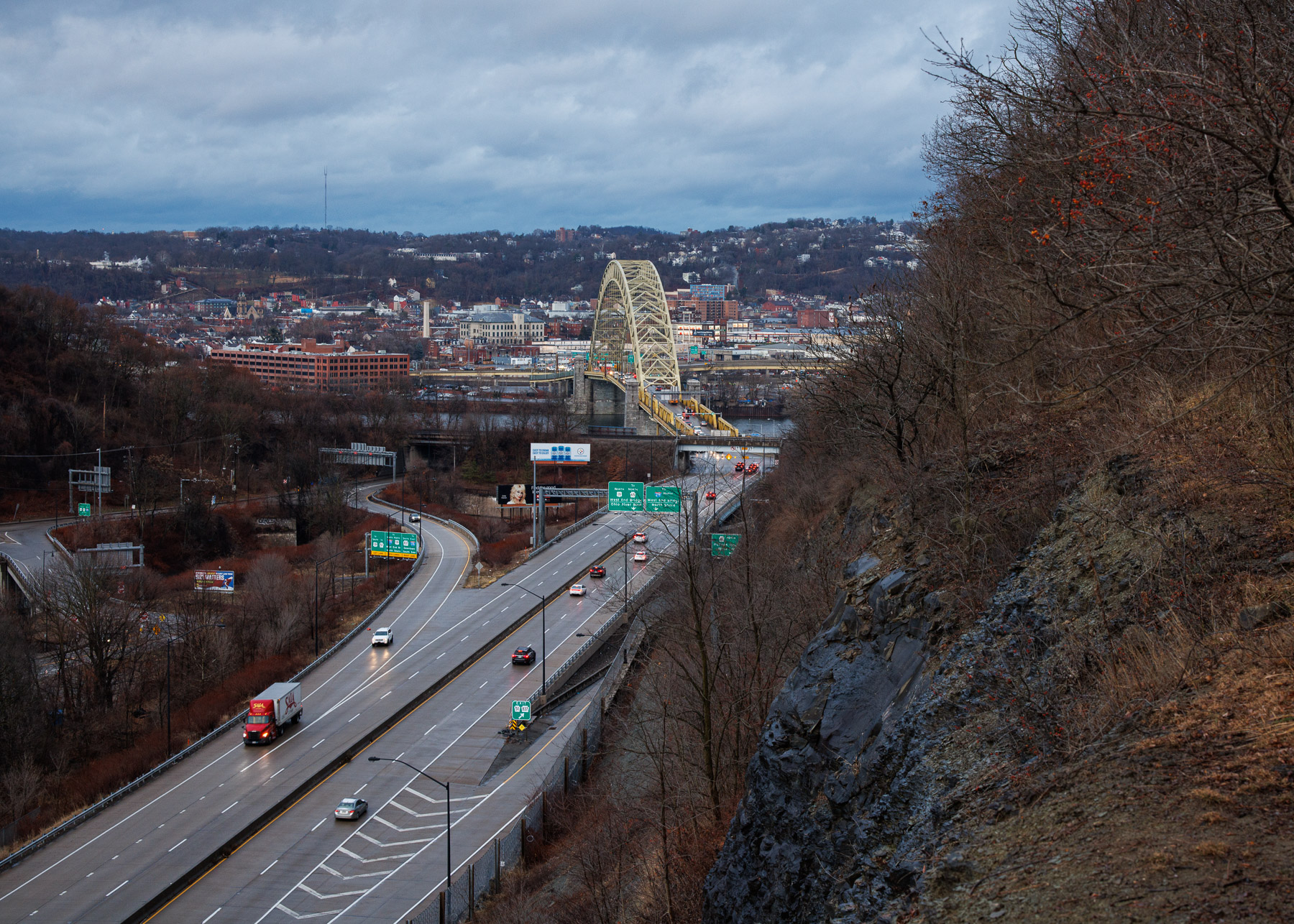
“Federal cuts to FEMA may make it more challenging to fully fund larger, more complex mitigation initiatives without adopting a longer-term planning approach,” George said. She said the potential closure of FEMA’s fire training academy could deprive the city of specialized training for first responders.
URA prepares for slowdown
Urban Redevelopment Authority spokesperson Dana Bohince said the organization is monitoring federal budget activity.
“Given the proposed HUD cuts, the URA must prepare for a decrease in federal investment that would impact our capacity to advance affordable housing and community development projects that support our communities,” Bohince said.
Pitt warns of ‘irreparable’ harm
The White House is seeking to cut some $4.5 billion from the National Science Foundation [NSF] budget, a move that would be felt at major research universities nationwide. The NSF announced May 2 that it would sharply reduce funding for overhead costs at research institutions going forward.
University of Pittsburgh leaders wrote in an email to community members that the funding changes mean “that our collective scholarly impact could be harmed irreparably, as could our broader mission.”
Carnegie Mellon University joined a lawsuit challenging the new overhead cost cap.
Arts group refuses to change course
Trump’s budget proposes to entirely eliminate the National Endowment for the Arts, which had a budget of around $207 million in 2024 and spends most of its money on grants for arts programs throughout the country.
Sony Ton-Aime, executive director of Pittsburgh Arts & Lectures, wrote in a May 5 email that the NEA terminated the group’s grant on May 2. He said that the NEA notified the group that their work to support literary programming “was no longer a priority” for the NEA.
“Going forward, for Pittsburgh Arts & Lectures to receive fundings from the NEA under such circumstances, we would have to change our own priorities and abandon our mission,” Ton-Aime said.
“That is not going to happen.”
Kendra Whitlock Ingram, president and CEO of the Pittsburgh Cultural Trust, said the trust does not rely on regular funding from the NEA but many of its partners do, “and we’re concerned that these changes could result in fewer arts programs throughout our community.”
The White House also proposes getting rid of the Institute for Museum and Library Sciences [IMLS], which is the source of much federal support for libraries in the U.S. Amy Anderson, the CEO of the Allegheny County Library Association, said the state’s Office of Commonwealth Libraries relies on IMLS funding, so residents could see a “trickle down effect of funding cuts” impacting libraries.
Refugee resettlement agencies in the dark
Dana Gold, the COO of refugee resettlement agency Jewish Family and Community Services, has been in a state of uncertainty ever since Trump won the November election. The confusion, Gold said, has only risen since he signed an executive order Jan. 20 suspending refugee resettlement indefinitely, and soon after cut off funding for support services for refugees who are already here.
“I don’t know what’s going to happen next,” Gold said. “Tumult.”
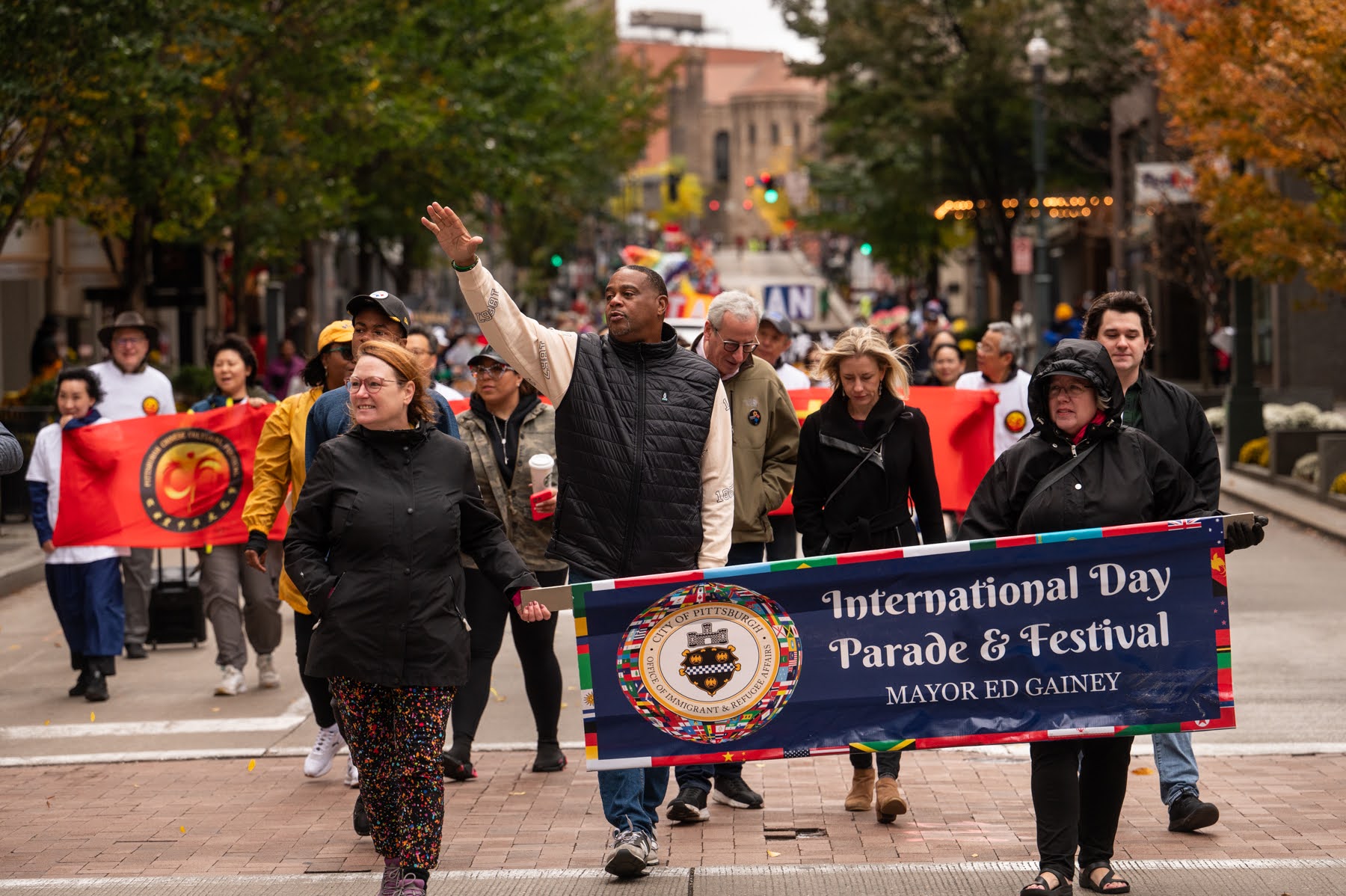
The budget proposal calls for a $2 billion cut in refugee and unaccompanied child immigrant programs, raising questions about how JFCS and Pittsburgh’s other resettlement agencies would operate if refugees eventually resume arriving in the country.
Broadcast offerings ‘may have to go away’
The budget proposal calls for the elimination of the Corporation for Public Broadcasting [CPB], which Congress created in 1967 to fund and oversee local public television and radio stations, including National Public Radio [NPR] and its affiliate stations throughout the country.
Pittsburgh public radio stations, news-focused WESA and music-centric WYEP, rely on CPB funding to some extent.
The Pittsburgh Public Broadcasting Corporation, which oversees both WESA and WYEP, receives about 10% of its funding from the federal government, according to the corporation’s president and CEO Terry O’Reilly.
“If 10% of the budget goes away, that means that we’re going to take a hard look at things that we do and decide where we can raise some more money to pay for them, and we’re going to look carefully at things that may not be essential and may have to go away,” O’Reilly said.
WESA underwent budget cuts in 2023, including layoffs of the producers and host of the station’s morning news talk show The Confluence.
The impact in Pittsburgh may be softer than in more rural markets, where stations rely more on federal money, O’Reilly said.
“There are going to be hundreds of local public radio stations that are simply going to go silent, and in many places they’re the only local sources for news,” O’Reilly said.
The White House and Republicans have defended cutting public media, saying NPR and PBS have been politically biased.
“I would simply say that is just hogwash,” O’Reilly responded. “Our coverage is as fair and trustworthy when taken as a whole as any that you can find.”
Charlie Wolfson is PublicSource’s local government reporter. He can be reached at charlie@publicsource.org.
PublicSource reporters Eric Jankiewicz, Maddy Franklin and Quinn Glabicki contributed to this story. The Associated Press contributed.
This story was fact-checked by Rich Lord.
This article first appeared on PublicSource and is republished here under a Creative Commons Attribution-NoDerivatives 4.0 International License.
About Post Author
