In an annual budget address, Pittsburgh Mayor Ed Gainey told of his team rebuilding city government from a state of disarray.
“PublicSource is an independent nonprofit newsroom serving the Pittsburgh region. Sign up for our free newsletters.”
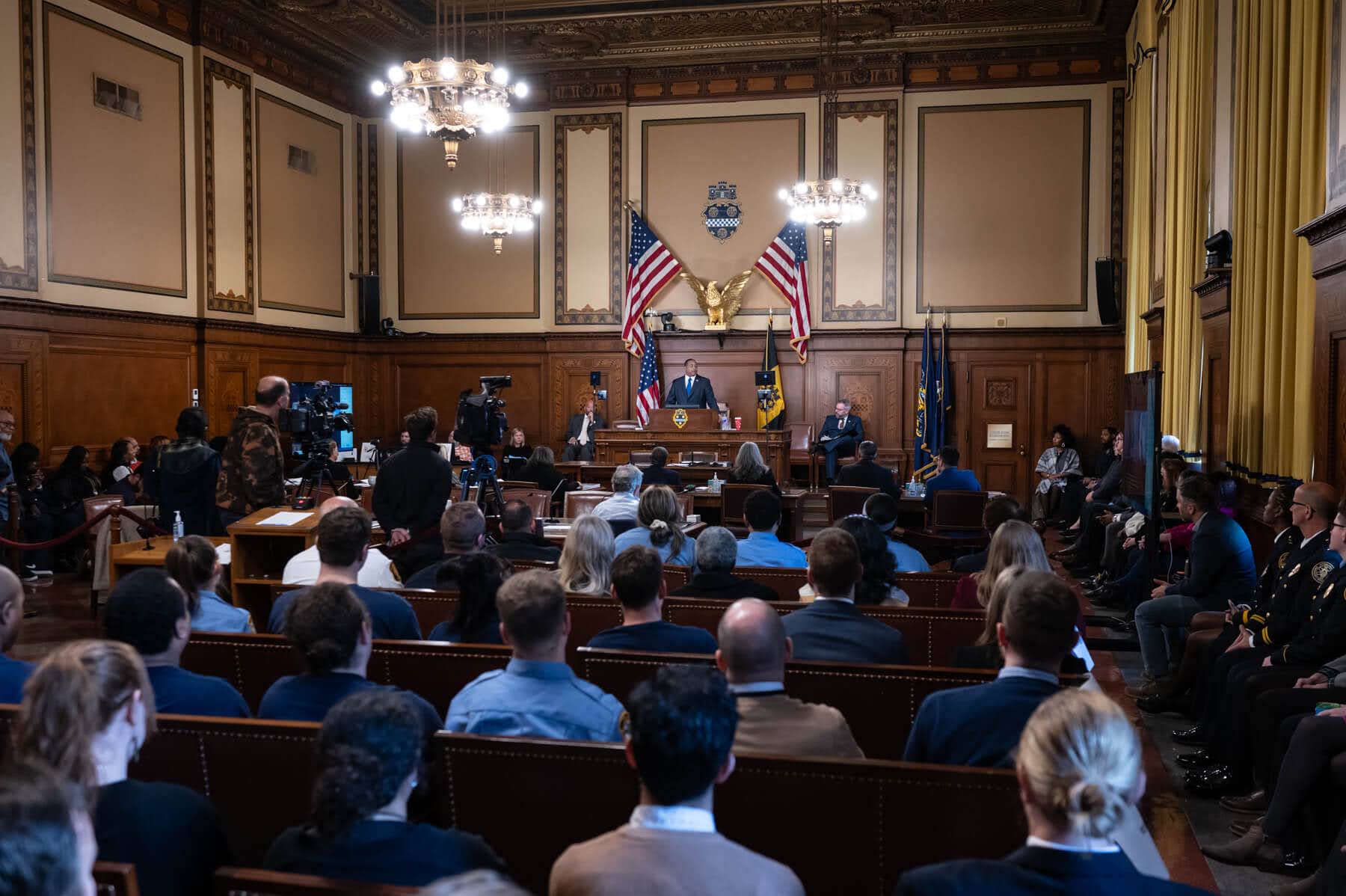
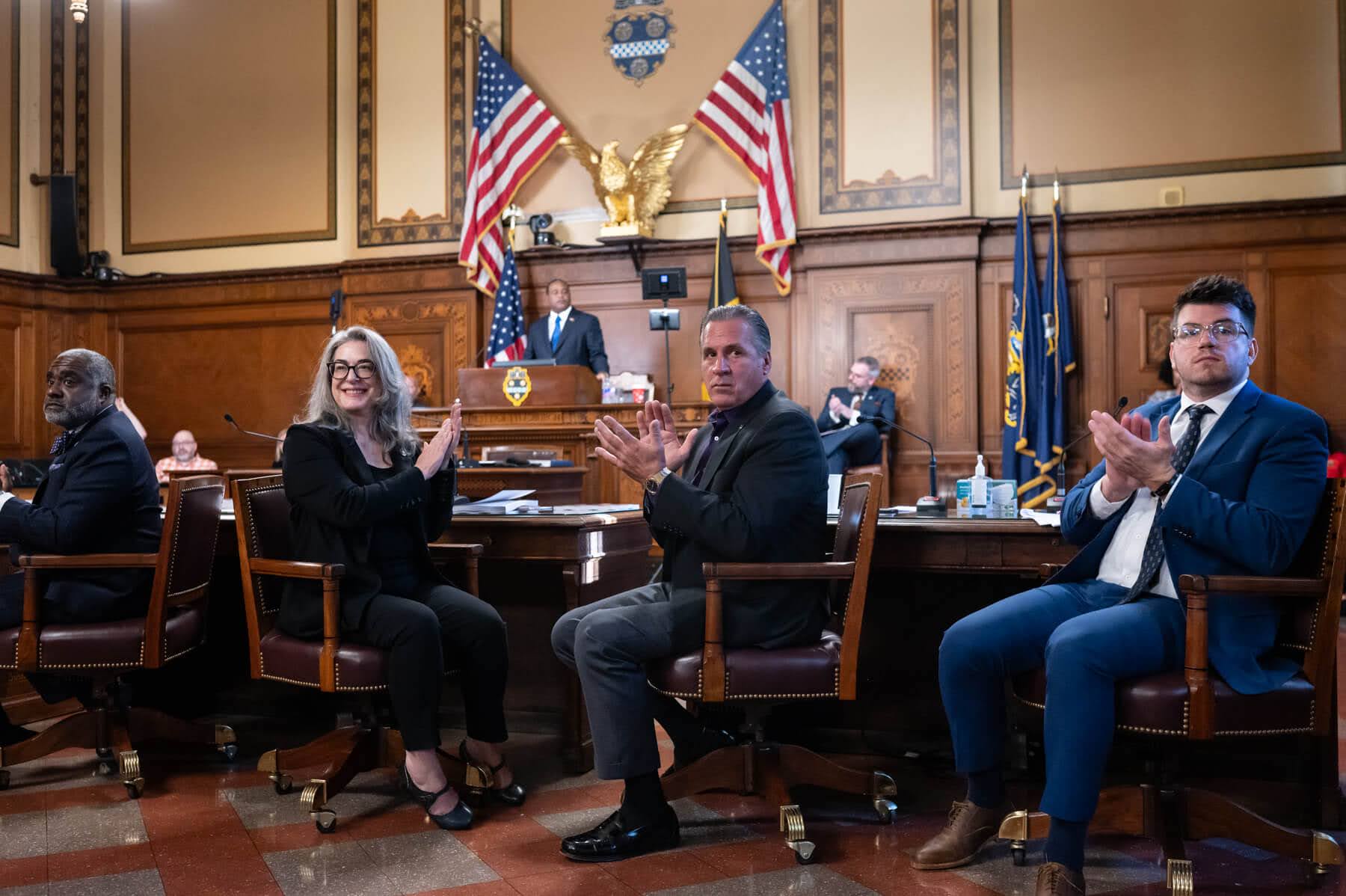
Mayor Ed Gainey made his case for a second term Tuesday morning as he delivered his annual budget address to Pittsburgh City Council.
He never mentioned the upcoming campaign during his nearly two-hour speech, ostensibly to introduce his 2025 spending plans, but he used the address to characterize his predecessor’s administration as mismanaged and deficient, explaining how his team has revamped city government since he took the reins at the start of 2022.
He submitted proposed operating and capital budgets totaling more than $785 million for council’s consideration. Council will hold hearings and propose amendments before passing final budgets before the end of the year.
The address was Gainey’s last before primary elections scheduled for May, in which he has already announced his intent to seek reelection. No Democratic challengers have formally announced bids to unseat him.
“Even though our country is on the brink of an enormous transition, and there are likely challenging times ahead, I am confident that the future of our city is bright,” Gainey said, referring to the impending return to power of President-elect Donald Trump, against whom Gainey and allies fiercely campaigned.
‘Barely keeping up’
He reached back to the dawn of his administration, January 2022, when the country was still emerging from the depths of the COVID-19 pandemic and the full extent of its impact on the local economy was not yet in view.
He said when he took over from former Mayor Bill Peduto, who served from 2014 through 2021, the city was “just barely keeping up with basic services” like garbage collection, morale was low across the city workforce, and the city government was rife with a management culture that “relied on politics and favoritism to determine promotions rather than merit.”
Peduto did not immediately respond to a request for comment, and his former Chief of Staff Dan Gilman declined to comment.
Gainey said initiatives had “failed to launch due to a lack of focus” and city workers had to overcome top-down innovations that “sounded good on paper but actually made things worse,” citing as an example a problem stemming from changes to how city trucks deploy road salt.
He gave his administration credit for responding to an uptick in unhoused people on Downtown streets and public safety issues in the South Side, as well as stabilizing the police bureau, addressing a backlog of infrastructure needs and jump-starting the long-idle Pittsburgh Land Bank.
The police bureau, though, has been rocked with a leadership change after Gainey’s hand-picked police chief retired abruptly in October to focus on being a college basketball referee. Other city officials questioned Gainey’s initial decision to allow the chief, Larry Scirotto, to remain in charge of the bureau while refereeing in far-off cities, and the chief left Nov. 1 amid the fallout.
The Fraternal Order of Police union has also steadily criticized Gainey for allowing staffing levels to reach historic lows; the officer count is well below 800 after a COVID-era hiring freeze slowed recruitment and officers reportedly left for higher-paying, suburban jobs.
Gainey touted a slew of recruiting classes in Tuesday’s speech even as his administration plans to civilianize a number of police tasks and sets its target number of armed officers at 800 rather than the longstanding standard of 900.
Some worry about fiscal future
The mayor’s proposed operating budget, totaling $665 million, represents a 3% decrease from last year as the city tightens its belt with federal COVID-19 aid drying up and a wave of property assessment appeals slashing tax revenues.
While the administration projects an operating surplus of about $3 million this year, that does not factor in some transfers for infrastructure, the Housing Opportunity Fund and violence prevention. With those included, the city’s reserve fund will shrink by about $22 million this year. The mayor’s five-year financial forecast shows the reserve fund shrinking from $208 million at the beginning of 2024 to $71 million by the end of 2029.
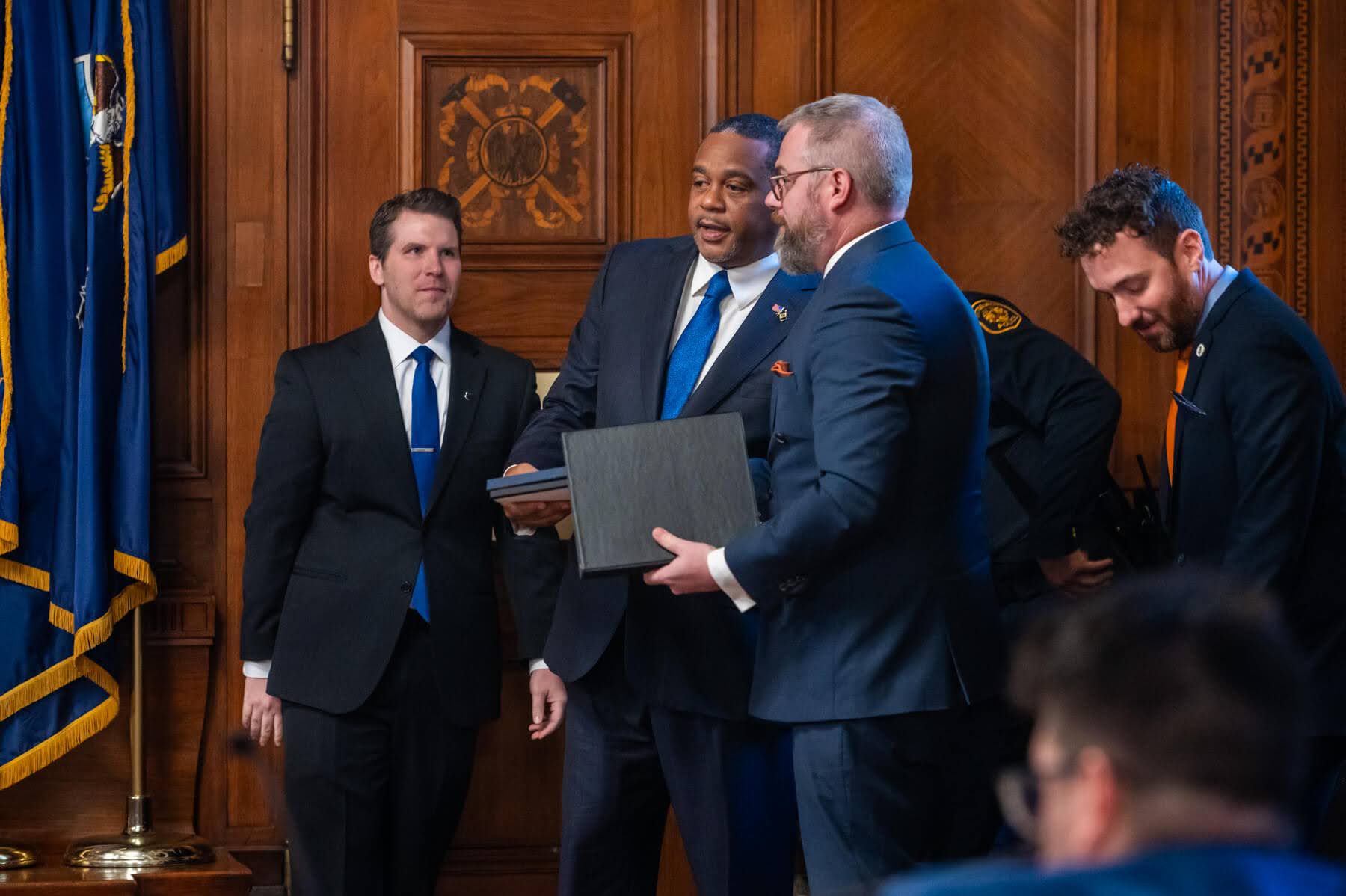
Not everyone in City Hall stands behind Gainey’s upbeat messaging. City Controller Rachael Heisler and some members of council have expressed concern over the mayor’s financial plans.
Gainey acknowledged a short-term squeeze, saying the situation will “limit our ability to make new investments for the next two years.
“Two tough years will not stop us from continuing our mission of rebuilding our government and making it deliver for you.”
He closed his address drawing on a familiar desire among Pittsburgh leaders ever since the collapse of the steel industry led to a population decline, pledging to work “so that everyone in this city doesn’t have to leave no more. You can find home right here. And for everyone that’s left, come on back.”
Charlie Wolfson is PublicSource’s local government reporter. He can be reached at charlie@publicsource.org.
This article first appeared on PublicSource and is republished here under a Creative Commons license.
About Post Author
