THE GRADUATES—Standing: Taylor McCartney, Charles Bennett, Jymoni Rainey. Seated: Jaquala Bibbons, Rigina Brown. (Photos by J.L. Martello)
Pitt’s Hill Community Engagement Center site of the training
Chances are, there isn’t a day that goes by that you’re not using a computer.
And yes, a smartphone is considered a computer.
Computers can only “compute” if a human “tells” them “how” to work. That’s called “coding,” or “computer programming.”
The percentage of human computer programmers who are African American, however, is scary small.
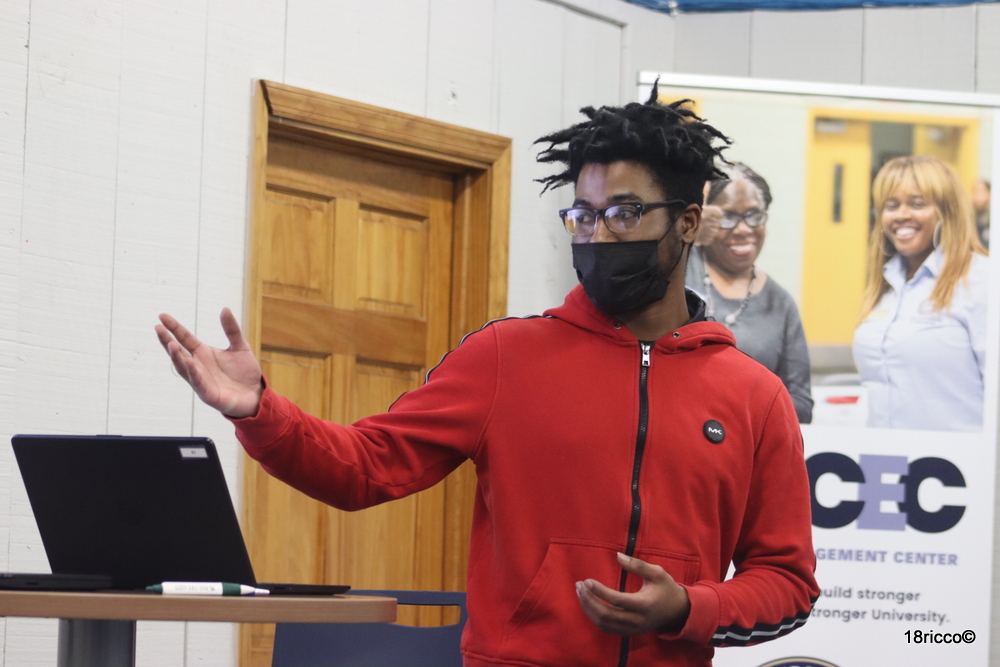
GRADUATE JYMONI RAINEY
People like Rigina Brown, Charles Bennett, Jymoni Rainey and Jaquala Bibbons are bucking the trend. They are all Pittsburghers who recently graduated from an eight-week course on coding, taught by instructors and graduate students from the University of Pittsburgh.
Pitt’s Hill Community Engagement Center was the site for the “intro to programming” course for adults where, in addition to the five aforementioned African Americans, Taylor McCartney also graduated from the course.
“Coding is an important skill nowadays, for different career options and other personal goals,” said Rohit Base, a graduate student at Pitt who helped with training. “We are surrounded by coding. That’s a skill everybody should have.”
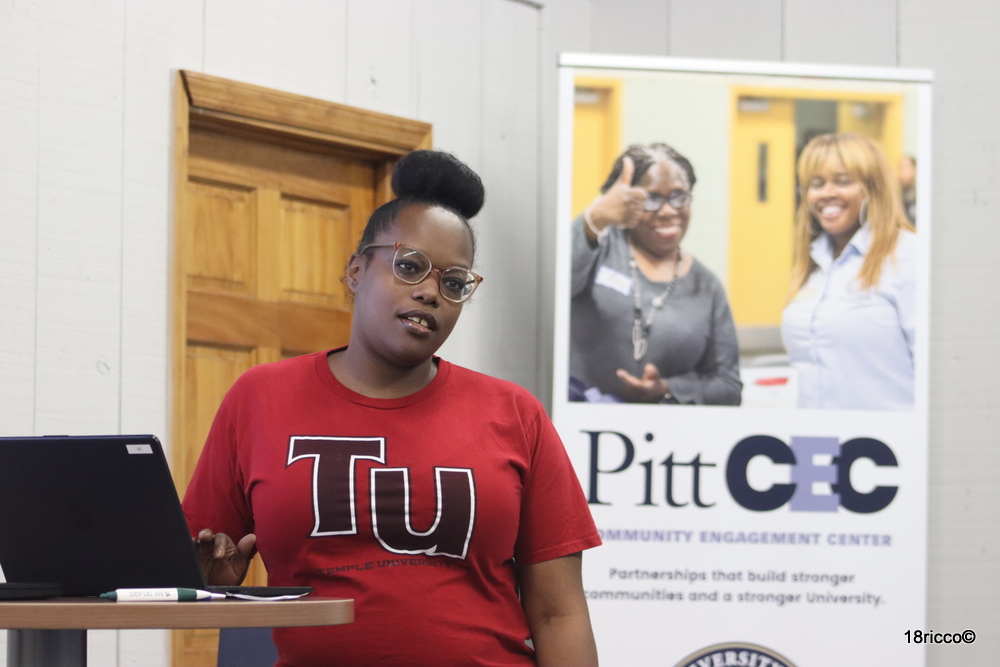
GRADUATE JAQUALA BIBBONS
By learning how to code, you can learn how to make websites and apps, process data and, most importantly, attain jobs in an industry that’s only growing.
Across the country, the word is out about coding, and there are many organizations that are trying to get more African Americans hooked on coding. Computer programmers made a median salary of $89,120 in 2020, according to a U.S. News and World Report salary study. The highest paid programmers earned more than $115,000 yearly, while the lowest-paid still pulled in close to $70,000.
For Pitt, it’s a determined, strategic effort to connect its resources with what the African American community labels as a priority, such as computer programming, free of charge.
“Hill District residents have highlighted the importance of digital literacy and inclusion,” said Keith Caldwell, executive director of Playspace Initiatives for Pitt’s Office of Engagement and Community Affairs, at the Nov. 9 graduation. Caldwell said Pitt prides itself on bridging the people to these IT (information technology) careers, “bringing opportunities in that connect with those stated goals (of the community).”
About Post Author