
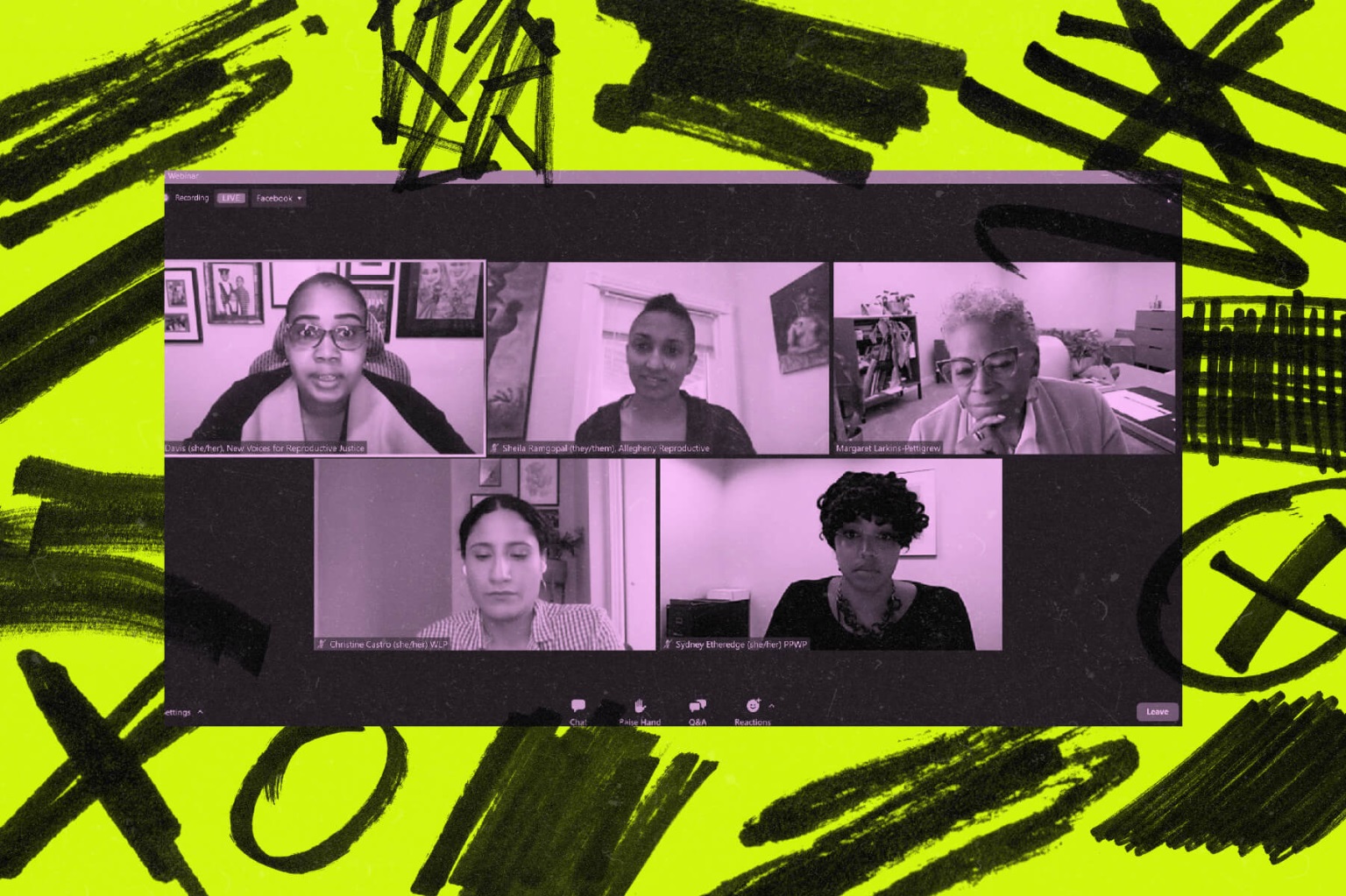
YWCA Greater Pittsburgh panel screenshot. (Photo illustration by Natasha Vicens/PublicSource)
The medical system can already be an unfair and callous place for many marginalized communities. Some worry that the shifting landscape of reproductive rights will only make that worse.
by
Pennsylvania women should prepare to defend abortion rights in light of a draft Supreme Court decision to overturn Roe v. Wade, lest it lead to further erosion of the medical system’s treatment of women, said panelists at a YWCA Greater Pittsburgh panel on reproductive justice.
Dr. Margaret Larkins-Pettigrew, the chief clinical diversity, equity and inclusion officer for the Allegheny Health Network, moderated the panel, highlighting issues of access to abortions, sex education and the disproprtionate harm to women of color that would come with the decision to overturn Roe v. Wade.
Sydney Etheredge, the executive director of Planned Parenthood of Western Pennsylvania, said the United States’ healthcare system has a pattern of “othering” people, including women, people of color and the LGBTQ+ community.
“And by allowing that to happen across health care more broadly,” Etheredge said, “we are able to see these attacks on sexual and reproductive health care.”
Kelly Davis, the executive director of New Voices for Reproductive Justice, added that some in the medical community are already prone to hand over patients with problems like substance abuse — especially if they are people of color — to law enforcement.
“While abortion access is actually beneficial to everyone — irrespective of gender, racial or ethnic group — when it’s taken away, not everyone is equally harmed,” Davis said. “We know that doctors and medical systems are often a warm handoff to criminalization and that is what is most at risk here. Who is going to be handed off to the criminal legal system? I firmly believe it is going to be Black women and other people of color.”
Read entire article here