
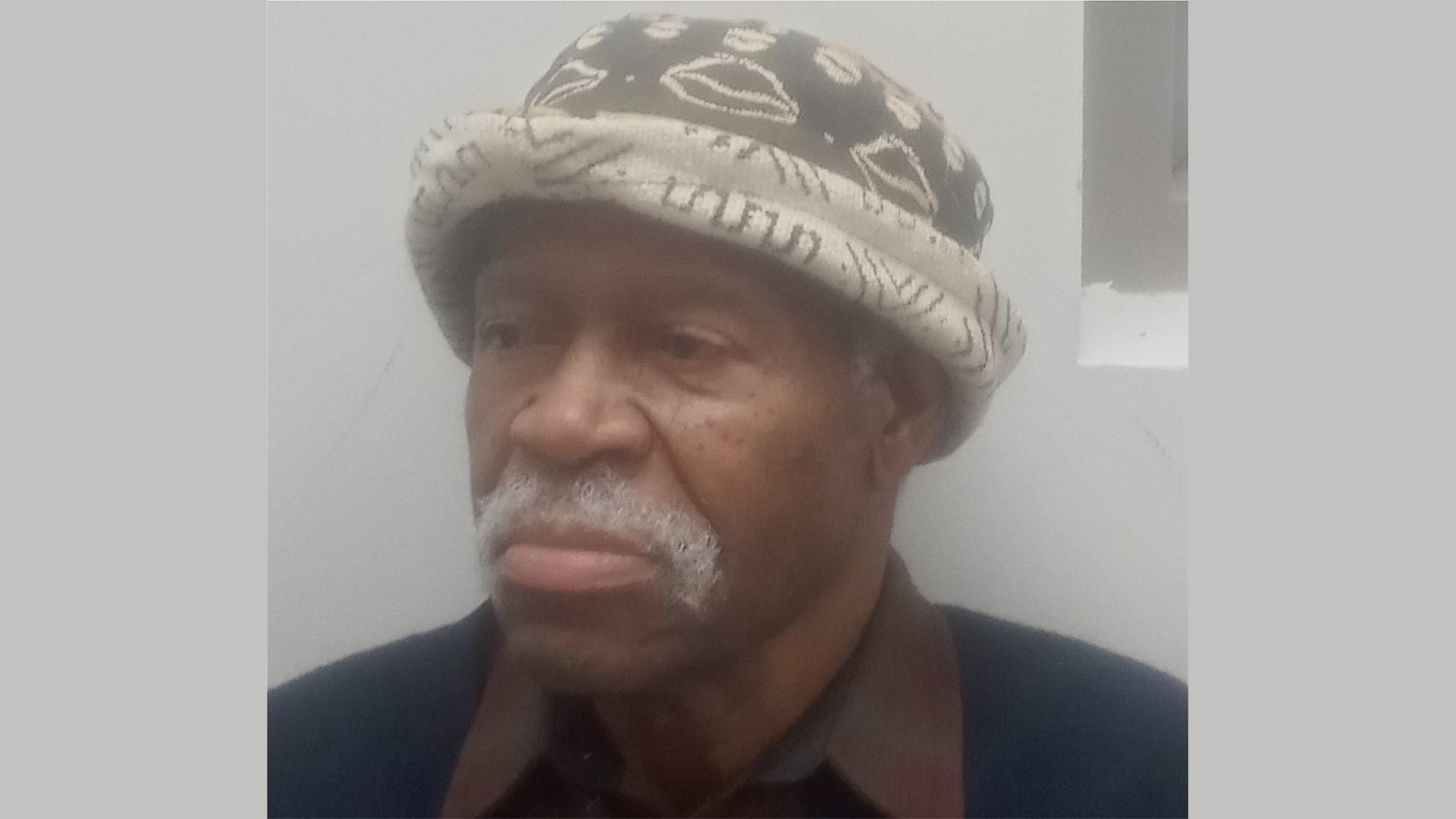
by Fred Logan
At this very moment, gun violence is a major problem in Black Pittsburgh and in African American communities all across the United States. The Allegheny County Medical Examiner recorded 125 homicides in 2021, compared to 107 in 2020 and 95 in 2019. Eighty-five of the 2021 victims were Black males. The predominately African American Homewood neighborhood had 11 homicides, the largest number in Pittsburgh.
Some of the gun violence is caused by domestic arguments, or accidental shootings, or an asinine fight in some bar or tavern. But illegal drug money is surely the leading cause of much of this gun violence plaguing the Black community.
During the latter half of 1988 and the first half of 1989 the crack cocaine free-enterprise market took-off in Pittsburgh and brought much more illegal drug money into the city. The cycle of narco-gun violence endemic to illegal drugs commerce also escalated in Black Pittsburgh and it has never returned to the pre-crack level of gun violence.
By some estimates, the dollar amount of illegal drugs sold in the United States is some $150 billion annually. African Americans are estimated to consume 15 percent of the illegal drugs in the USA. In dollar amounts, this would total $22 billion annually. This estimate could be way too high, but if it is only 5 percent, it would still total $7 billion annually.
Whatever the exact amount, asks yourself this unanswered question, what is the annual dollar amount of illegal drugs sold by Pittsburgh Black drug dealers to both their Black and White customers? It is surely a tidy sum, and if just a small percentage of it is used to purchase guns, it is still an awful lot of money to buy an awful lot of guns.
What happens to the dope money? Black drug dealers do not have the connections, the “White privilege,” to laundry their drug money that their European American counterparts have.
A hypothetical White drug dealer can laundry say $10 million of illegal drug money easier than his Black counterpart can laundry say $300 thousand. Large sums of White dope money can be hidden, “invested,” in constructing sports arenas, commercial real estate buildings, condominium complexes, or other gigantic development projects.
Some Black drug dealers purchase expensive automobiles and large homes, and maybe invest in some legitimate small business in the Black community, but the profits keep piling up. They can bury some of their stash in the cellar, or hide it in pillow cases under the bed.
They must be on guard 24/7, and hiding dope money can be as great a task as selling illegal drugs. The small arsenal of guns often seized when drug dealers are arrested go along with the business to protect the dealers.
A lot of people in the neighborhood know the dope man has money stashed somewhere. They also know he can’t call the police and report that someone stuck him up and stole his dope money.
So, why stick-up the neighborhood corner store with, at most, only a few hundred dollars on hand, and get reported to the police and perhaps shot by the store owner when often a stick-up man can get more money from some drug dealer?
The post-WWII collapse of the downtown Pittsburgh retail district, the Mon Valley manufacturing district, the entire Greater Pittsburgh regional economy fell like an avalanche on top of the Black community locked in by racism at the very bottom of the local social and economy pyramid.
The current 30-yearlong cycle of narcoviolence in Homewood, for example, did not initiate Homewood’s decline which has been under way for over 50 years old. It did add more fuel to the fire, and made bad matters worse.
Mexico, Guatemala, and other countries in Latin America and predominately Black communities in the United States that are plagued by narcoviolence share very important characteristics. In various ways, they have been victimized and “destabilized” by US foreign or domestic political and economic policies that serve the interest of the US status quo. The masses of people are destitute, and they have a long adversarial relationship with the state, the police.
The scale and character of narcoviolence differs greatly among these “marginal” locales depending on their role and place in the production and distribution of illegal drugs.
In response to the on-going gun violence, the Pittsburgh Black Elected Officials Coalition recently called for a 2022 campaign called “Reclaiming the Village.” This follows in the footsteps of Black Pittsburgh’s decades-long struggles against illegal drugs and narcoviolence.
Over the past 50 years, the Pittsburgh Courier has published countless articles and photographs documenting the undisputable fact that the Black community, far and away, has been the vanguard of the struggles against illegal drugs and narcoviolence in Pittsburgh.
In the 2022 struggles and beyond, the Pittsburgh Black community must acknowledge these past struggles and it must study and critique the very important lessons of these struggles.
It must also build an informed, organized, and politically active Black community to wage this struggle and “turn weakness into strength.”
In the struggle, Black Pittsburgh must study and master the sophisticated art and science of African American coalition-building in Pittsburgh.
This struggle will be waged inside and outside the Black community. So, it must be funded by the Black community and cannot be dependent on public or private establishment funding.
Black folks must stop glamorizing Black drug dealers as pop-cultural heroes and roles models. This is what mainstream America does with The Godfather, the Sopranos and other perpetrators of “White-on-White” violence.
The battle against narcoviolence must denounce and expose the rampant conspiracy-mongering by Black folks about a secret racial plot to flood the Black community with illegal drugs and kill off Black people. At the very least 70 percent of the people who use illegal drugs in the United States are White people. Is a racial conspiracy behind that to kill off White people? These crazy conspiracy theories scare Black people, and they also sow widespread confusion in the struggle. Narcoviolence in the Black community must be closely monitored and critiqued by Black Pittsburgh to stamp out the confusion, fear and nonsense that clouds the reality of the crisis.
Not last or least, the struggle must put pressure on Black folks who are always condemning the gun violence in the Black community, but who buy stolen goods from “opioid abusers,” patronize drug addicted prostitutes, and/or buy what they call occasional recreational drugs. They put money in the illegal drug market and some of that money is used to purchase the weapons used in the gun violence these hypocrites denounce.
Like us at https://www.facebook.com/pages/New-Pittsburgh-Courier/143866755628836?ref=hl
Follow @NewPghCourier on Twitter https://twitter.com/NewPghCourier