TIM STEVENS
Legislation would make stops for minor infractions illegal
With the Gainey administration less than two weeks from officially taking over Pittsburgh’s City Hall on Jan. 3, Black community leaders are urging all involved stakeholders to hold off on voting on proposed legislation to do away with police traffic stops for minor violations.
Councilman Rev. Ricky Burgess introduced the legislation in November, calling on the end to police pulling people over for minor traffic violations such as a taillight or headlight that’s not working, an expired registration sticker, or a license plate not properly mounted. Reverend Burgess has contended that the traffic stops disproportionately affect African Americans in the city, which has been supported by data from the city. Out of 9,912 individuals involved in traffic stops in 2020, 3,238 were Black men, while another 1,405 were Black women. That data shows that 47 percent of traffic stops in the city in 2020 were done on Black drivers, even though the city is barely 22 percent Black.
Council delayed a vote on the legislation on Dec. 20, but Rev. Burgess doesn’t want to delay the vote any further. He wants a vote done by the end of 2021. But Tim Stevens, Chairman and CEO of the Black Political Empowerment Project, penned a letter to the city’s outgoing mayor, Bill Peduto, chief of police, Scott Schubert, Mayor-elect Ed Gainey and all nine City Councilmembers urging that no vote is taken until Gainey takes office.
“The new administration should be given the opportunity to work with City Council and with community leaders to mold this ordinance into a product they can support and PBP (Pittsburgh Bureau of Police) officers will follow. We believe this approach will result in stronger ‘buy in’ by the new administration, and therefore a higher probability for full, meaningful, and effective implementation at the rank-and-file level,” Stevens’ letter, dated Dec. 20, read, obtained by the New Pittsburgh Courier.
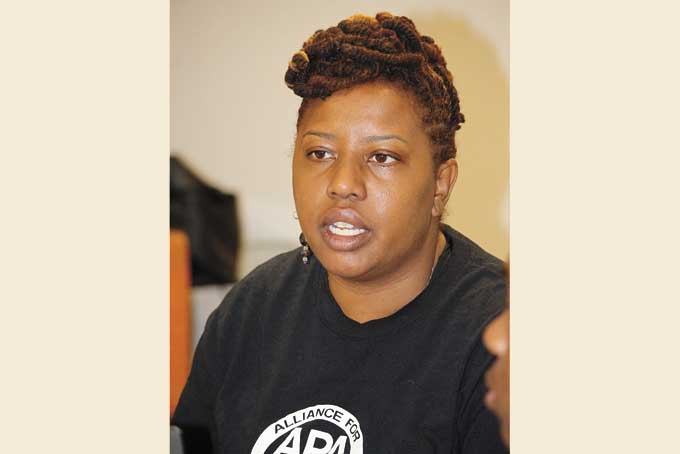
BRANDI FISHER
Stevens also questioned if there was enough community input placed into the proposed legislation. “We are unaware of any post-agenda hearings,” Stevens’ letter read. “This is a very important issue and Pittsburghers/community, who work on policing and criminal justice issues locally, should be given an opportunity for input.”
Stevens said that consideration should be given to including pedestrian stops in the legislation. “Stop-and-frisk types of harassment play as big if not a bigger role in interactions between police and young people, especially in predominantly Black neighborhoods.”
It’s unclear how each council member would vote on the legislation if a vote is taken, say, Monday, Dec. 27. One of the legislation’s biggest critics, however, is Councilman Anthony Coghill, who said those traffic stops can sometimes get an unsafe-to-drive vehicle off the streets, or help capture those participating in more severe crimes such as drug trafficking.
“We also want to acknowledge today’s postponement of a vote until next week, but we believe that giving the Gainey administration and members of the community an opportunity to participate in discussions after they assume power in January will improve the process by involving all key stakeholders, strengthening the final language, ensuring that it addresses the most important issues, and is implemented fully by PBP,” Stevens’ letter read.
Stevens’ letter was also co-signed by Brandi Fisher, president/CEO of the Alliance for Police Accountability, and Vic Walczak, legal director of the ACLU of Pennsylvania.
About Post Author
