
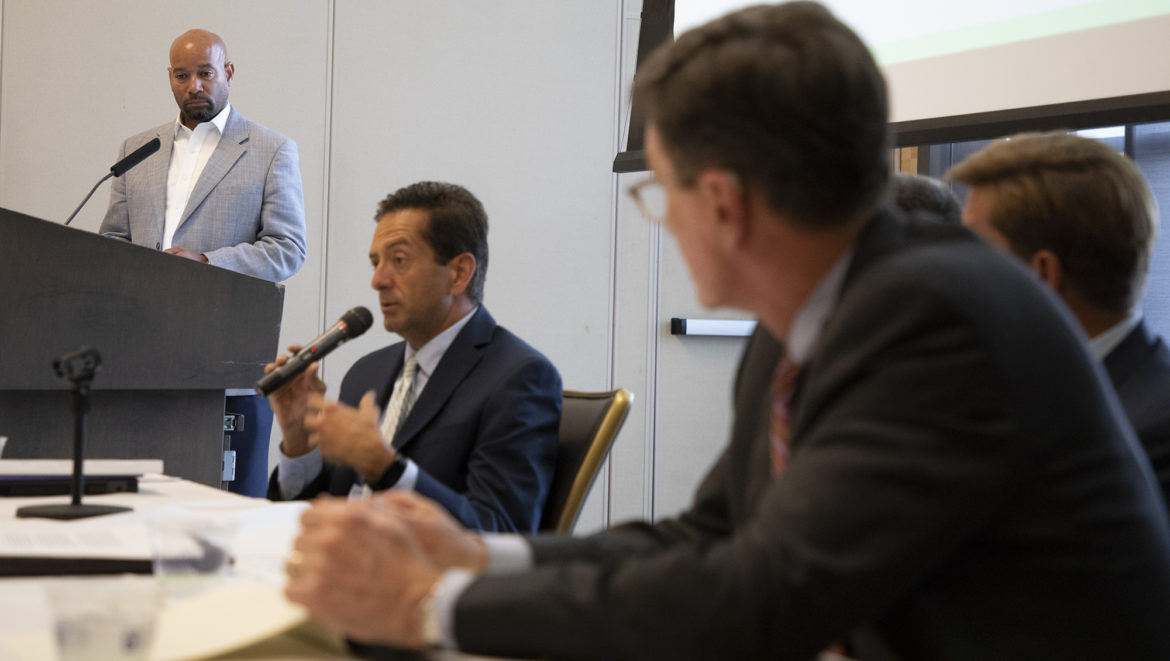
UPMC Mercy President Michael Grace (center) speaks at a community forum. Pittsburgh City Councilman R. Daniel Lavelle (left) facilitated a discussion at the Duquesne University’s Power Center between community members and UPMC executives on July 16, 2018, the evening before a City Council hearing. (Photo by Kat Procyk/PublicSource)


Last spring, Louis Berry III was feeling mildly optimistic.
As a labor activist and retired housekeeper with the University of Pittsburgh Medical Center [UPMC], he felt for the first time in April 2018 that he and activists might be able to get some concessions from his former employer. In Berry’s mind, he said, the not-for-profit hospital chain and healthcare provider is a behemoth that pays some of its employees too little and causes others to go into medical debt.
Last spring, Berry thought he had reason to be hopeful: UPMC needed city approval to build a state-of-the-art hospital in Pittsburgh’s Uptown neighborhood. Some activists weren’t opposed to the new facility but when the city’s Planning Commission made a recommendation that UPMC work on establishing a community benefits agreement [CBA] with the city, Berry and others saw it as an opportunity to demand and negotiate concessions.
“It was the first time in the history of me [being] on that campaign where they actually needed something from the public,” said Berry, who has been attempting to organize UPMC workers since 2011.