Some communities view streets as pedestrian spaces. Could Pittsburghers benefit from more room to play?
Courier Newsroom
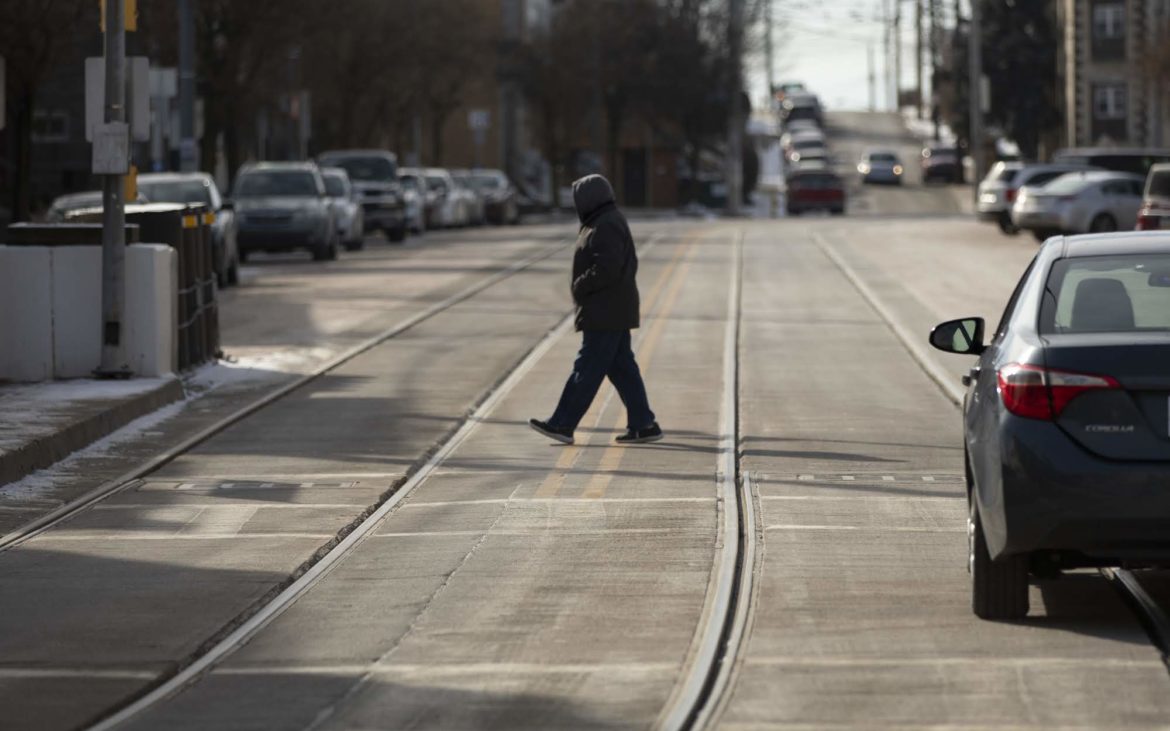
A pedestrian crosses Broadway Avenue in Beechview. Could nearby side street closures benefit residents on foot? (Photo by Kat Procyk/PublicSource)
My earliest memories are from 147th Street in Rosedale, Queens. Near the bustling Francis Lewis Boulevard, ours was a quiet street, lined with trees and modest houses with space to play in front and backyards.
Yet our playground of choice was the hard, gray concrete of the sidewalk and asphalt of the road, which seemed like an extension of our homes.This was where all the block kids regularly met, where friendships were made, while our parents watched from the front steps or inside. It was where we learned how to watch out for each other, yelling “CAAARRR!” on what seemed like the rare chance that one would pass.Over time, streets in the United States and elsewhere have increasingly been turned over strictly to car traffic, making scenes like this feel like far-flung memories. Yet some communities are shifting back, reclaiming asphalt for pedestrian use, often with innovative policies to make streets truly shared spaces.
In the United Kingdom, Bristol resident Alice Ferguson caught the attention of BBC News for her work to reinvent how neighborhood streets are used in the city of 460,000 residents. She led a campaign that simplified the process of closing down streets for frequent residential use.
According to the BBC, around 40 authorities in the United Kingdom have modified their permitting rules to increase the ease of more frequent closures, and the concept has recently been piloted in Toronto.
In the Netherlands, pedestrians regularly mingle with traffic in what’s called a “woonerf,” a shared street or square, where curbs, signs, painted lines and traffic lights are eliminated to open the street to everyone. Woonerfs exist by the thousands, akin to a more enhanced version of Pittsburgh’s Market Square.
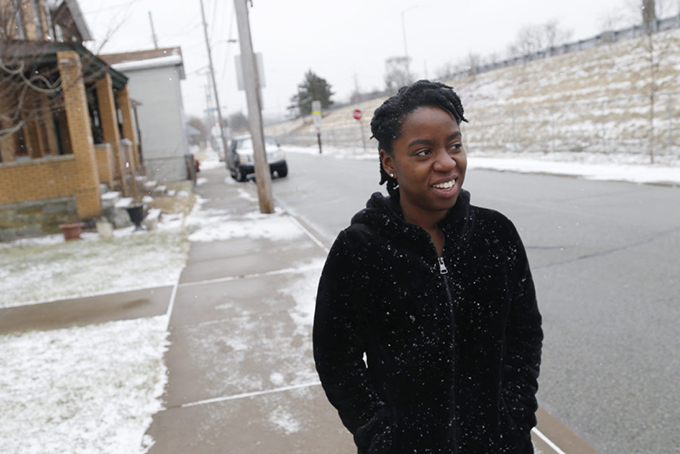
But given that our streets are one of our largest public assets, can we do more to use them? NaTisha Washington, green initiative coordinator for Operation Better Block, walks along Finance Street in Homewood. Washington said more regular street closures in South Homewood “could have a positive impact” in conjunction with local projects related to Safe Routes to School, a federally backed initiative that Pittsburgh plans to implement later this year. (Photo by Ryan Loew/PublicSource)
READ ENTIRE ARTICLE AT: https://www.publicsource.org/some-communities-view-streets-as-pedestrian-spaces-could-pittsburghers-benefit-from-more-room-to-play/