Trump’s former lawyer in the Russia probe, John Dowd, is also said to have doubted Trump’s ability to avoid perjuring himself should he be interviewed by special counsel Robert Mueller.
“Don’t testify. It’s either that or an orange jumpsuit,” Dowd is quoted telling the president.
And Secretary of Defense Jim Mattis is quoted explaining to Trump why the U.S. maintains troops on the South Korean peninsula to monitor the North’s missile activities. “We’re doing this in order to prevent World War III,” Mattis says.
Woodward recounts that Mattis told “close associates that the president acted like — and had the understanding of — ‘a fifth- or sixth-grader.’”
Woodward also claims that Gary Cohn, the former director of the National Economic Council, boasted of removing papers off Trump’s desk to prevent their signature, including efforts by the president to withdraw from the North American Free Trade Agreement.
The White House didn’t immediately respond to a request for comment.
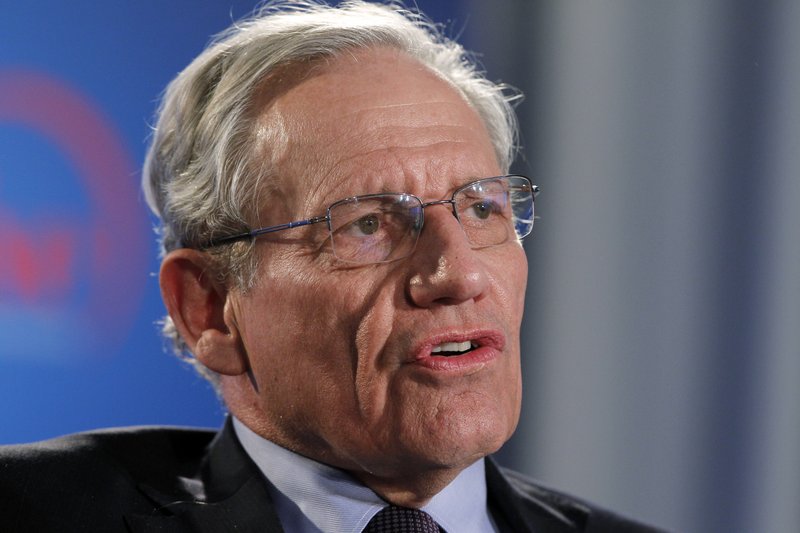
The publication of Woodward’s book has been anticipated for weeks, and current and former White House officials estimate that nearly all of their colleagues cooperated with the noted journalist, who cut his teeth bringing down Richard Nixon’s presidency during Watergate.
But Trump did not speak to Woodward until after the book’s manuscript was completed. The Post released audio of Trump expressing surprise about the book in an August conversation with Woodward. Woodward tells Trump he had contacted multiple officials to attempt to interview Trump and was rebuffed.
The book follows the January release of author Michael Wolff’s “Fire and Fury,” which led to a rift between Trump and Steve Bannon, his former chief strategist who spoke with Wolff in terms highly critical of the president and his family. Wolff’s book attracted attention with its vivid anecdotes, but suffered from numerous factual inaccuracies.
Trump has been increasingly critical of anonymous sources used by reporters covering his administration. Woodward’s account relies on so-called “deep background” conversations with sources, in which their identities are not disclosed.
About Post Author
