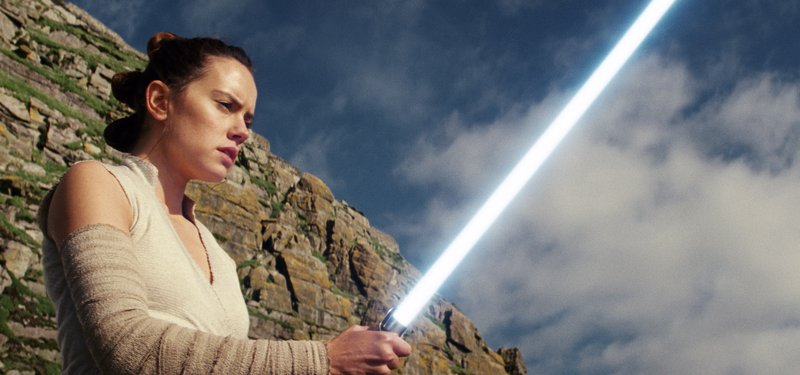
The percentage of female characters with speaking parts in the top 100 films has remained largely unchanged at or around 30 percent over the past decade, according to the report released Tuesday. And in survey of the top 100 films of 2017, a year in which the top three were the female-led “Star Wars: The Last Jedi,” ″Beauty and the Beast” and “Wonder Woman,” only 33 featured women in a lead or co-lead. Four of those were from an underrepresented group, and five were over the age of 45.
[pullquote]Women of color are still among the most marginalized, which the report calls an epidemic of invisibility. In 2017, 64 of the top 100 films did not include a single Latina character, 65 were missing Asian females, and 43 were devoid of any Black female characters. 78 films were without a female character with a disability and 94 absent of an LGBT female. The report calls it an epidemic of invisibility.[/pullquote]
“It was an unprecedented year where you had the top spots at the domestic box office driven by female leads, and yet we find ourselves in another year where almost nothing has changed.” said Dr. Stacy L. Smith, Founding Director of the Annenberg Inclusion Initiative. “In the aggregate, Hollywood isn’t embracing any solution. It’s business as usual or embracing the status quo as usual.”
The Annenberg Inclusion Initiative has been tracking and examining the top 100 films every year since 2007 leading to a database of 1,100 films and 48,757 characters.
And while the Time’s Up and #MeToo movements have affected every level of the entertainment industry over the past nine months, any statistically significant impact will likely not be seen on screen for another year or more.
“As Time’s Up focuses on safety, equity and dignity, we need to be looking to 2019 and 2020 for the major changes where Time’s Up exerts its influence and we see a shift in hiring practices for the first time,” Smith said. “Until hiring changes, these numbers will not move.”
Although many in the industry have embraced the concept of inclusion riders, like Michael B. Jordan, Matt Damon, Ben Affleck and Paul Feig and others who run production companies, some have criticized the idea saying it is potentially illegal. Smith says that the critics misunderstand the concept and should speak to employment attorneys to understand how to execute it.
“The spirit of the inclusion rider was to get people to realize that the world we see on screen is imbalanced and there are ways to address this,” Smith said. “The solution is to hire differently. An inclusion rider isn’t needed to do that.”
___
Follow AP Film Writer Lindsey Bahr on Twitter: www.twitter.com/ldbahr
About Post Author
