Brazil, Argentina and Germany, a virtual World Cup dictatorship that won 11 of the 20 tournaments before this one, have all been overthrown and chased away before the semifinals. That is a World Cup first.
Also striking: the final four teams are all European. This is only the fifth time that has happened (after 1934, 1966, 1982 and 2006). The absence of other continents in the semis this time in Russia isn’t anecdotal. It reflects how western Europe has become the epicenter of football wealth and innovation and how South America has fallen behind.
Brazil, with the first three of its five titles coming in 1958, ’62 and ’70, and two-time winners Argentina and Uruguay together were a match for Europe at the first 13 World Cups from 1930 to 1986, winning seven of them to Italy, Germany and England’s combined total of six.
Since 1990, the eight World Cups including this one have seen just two South American wins, both by Brazil — and the last of those was back in 2002. The impression, increasingly, is that all that remains of Brazil’s heydays are fumes. After its 7-1 humiliation by Germany in the 2014 semifinals, Brazil was knocked out even earlier this time, losing 2-1 to Belgium in the quarterfinals. Already the only continent to win three World Cups in a row, Europe is now guaranteed to extend that to four in the July 15 final in Moscow.
This World Cup also spelled the beginning of the end of the Messi and Cristiano Ronaldo era . Both in their thirties, the superstars are unlikely to return in Qatar in 2022. With Brazil’s skillful but frustrating Neymar now out, too, the tournament is showing that game-changing players need fully functioning teams around them and cannot carry their nations’ hopes alone.
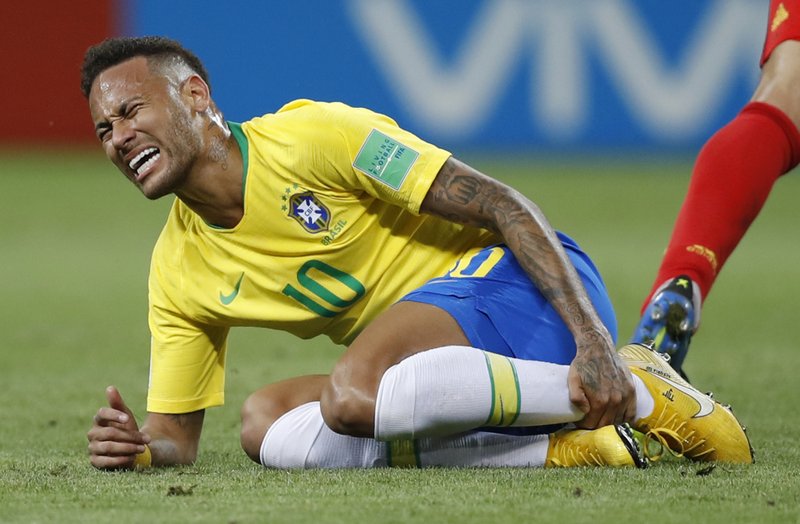
And while we’re on the subject of Neymar: This could have been the World Cup where he made a move from No. 3 in football’s superstar hierarchy to No. 1. Instead, the 26-year-old playmaker regressed, becoming the butt of jokes because of his theatrics and flops.

But into the vacuum, a new star: France’s 19-year-old Kylian Mbappe , likened to the great Pele after he burned through Argentina, scoring two goals and winning a penalty in a 4-3 victory for Les Bleus.
France vs. Belgium promises to be the pick of the two semifinals, because both teams are rapier-quick, packed with talent, favor open, attacking play and have outstanding players — Mbappe for France, Kevin de Bruyne for Belgium — who can make a difference.
With traditional powers gone, this World Cup could be a now-or-never chance for Belgium’s players to live up to the ‘golden generation’ tag they’ve embraced.
But there is also much more to France than Mbappe’s champagne skills and the enterprise of its other young players like Pavard.
The team also has a seasoned spine running from back to front, via goalkeeper Hugo Lloris, central defender Raphael Varane, midfielder Paul Pogba and striker Antoine Griezmann. All veterans of the last World Cup in Brazil, and with a deep pool of experience from their combined 266 appearances for Les Bleus, they were game-changers in the 2-0 quarterfinal victory over Uruguay that moved 1998 World Cup-winner France into its first semifinal since 2006.
The group stage was spectacular. With high drama in the knockout stage, too, this World Cup is going from great to greater. And, perhaps fittingly given the host country’s revolutionary history, change is in the air.
___
John Leicester is an international sports columnist for The Associated Press. Write to him at jleicester@ap.org or follow him at https://twitter.com/johnleicester
About Post Author
