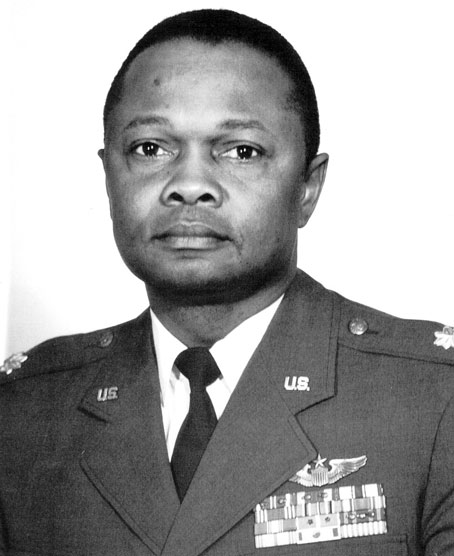
Mitchell Higginbotham’s younger brother, Robert, also joined the military during World War II two years after his older brother; however, Robert Higginbotham became a pilot for the Navy Air Corps.
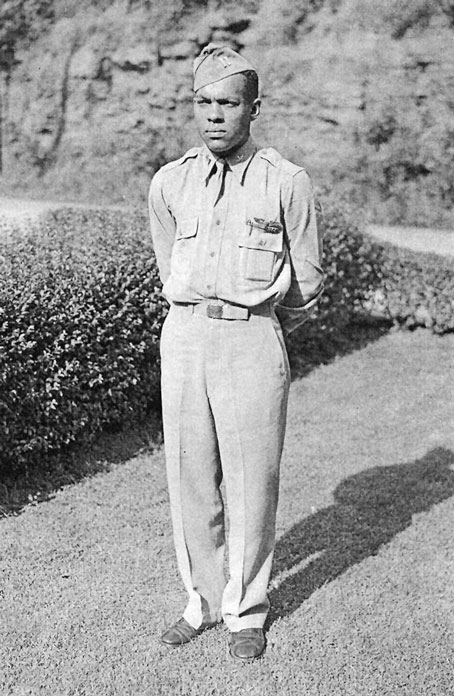
Mitchell Higginbotham was one of 100 Black servicemen who were arrested for attempting to enter an officers club reserved for White officers. This event became known as the Freeman Field Mutiny; it is widely seen as a key moment in the path towards full integration of the U.S. Armed Services.
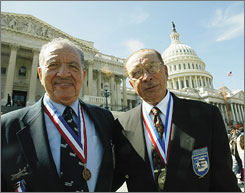
Following his years of active duty, Mitchell Higginbotham went to work for the Los Angeles Airport Advisory Committee, working as a registrar at the Pittsburg Airport. He also served as a probation officer for nearly thirty years.
People may also know the Tuskegee Airmen stories from the movies “Redtails” and the HBO movie, “The Tuskegee Airmen.” Nationally there were about 300 designated original Tuskegee airmen or DOTAs as they call themselves that saw combat starting from March 7, 1942, when the first class of 5 graduated to the end of the war in May 1945. Much as the 54th Massachusetts was formed with the cream of the crop from Black free society 80 years earlier for the civil war, the Tuskegee Airmen were no different. If the first Black fighter squadron was to be created, it had to be a success.
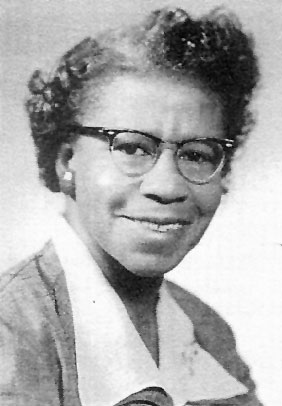
An example was Lt. Dave Wiley, graduate of Oliver High school top of his class, and recipient of a scholarship in engineering at Pitt. He was being vetted to work on the Manhattan project when he found out about the 99th squadron being formed and enlisted.
“Western Pennsylvania had a good deal of the Tuskegee airmen,” said Regis Bobonis, chairman and founder of the Sewickley Tuskegee Memorial Project. “Western Pennsylvania set the record with 55 Tuskegee Airmen having roots here,” Bobonis said. Army Air Forces’ 332nd Pursuit Group but also in the 447th Bombardment Group. Fighting 99th Pursuit Squadron.
“A lot were Courier News Boys, so they were well versed on society and the world abroad,” he said. “The largest group came out Pittsburgh, 22 out The Hill District, 14 out of Homewood, 4 from The North Side, 5 from Westmoreland County, 5 from Washington County.” Bobonis said his statistics and information is all copyrighted from his book, “Black Pilots, Red Tails.”
“My job of research was made easy by George Barbour who really sat down with Black pilots in western Pennsylvania. My claim to fame is I did the head count to see how many came out (from where).”
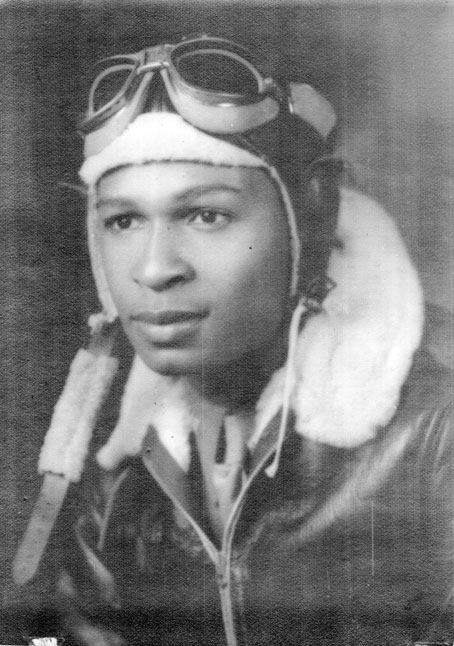
In April of 1943 the fighting 99th joined the 332nd fighter group and arrived in Casablanca. They had two assignments: perform proper escorts for the bombers and to help capture back the African mainland.
The legend of the 332nd fighter squadron has taken on mythical proportions, meaning some myths have been propagated and allowed to stand the test of time. There is a scene in the movie where the tape shows a pilot single handedly blowing up a German destroyer with nothing but a machine gun, the logic being that a bullet pierced the ammunition magazine and blew it up. Bobonis said that never happened. In the movies, it was said The Tuskegee Airmen never lost a bomber. On March 24, 1945, during the war, the Chicago Defender said that no bomber escorted by the Tuskegee Airmen had ever been lost to enemy fire, under the headline, “332nd Flies Its 200th Mission Without Loss;” the article was based on information supplied by the 15th Air Force, but according to Bobonis this reputation started in early 1944 during an escort mission of B-24s to Berlin without a bomber lost. Future senator, and democratic presidential nominee George McGovern happened to be the lead bomber. In reality, the total number of bombers lost was 27 by the 332nd. By comparison, the average number of bombers lost by the other P-51 fighter groups of the Fifteenth Air Force during the same period was 46. By all comparisons it is still a brilliant combat record especially considering they encountered and shot down 3 experimental German jet planes.
In total, 68 DOTA pilots were either killed in action or reported missing in action. At least 30 were shot down and taken prisoner. Ninety-six Distinguished Flying Crosses; 14 Bronze Stars; 8 Purple Hearts; 150 Distinguished Flying Crosses; and 714 Silver and Gold Cluster Air Medals.
Sixty-two years went by before they were recognized. On March 29, 2007, the Tuskegee Airmen were collectively awarded a Congressional Gold Medal at a ceremony in the U.S. Capitol rotunda. The medal is currently on display at the Smithsonian Institution.
Sewickley, Pa., dedicated a memorial to the seven from that municipality where Mitchell Higginbotham’s name will likely be added. Also, an exhibit was established at Pittsburgh International Airport in Concourse A.
The Higginbotham brothers were co-chairs of the Tuskegee Airmen of Western Pennsylvania original memorial campaign. Robert Higginbotham is still alive.
(Ulish Carter contributed to this story.)
Like us at https://www.facebook.com/pages/New-Pittsburgh-Courier/143866755628836?ref=hl
Follow @NewPghCourier on Twitter https://twitter.com/NewPghCourier
Download our mobile app at https://www.appshopper.com/news/new-pittsburgh-courier
About Post Author
