
As part of his work to combat the disparate effects of the “war on drugs,” Institute of the Black World founder Ron Daniels said he believes the Law Enforcement Assisted Diversion program can impact Black crime and policing’s “broken relationship with the community.”
“It is a transformative model,” he said. “When you see prosecutors, public defenders and police officers talking about individuals like they are human beings it’s promising.”
On Aug. 19, at the Community College of Allegheny County, Daniels and a coalition of criminal justice reform advocates, Allegheny County agency heads and foundation representatives joined American Civil Liberties Union Pennsylvania Legal Director Witold “Vic” Walczak and Pittsburgh Police Chief Cameron McLay to update each other on their progress, and to refine their focus on efforts to roll out the program in Pittsburgh.
As the New Pittsburgh Courier reported in April, LEAD, developed in Seattle, Wash., diverts select non-violent defenders into a human service and treatment regimen rather than to jail at the point of arrest. Prosecutors hold the charges in abeyance pending completion of the program.
In Seattle, the program reduced recidivism of the target population—long-term homeless drug addicts—by 58 percent.
Host Rick Adams, CCAC vice president of the Frieda G. Shapira Center for Learning and board chair of the Institute of the Black World, welcomed everyone and noted that Daniels and Allegheny County Public Defender Elliott Howsie had met with officials in Washington, D.C., last month about implementing the program and had been received well.
McLay said he is impressed with the program’s possibilities, but he wanted two things clarified so he can take it to the officers who will be tasked with implementing it.
“What is the local capacity (in terms of social service delivery) to implement this thing,” he asked. “Second, we need full guy-in from the prosecutorial community. I talked with District Attorney Stephen Zappala, but I wasn’t versed enough to really sell it to him. We need to know what crimes will be eligible. Decoupling drugs from the gun violence might be an issue.”
As to the first, county Human Services Executive Director Marc Cherna said Medicaid would pay for much of the treatment expenses
“But one population I think should be included is the (homeless) mentally ill,” he said. “They commit nuisance crimes because they are off their meds, and they are often victims as well.”
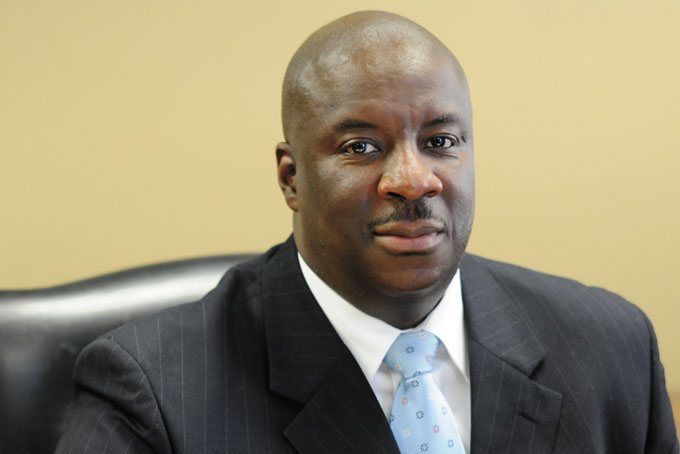
Noting other cities have targeted burglaries and prostitution, Howsie said the program could be tailored to local needs.
“You can build it how you want,” he said. “And the county has a number of diversionary programs already in place for first offenders, but they are all post arrest.”
Echoing Daniels’ comment about the program changing the mindset of police officers, Brandi Fisher, executive director of the Alliance for Police Accountability, called the program a “no brainer.”
“Just in terms of breaking the cycle of questionable police arrests—‘I smelled weed’ or ‘he looked suspicious’—the money the city has paid out in lawsuits over officer misconduct could probably fund this program,” she said.
Lisa Kuzma from the Richard King Mellon Foundation noted that the front end of LEAD and the back end of the police bureau’s anti-gang violence initiative (formerly PIRC) are the same.
“It’s about getting people to services,” she said. “So from a grant perspective, it would be nice not to fund the same thing twice.”
On the services end, all agreed that one community has not been represented in either of the group’s first two meetings—employers.
“I think the Three Rivers Workforce Investment Board needs to be at the table,” said Howzie.
The group agreed to meet again in October, with the focus going forward on a detailed meeting with Zappala, organizational funding applications, and defining eligible crimes.
Other meeting attendees included State Rep. Ed Gainey, D- East Liberty; Shad Henderson, Neighborhood Allies; Alfred Blumenstein CMC/Heinz College; Keith Murphy, Bethany House Academy; Darcel Madkins, African American Leadership Association; Jay Gilmer, PIRC; Kayla Bowyer Amachi Pittsburgh; Corey Buckner and La Trenda Sherrill, Mayor Bill Peduto’s Office; John Tokarski, City Department of Public Safety; and Ginger Underwood, CCAC Civic Engagement Team.
Follow @NewPghCourier on Twitter https://twitter.com/NewPghCourier
Like us at https://www.facebook.com/pages/New-Pittsburgh-Courier/143866755628836?ref=hl
Download our mobile app at https://www.appshopper.com/news/new-pittsburgh-courier
About Post Author
