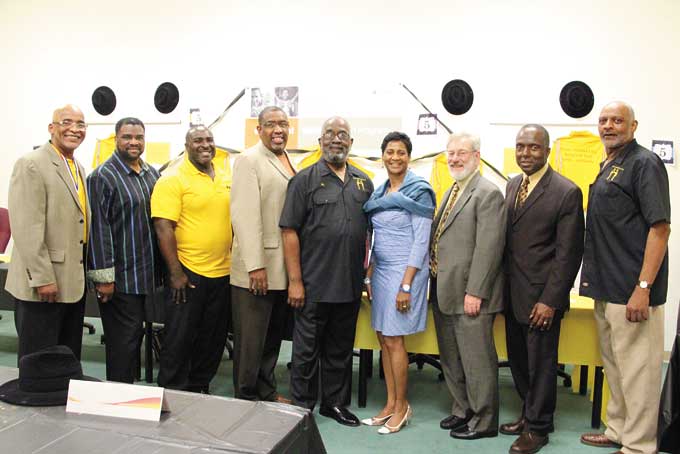
Mothers are naturally better parents than fathers. At least that has been the conventional thinking for a millennia, but as we wade deeper into a new millennium, the courts are evolving on the idea of families, not just when it comes to gay rights and adoption, but about fathers and their role as parents.
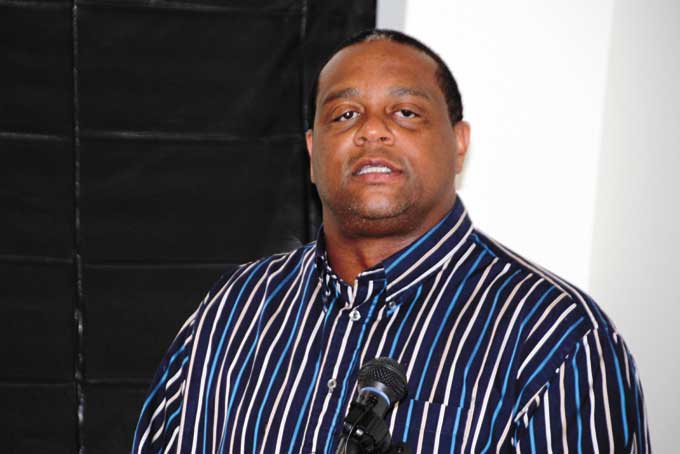
Yes, it is true that fathers have technically had the right to full custody of their children since courts existed, but as DADs (Dads Assisting Dads) Program Administrator Jerry Harvey said, until recently it wasn’t viewed as important to involve the father in the child custody process.
“The old CYF used to be mother oriented,” he said. “The court would say the mother’s name or child’s name and the father’s name would be unknown, and they would put the child in a foster home. Now the investigation will continue until a real effort has been made to find him.” Harvey said trying to find the father is important because even if the father is unable or unwilling to get custody of the child, at least the potential arises for the father’s family to take the child.
When the DADs program was formed, it gave dads the ability to network with men whose children were in foster care, were receiving help from CYF and got their children back. DADs allows men in CYF to teach other men their rights and responsibilities and works with them on having appropriate housing, income to support their family, budgeting, shopping, cooking and if you’re the father of a little girl, combing her hair, and other appropriate activities.
Giving comments
While fathers still have a long way to go before they are seen as equal in parenting to mothers in the eyes of the family court system, being recognized as better than a foster home is a good next step.
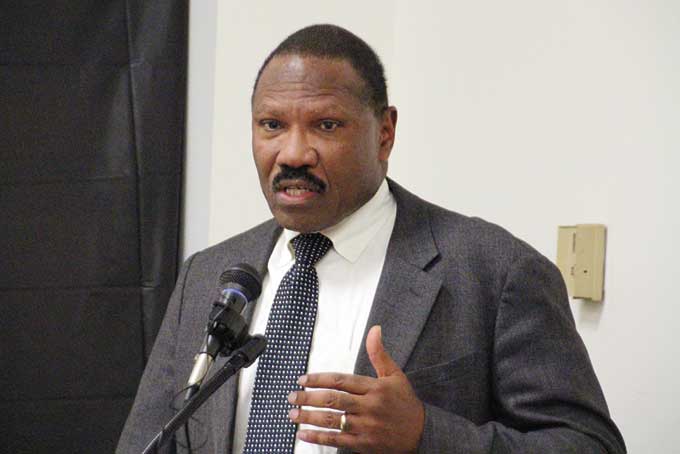
Judge Kim Clark has served on the Court of Common Pleas of Allegheny County Family Division since 2006. She described how she has seen first-hand the effect DADs has had on the system.
“When I first started, the goal was to reunify the child with the mother and fathers were often left out of the process.”
Clark said she didn’t realize how badly the system was letting down fathers until she got more familiar with the process and dealt with them personally. “Sometimes the father wasn’t even told about their children or involved until the end,” she said. “I would be angry like where were you? How come you haven’t been here before?”
Giving comments
Clark said most of the time the men responded they simply did not know. “I changed my philosophy on that a lot and tried to be a lot more welcoming to dads realizing there are a lot of good men out there to be parents if we give them a chance and give them the support they need to do that.”
A strength or weakness of the program is that it is a voluntary program. According to Harvey, this is a positive. “Since it’s voluntary, it shows the judge they are really making an effort to do things on their own. From 2010 to 2015 we have assisted case workers to help reunify 20 fathers with their children.”
Clark also agrees it is a positive when the father decides to join on his own. “It works best when it’s something they want to do.” However, she also admits that she doesn’t see as many opting for it as she’d like, with less than 50 percent opting for the help. She feels every father should opt in because even if they feel they are unfit to take custody, they would still gain rights in the choice of where the child is placed, visitation rights, and when it comes to medical and educational decisions.
DADs is a part of another great acronym group, the FATHERS (Fathers Alliance Together Helping Each Reach Self) Collaborative Council, a group of 34 local agencies that joined forces, from local ministries and the Pittsburgh Public Schools to the state government and the county’s CYF, which offers parents’ services and also steps in when families get in trouble.
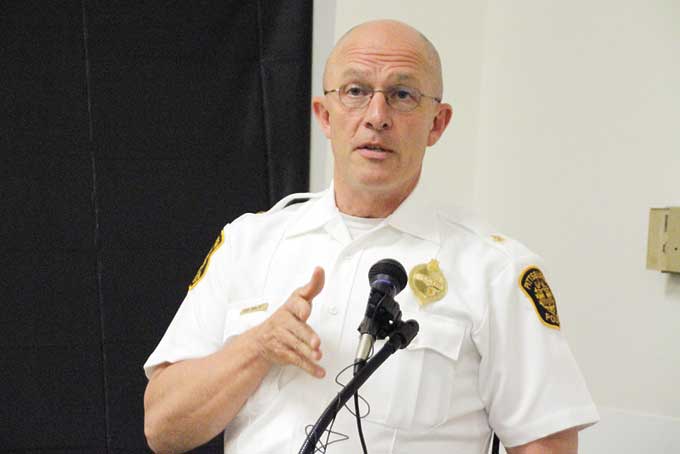
Pittsburgh Police Chief comments
According to Harvey, between eight and 10 different fathers meet once a month to coordinate activities. Harvey’s favorite is the Daddy Daughter Dance. “We try to have sponsored events like in February we have a father daughter dance. Started with the Allegheny county family network. They put together four years ago where more than 250 fathers and daughters only at the AIU (Allegheny Intermediate Unit). They get roses and take pictures with their fathers, we give them the red carpet treatment and we have dinner. (It’s from) 6-10 p.m. We average about 200 fathers and daughters.”
While fathers seeking custody are now getting training and education on the basics, support and funding still trails well behind the support mothers receive. Some fathers would like access to a version of WIC (Women Infants and Children), a nutritional food program for supplemental foods, health care referrals, and nutrition education for low-income pregnant, breastfeeding, and non-breastfeeding postpartum women, and to infants and children up to age five.
Clark agrees more must be done. “One of the things we still are lacking for dads is placement programs, because we have programs where moms who have addiction issues, once they go to in patient and come out they get a level of sobriety, they can live in a treatment facility with their children, we don’t have that for dads but although we are making great progress, we need to stop just thinking of moms and dads and start thinking of just parents and have the same service for dads as we have for moms.”
Follow @NewPghCourier on Twitter https://twitter.com/NewPghCourier
Like us at https://www.facebook.com/pages/New-Pittsburgh-Courier/143866755628836?ref=hl
Download our mobile app at https://www.appshopper.com/news/new-pittsburgh-courier
About Post Author
