Upcoming legal cases may change future of franchises

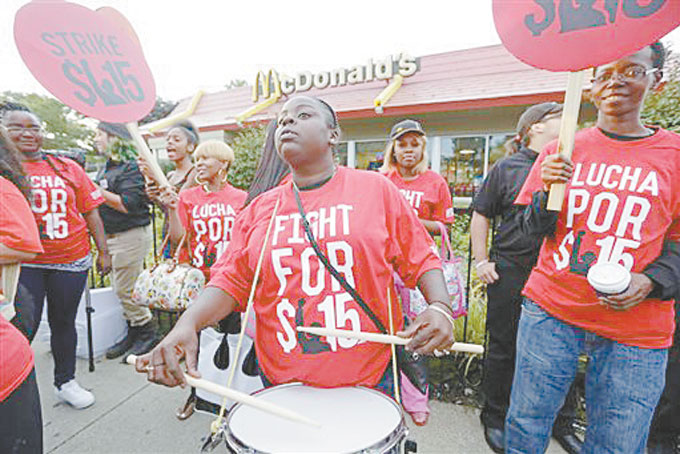
PROTEST—In this Sept. 4, 2014 file photo, Carmalita Johnson drums as protesters participate in a rally outside a McDonald’s on Chicago’s south side as labor organizers escalate their campaign to unionize the industry’s workers. Franchise owners wonder whether they’ll lose autonomy as a result of hearings into about 80 charges against McDonald’s and some of its franchisees. (AP Photo/M. Spencer Green, File)

NEW YORK (AP)—Are franchises small, independent businesses or should they be considered part of a much larger company?
The question is at the heart of two upcoming legal cases. The outcomes could affect profits and change how franchisees hire, fire, manage and pay workers.
A federal judge holds a hearing Tuesday on Seattle’s minimum wage law, which treats franchisees of companies such as McDonald’s and 7-Eleven as big businesses although many are owned by individuals and have a handful of employees. And March 30 brings the first of a series of hearings into complaints against McDonald’s Corp. and some of its franchisees brought by National Labor Relations Board officials. The agency’s Office of General Counsel contends McDonald’s is a joint employer with its franchisees, and should be held responsible if franchisees are found to have committed labor law violations.

About Post Author

Comments

From the Web

Skip to content