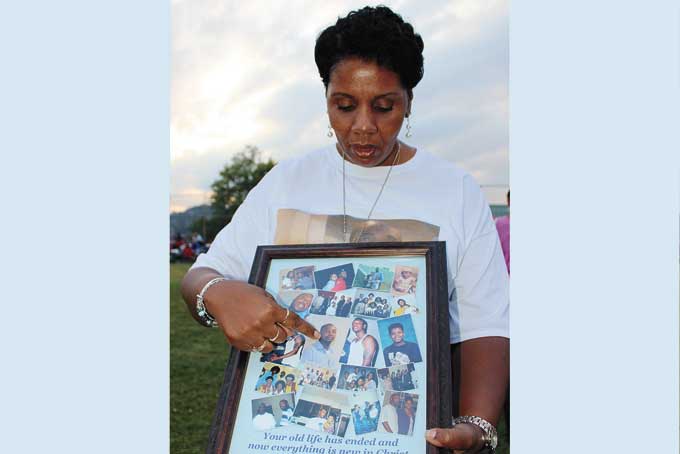
Working hard to change the stigma of addiction, while using awareness and education to address the growing epidemic of deaths from heroin overdose, is what Not One More Pittsburgh is about. Through their dedicated efforts they want to make sure, as their logo states, there’s “Not One More Overdose, Lost Spirit, Grieving Heart.”
Not One More began in 2012 by two California mothers who lost their children to a heroin overdose and heroin-related accident. Those mothers used their grief, frustration and recognition of a need for change to start a grassroots organization that provides support for families affected by addiction, educates the community about drug addictions, inspires youths to remain drug free and that breaks the stigma associated with addiction. In April 2013, the Pittsburgh chapter was formed. Since it formed, Not One More Pittsburgh has been going to schools, rallying and holding vigils to make sure its message about the hazards of heroin and other drug abuse is being heard. There are currently five other chapters.
“When we go into the community, our goal is to honor those lost. We are reaching out to those who are suffering from active addictions and we try to make them feel welcomed enough to speak to people who are there,” Laura Propst, founder and president of Not One More Pittsburgh, said. “We want the people walking by, who are afraid to come near, to just be in an ear shot to listen because this epidemic is so widespread; there really isn’t one person who isn’t touched in one way or another. We want people that think this isn’t going to happen to them to wake up.”
According to an April 2014 article previously published on the New Pittsburgh Courier’s website entitled, “Heroin use taking a toll in Pennsylvania,” the attorney general’s office said most of its drug cases were heroin-related; that there had been more than 300 heroin arrests since the start of 2013; and that there are approximately 40,000 heroin drug users in this state alone.
Propst, who has had a son and daughter addicted to heroin, also shared some facts. According to her, western Pennsylvania is considered to have some of the highest heroin overdose rates per capita. She added that in Allegheny County there were approximately 280 deaths due to heroin overdose in 2012, 278 in 2013 and “that we’ve already exceeded that in 2014.” Many this year were due to the use of heroin laced with fentanyl. She added that the statistics are worse in the surrounding counties.
Propst said at their vigils they currently have ten pages of names they read and those are only the names that were submitted to them. She realizes there are so many more.
Like many experts, Propst said individuals usually start off with an addiction to prescribed pills and then move on to heroin because it is a cheaper, yet stronger high. “To purchase a pill on the street may be $80, where as you can get a really nice hit of heroin for $10,” she said.
While there may be signs, Propst said many do not realize their loved ones are addicted until it’s too late. Often times it’s due to the stigma, “that it will never happen to me.”
“There’s a misunderstanding about addiction; that it only happens to parents that aren’t paying attention to their kids and that’s not true. And that’s what’s killing our youth because parents don’t even know until it’s too late… Kids are experimenting with drugs at an even earlier age,” Propst said.
Mary Bryant is all too familiar with the dangers of finding out too late. Bryant lost her son, Jeremiah Hall Jr., in November 2013 to a heroin overdose after being hooked on the drug for two years. She didn’t find out until he was a year into his addiction.
Bryant said Hall had moved to Verona to get away from the ills of the city; while there he began dating a girl who was addicted to pills and later became addicted himself. It was then suggested that he try heroin because “it’s a cheaper, stronger drug.” He did and was hooked.
Hall tried rehab and after serving his second stint in jail, she said he seemed to have a new outlook on life—he had a fiancé, a baby on the way and wanted to find a job. But after relapsing, he died. Bryant said she was told her son was healthy, but that his heart exploded.
“It’s a deadly disease because once you try it, it’s a lifetime struggle. Even though you want to get off it, it rules you,” said Bryant. “Get to them before they get to heroin. It’s like giving them a loaded gun.”
While the use of heroin is not as prevalent in the Black community as it is in others, Bryant warns that it is out there. “The Black minority, we’re 10 percent of the heroine addicts. It’s out there in our community. I would love us, as Black people, to stand up and do something now before it becomes 50 percent. Before it becomes a bigger epidemic.”
Propst said Hall’s story is not uncommon because “most people die from overdose when they relapse.”
As an individual who is addicted to heroin abstains from use of the drug, their tolerance for it is lowered. So when they use it again, the shock to their heart can be deadly.
Recently, in September, Not One More Pittsburgh held a vigil for Hall at Leslie Park in Lawrenceville. Propst said she was touched when she heard Bryant’s story and wanted to do it.
“Mary and her family lost (a loved one) and I know that pain. I feel for Mary because Mary didn’t know.”
So what will it take to curb this epidemic?
Propst said it will first take society realizing that addiction is a disease and addressing it as such. She said there needs to be changes made to the length of rehabilitation that most insurances cover, which is typically two weeks or 30 days.
“Imagine being treated for cancer and after two weeks being told see ya, bye. Or having diabetes and told we’re not going to tell you how to manage it, how to eat right,” Propst said. “This is a disease and it needs to be addressed as such.”
Along with changes to how addiction is viewed and the length in treatment, Propst also said it will take education, not only in schools but for parents as well, and for systems to be put in place where people can go to get life saving drugs like Naloxone, which is used by medical professionals when individuals overdose.
Bryant said she would like to see accountability for addicts after they are released from prisons. She would like programs made available, even a year after, that includes training and employment assistance.
But until these changes are made and the overdoses end, Propst said Not One More Pittsburgh will continue their efforts of spreading the message. She said the organization welcomes much-needed volunteers, resources and donations.
(For more information on Not One More Pittsburgh, visit www.Facebook.com/NotOneMorePittsburghChapter.)
Follow @NewPghCourier on Twitter https://twitter.com/NewPghCourier
Like us at https://www.facebook.com/pages/New-Pittsburgh-Courier/143866755628836?ref=hl
About Post Author
