
In an effort to move discussion on state spending priorities related to penitentiaries versus education when African-Americans are populating more prisons than classrooms, state Rep. Ed Gainey, D-East Liberty, recently brought officials from both fields to Homewood for his “Incarceration vs. Education” panel discussion with residents.
“The main purpose is to inform the community about what’s going on in Harrisburg. We have to change the funding formula,” said Gainey. “In 2007, we spent $12,724 per student and $33,000 per inmate. Last year it was $14,622 per student and $36,300 per inmate. That has to change.”
Some of the panelists and commenters included Community Empowerment Association Founder Rashad Byrdsong, Manchester Academic Charter School teacher Dennis Henderson, Pittsburgh School Board Director Regina B. Holley and state Secretary of Corrections John Wetzel.
Gainey said he was particularly pleased to see Wetzel attend the July 25 meeting at the Carnegie Library Homewood branch.
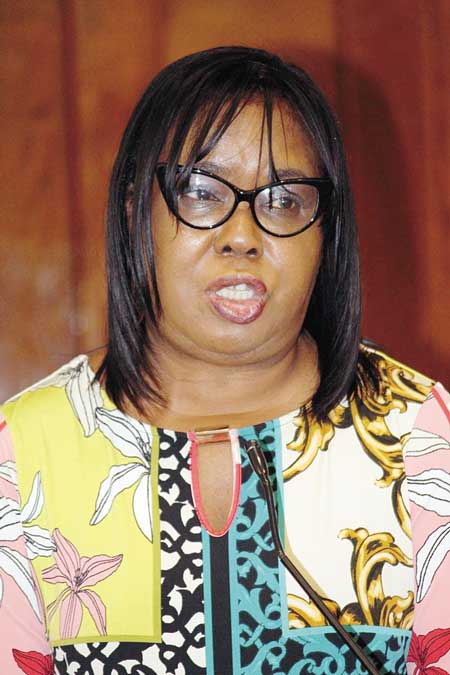
“I’m just getting to know him but he’s here tonight and that’s how you build a relationship,” said Gainey. “He’s willing to work with us and some of the programming he’s been part of has been good.”
Gainey said the funding dichotomy is directly related to what has been referred to as the school-to-prison pipeline, which is another reason why the community needs to be informed so they can press legislators for changes.
“Oh, (the pipeline) is very real,” he said. “Some of your lowest performing schools and highest rates of incarceration are in the same neighborhoods. That correlation can’t be chance–it’s the truth. So we are currently looking at other states to help us craft legislation to ensure we are not funding incarceration more than education.”
Wetzel, who has actually closed a state penitentiary during his tenure, said he was pleased to be invited to the meeting.
“I spend a lot of time in the community, with kids youth–I’m here,” he said. “Mr. Gainey not only reps the community, but he is connected to the community. Those are the kind of people I like to work with because there are a lot who are not. We need people like him to be a voice, to knock down the partisanship and keep our eye one the prize, which is better outcomes.”
Wetzel rejects the school-to-prison pipeline scenario, saying it’s more accurately a home-to-prison pipeline.
“What the numbers tell us is that dropouts have a 69-percent chance of being incarcerated at some time,” he said. “Yes high Black student ratios indicate higher incarceration rates, but an even bigger indicator is single-parent homes.
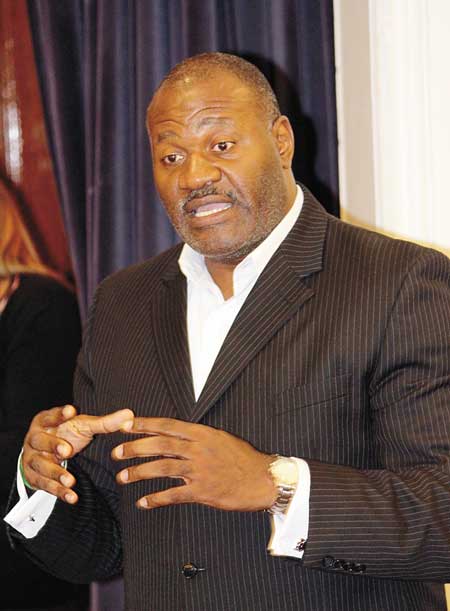
“We can’t wave a wand and eliminate single-parent homes, so I’d like to see what we can do to support these homes so these kids, especially young boys get the guidance care and love they need.”
Holley agreed with Wetzel about the nature of the “pipeline,” and that the community needs to become more involved politically and with their schools to support those vulnerable students.
“I want to see the community, the city, the county and the state come together to support the children who don’t have the resources,” she said. We have the ability, we just need the will.”
When asked why school districts haven’t been required legislatively to offer vocational and technical training, Gainey said he tried that.
I introduced legislation to create Vo-Tech, but couldn’t get it through the Republicans who control the State House,” he said. “But we have to broaden our horizon. It’s not about just old type labor-intensive instruction, but also knowledge intensive instruction, STEM programs. Get people ready for Google. It’s best of both worlds–teach kids how to use their minds to create and build new things.”
(J.L Martello contributed to this story.)
Follow @NewPghCourier on Twitter https://twitter.com/NewPghCourier
Like us at https://www.facebook.com/pages/New-Pittsburgh-Courier/143866755628836?ref=hl
Download our mobile app at https://www.appshopper.com/news/new-pittsburgh-courier
About Post Author
