March 12
1773—This is the most probable date when Black explorer Jean Baptiste Pointe de Sable begins building the settlement which would eventually become the city of Chicago, Ill. The Haitian-born de Sable would over time become a man of considerable wealth owning commercial buildings, docks, trading posts and a mansion. De Sable was the product or a French man and an African woman. He died Aug. 19, 1818.

1791—Pierre Charles L’Enfant is commissioned to design and layout the nation’s capital city—Washington, D.C. However, a dispute with President George Washington forces his departure the very next year. Thus, the final design and layout fell to Black inventor and mathematician Benjamin Banneker. Although two White men were nominally in charge of the project, historical records show that it was Banneker’s mathematical skills and his memory of L’Enfant’s plans that enabled the project to be completed.

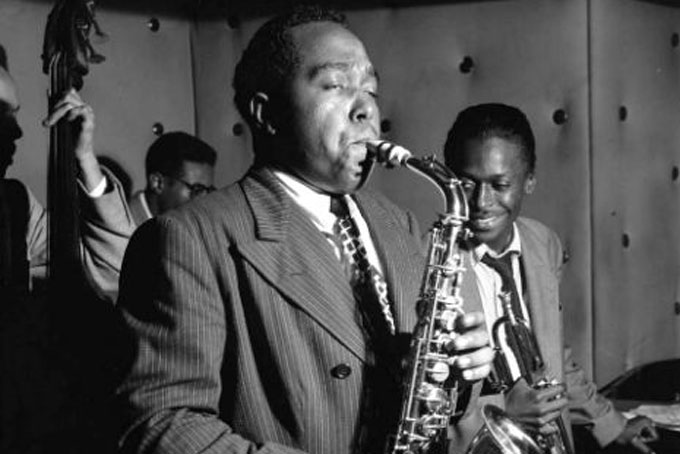
1955—One of the chief founders of modern Jazz, Charlie “Yardbird” Parker, dies on this day in New York City. Parker is widely considered “the greatest Jazz saxophonist of all time.” His death at 35 was reportedly a result of pneumonia worsened by drug and alcohol abuse.
1964—Legendary Black leader Malcolm X formally separates from the Elijah Muhammad-led Nation of Islam although his initial statement of resignation was given March 8. The separation was triggered by growing differences over Islam and the proper role of religion in the Black liberation struggle as well as by Malcolm’s objections to Elijah Muhammad’s infidelities. Less than a year later, Malcolm was assassinated by men allegedly connected with a Nation of Islam mosque in New Jersey.
March 13
1865—The last battle of the Civil war ends. Ironically, it appears the Confederate troops won the battle at Palmetto Ranch, Texas. However, it was the actions and bravery of the 62nd Regiment of United States Colored Troops which prevented the defeat from turning into a rout. The Confederates had actually underestimated the fighting prowess of the Blacks assuming they would run in fear when the fighting started. Instead, what occurred was the rapid defeat of two White regiments, but the Black soldiers of the 62nd held firm. The Confederates would later surrender.

1950—Singer-songwriter Stevie Wonder is born Stevland Hardaway Judkins in Saginaw, Mich. Blind since shortly after birth, Wonder signed with Motown Records’ Tamla label at the age of 11, and continues to perform and record for Motown to this day. Wonder has recorded 30 Top Ten hits and has won 24 Grammy awards—a record for any living artist.
March 14
1885—Erskine Henderson, an African-American jockey, wins the Kentucky Derby on “Joe Cotton”—a horse trained by Alex Perry—an African-American trainer. Henderson was the sixth Black jockey to win the coveted race. Indeed, Black jockeys and trainers dominated the Kentucky Derby from 1875 to 1902. However, while some of the reasons are not entirely clear, it appears that as the race became more and more prosperous, Black jockeys and trainers were forced out.
1970—A student protest on the campus of Mississippi’s Jackson State University leads to a massive confrontation with local police authorities. When the smoke cleared, two students had been shot and killed and another 12 injured or wounded. Reasons given for the protests ranged from opposition to the War in Vietnam, racial tensions and anger over the National Guard killings of White students on the campus of Kent State University earlier in the month. The university memorialized the disturbance by naming the area where it took place “Gibbs-Green Plaza” after the two students who were killed—Phillip Lafayette Gibbs, 21, and James Earl Green, 17.

1985—In a confrontation with the Black Nationalist back-to-nature group MOVE, Philadelphia police drop an incendiary device on the group’s home and headquarters. The decision to bomb had been apparently approved by Black Mayor Wilson Goode. Eleven MOVE members, including five children, were killed. The only adult survivor was Ramona Africa. Over 60 homes in the surrounding area were burned to the ground. It was never fully clear why the decision to drop the bomb was made.
March 15
1911—Kappa Alpha Psi, one of the nation’s leading Black fraternities, is founded on this day on the campus of Indiana University by 10 young men led by Elder W. Diggs and Byron K. Armstrong.
1942—The 93rd Infantry is activated and assigned to combat in the Pacific. It thus became the first African-American division formed during World War II.
March 14
1821—The African Methodist Episcopal Zion Church is officially formed in New York City. However, the church had been actually operating since 1796. A decision to officially separate from the White-controlled Methodist Church was reached in 1820. The dispute centered in part on the refusal of the Whites to allow Black ministers to preach. Among the founders were James Varnick, Abraham Thompson and June Scott. Today the denomination has an estimated 1.2 million members and operates Livingstone College in Salisbury, N.C.
1933—Legendary music composer and producer Quincy Jones is born on this day in Chicago, Ill.

1977—One of the unsung heroines of the Civil Rights Movement, Fannie Lou Hamer, dies on this day in 1977. Hamer, the youngest of 20 children born in Ruleville, Miss., became active in voter registration and later became Mississippi field secretary for the Student Non-Violent Coordinating Committee as well as head of the Mississippi Freedom Democratic Party. She also coined the phrase, “I’m sick and tired of being sick and tired.”
March 15
1897—The 55th Congress convenes with one Black member remaining in the legislative body—George White of North Carolina. All the Black political progress made during Reconstruction had been snatched away after the Hayes-Tilden Compromise of 1887. By 1890 states throughout the South had effectively taken away the right of Blacks to vote with schemes ranging from literacy tests to poll taxes to Whites-only primaries. As a result, Blacks were forced from elected office. When White’s term expired in 1901, there would not be another African-American elected to Congress for 27 years and he would come from the North—Oscar DePriest of the Southside of Chicago (1st Congressional District of Illinois).
March 16
1827—The first Black-owned and operated newspaper in America begins publishing. It was Freedom’s Journal. It published weekly in New York City from 1827 to 1829. Editors John Russwurm and Samuel Cornish declared as their mission: “We wish to plead our own cause. Too long have others spoken for us.”
March 17
1806—Norbert Rillieux, one of the earliest Black chemical engineers in America or Europe, was born on this day in 1806. The product of a wealthy French plantation owner in New Orleans and his Black mistress, Rillieux was given his freedom and sent to Paris, France, to be educated. He is best known for his invention of the “multiple evaporation process” which revolutionized the sugar and paper industries. It also saved the lives of many who had previously labored in extremely dangerous conditions. Rillieux returned to the U.S., but as conditions for free Blacks deteriorated prior to the Civil War, he went back to Paris and died there in 1894.

1999—Maurice Ashley, a Jamaican immigrant living in Brooklyn, becomes the first Black grandmaster in modern chess history.
March 18
1933—The first Black woman elected mayor of a Mississippi town, Unita Blackwell, was born on this day in Lula, Miss. The former field worker with the Student Nonviolent Coordinating Committee became mayor of Mayersville, Miss., in 1977.
1963—Singer-actress and the first Black woman to win the Miss America Pageant, Vanessa Williams, was born on this day in Millwood, N.Y.
1970—Actress and rapper Queen Latifah was born on this day in 1970.


