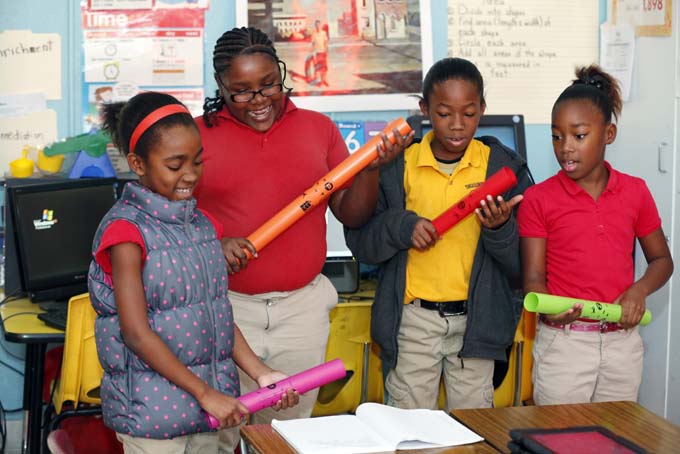
When the song is over, Dixon tells the students to work in groups of four and think about problems they face as fourth graders: “We’re going to see if you can come up with your own blues song.”
One group writes about reading. Another writes about art. Two write about math. After five minutes, they sing what they’ve written, in call-and-response with their classmates:
“Comparing fractions is so hard… It’s easier to put it on a math chart.”
The children read lyrics of “Cotton Crop Blues” by James Cotton, a blues harmonica player born in 1935 in Tunica County. Each group of four students creates a tableau, standing like statues to depict what the song is saying: “Well, raising a good cotton crop… Just like a lucky man shootin’ dice… Work all the summer… To make your cotton… When fall comes… It still ain’t no price.”

Jimmarious Frazier, one of Dixon’s students, said he found it interesting to learn about boll weevils, the bugs that can ruin cotton crops.
“My daddy chops cotton and plants seeds. He gets paid for it,” Jimmarious said.
Tom Pearson, executive director of the Mississippi Arts Commission, said the Blues Curriculum gives children a sense of place.
“I think it’s important that they understand their local history first — understand it and how it relates to the world,” Pearson said.
During fall semester, one boy in Dixon’s class produced a short video about legendary bluesman Howlin’ Wolf, a Mississippi native. Come January, Dixon will use the blues to teach the youngsters about civil rights.

Tunica Elementary Principal Eva McCool-O’Neil said she hopes to expand the Blues Trail Curriculum to other classrooms next year.
“I see student engagement really, really, really high,” she said. “Students love to do things other than just the traditional.”
____
Online:
Mississippi Blues Trail Curriculum: https://bit.ly/1dOwL8H
____
Follow Emily Wagster Pettus on Twitter: https://twitter.com/EWagsterPettus
About Post Author
