
Week of July 3-9
July 3
1775—Prince Hall founds African Lodge Number One—the first Black lodge of Free Masons in the United States. Hall would become the pioneer builder of Black Masons in America. He was also a leading voice against slavery and for Black rights in the North.
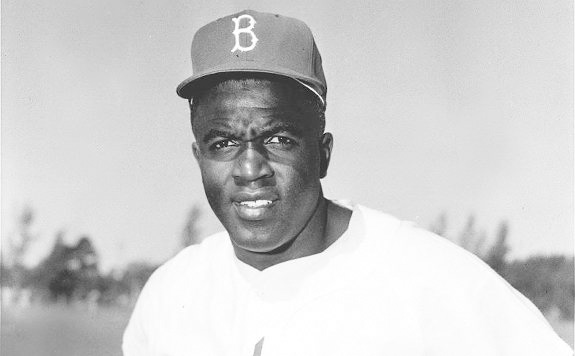
1962—The first Black man permitted to play Major League Baseball, Jackie Robinson, is named to the Baseball Hall of Fame.

1776—The United States formally becomes a nation with the adoption of the Declaration of Independence. The document was largely written by later President Thomas Jefferson. Amazingly, although he was a slave owner himself, Jefferson originally included a section in the Declaration denouncing slave traders and slave owners. But it was later deleted by Congress. The section said of the slave trader: “He has waged cruel war against human nature itself, violating its most sacred rights of life and liberty in the persons of a distant people who never offended him.”
1792—Thaddeus Stevens is born. Stevens would become one of the great White heroes of Black history. He was a leader of a group known as the “Radical Republicans” which fought tirelessly in Congress against slavery. It was Stevens who introduced the 14th Amendment to the Constitution which, in effect, made the former slaves full citizens of the United States. It also contains the due process and equal protection clauses of the Constitution. These clauses are now considered two of the most fundamental underpinnings of American law and were used extensively during the Civil Rights Movement to outlaw discrimination against Blacks.
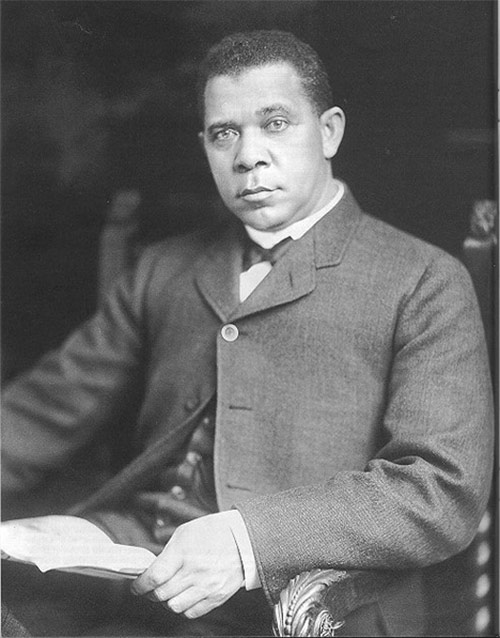
1881—Booker T. Washington opens Tuskegee Institute (now university) in Alabama. It would become a leading center for the education of Blacks.
July 5
1975—Tennis star Arthur Ashe becomes the first Black man to win the men’s singles championship at Wimbledon defeating Jimmy Connors. Ashe was born and raised in Richmond, Va. During his prestigious career he had become active in several social causes including frequent protests against the system of racial oppression known as apartheid in then White-ruled South Africa. Ashe contracted AIDS as a result of blood transfusion in 1988. He died of AIDS complications on Feb. 6, 1993.
July 6
1853—The first novel written by an African-American is published on this day. However, the novel had to be published in England because the author William Wells Brown was a fugitive slave. The novel was entitled “Clotel” or “The President’s Daughter” and may have been partially inspired by the then rumored relationship between President Thomas Jefferson and the slave Sally Hemmings.


1971—Henry T. Sampson invents the “gamma electric cell.” His invention and other engineering accomplishments had wide-ranging applications, but he did not invent the cell phone as some histories suggest. The gamma-electric cell converted nuclear radiation from reactors into electricity without going through the heat process.
July 7

July 8
1805—On this day in 1805, Bill Richmond becomes the first African-American to gain international fame as a boxer when he defeated Jack Holmes in a 26-round bout in England. The son of escaped slaves from Georgia, Richmond was born in New York City in 1763. He did most of his fighting in Europe. Near the end of his boxing career, he married a rich woman and retired. He died in London in December 1829.

July 9
1863—Eight Black regiments play a major role as Union troops capture Port Hudson in Louisiana. They had laid siege to the Confederate fortress since May 23. The victory, along with the July 4 capture of Vicksburg, Miss., gave U.S. forces control of the Mississippi River, cut the Confederate army in half and laid the foundation for ending the Civil War. The Civil War would drag on for another two years but the Confederate troops fighting to maintain slavery were never able to recover from the loss of Port Hudson.

2009—Reports first emerge suggesting that Haiti was beginning to conquer its HIV/AIDS epidemic. According to UNAIDS, the official AIDS infection rate on the poverty-ridden Caribbean island for people ages 15-49 was 2.2 percent—down from a high of nearly 8 percent in the 1980s. The decline was attributed to the closing of blood banks, where the poor sold their blood for money; the work of the Boston-based Partners in Health; and Haiti’s own GHESKIO clinic.
Your comments are welcome.
Follow @NewPghCourier on Twitter https://twitter.com/NewPghCourier
Like us at https://www.facebook.com/pages/New-Pittsburgh-Courier/143866755628836?ref=hl
Download our mobile app at https://www.appshopper.com/news/new-pittsburgh-courier