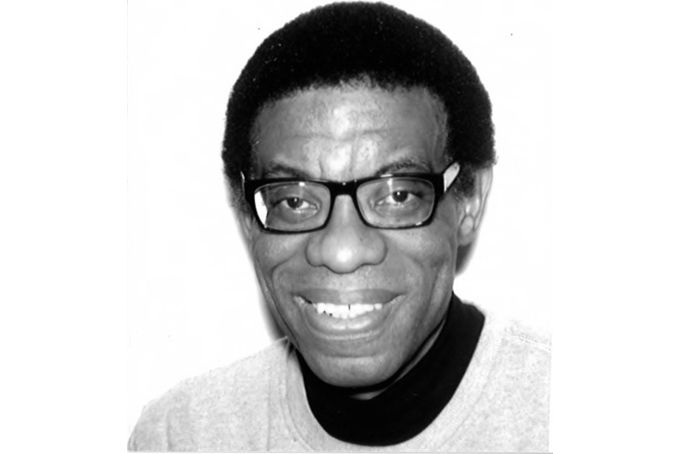

C. MATTHEW HAWKINS
Whenever people get together to discuss the academic achievement of Black American males they usually end up with a litany of failure that seems to defy solutions. Over the past five years, however there is a new trend in the research on Black males and schooling. Pittsburgh, for a number of reasons, may find itself at the forefront of new methods to improve the effectiveness of schools and communities in engaging young Black males.
Pittsburghers got a glimpse of where this might be headed during a community conversation that took place at the August Wilson Center on June 20th. The conversation featured a sneak preview of a documentary that took fourteen years to make, titled “American Promise”.
This documentary followed the development of two African American boys who were enrolled in the Dalton School, an elite private institution in Upper East Side Manhattan. The two were part of a handful of Black students attending the elementary school, in the hope of continuing through high school. The film’s narrative contained both dreams and disappointments, but no easy answers. It illustrated persistent questions that people who are serious about the education of Black males must wrestle with.
One of the basic conflicts illustrated in the documentary was the dilemma facing the parents of the two students: on the one hand they wanted their children to have all of the social and cultural advantages that an elite school, such as Dalton, could offer. On the other hand, they wanted their children to still be comfortable their Black peers in the neighborhood. It is the classic dilemma of code-switching; how does one maintain one’s integrity in two very different social and cultural environments? When one leaves familiar surroundings, is it possible to come home again?
After the film the sponsors of the program convened a panel, consisting of the parents of the children in the movie, along with Richard Gray, of the Annenberg Institute for School Reform; Carey Harris, Executive Director of A+ Schools; William Generett, Executive Director and CEO of Urban Innovations; and Rex Crawley, PhD., Assistant Dean of the School of Communications and Information Systems and Endowed Chair of the Uzuri Think Tank at Robert Morris University. WQED Producer Chris Moore moderated the conversation.
The panel discussed the core dilemma facing the parents in the film, and the Black community in general since the end of desegregation. For most of the 20th Century the Black community fought to dismantle segregation only to discover that we may have placed unwarranted hopes on the ability of integrated schools, alone, to solve all social and educational problems.
While desegregation opened new opportunities, it came with a price. The teenagers in the film had to have one foot in two very different social environments. Their parents, meanwhile, suspected that the teachers at Dalton, whom they hoped would strengthen their children’s opportunities in life, were judging and stigmatizing the children without really knowing them.
When the school’s administrators raised questions about whether or not the two young men should continue at Dalton High, after graduating from their elementary school, a familiar choice, for activists in education reform, emerged. How does one define where the problem actually lies?
The school’s administrators put the institution above critique by focusing on whether or not the students were “the right fit” for that institution. The institution would not be responsible for trying to find new ways to teach a socially diverse student body; instead the students would have to develop new ways of learning to fit the traditional methods of the school.
Does one say, “This is a great school, but unfortunately these students don’t fit in,” or does one ask what there might be within the school’s environment that prevents some students from fulfilling their potential? Assumptions that the viewer brings to the situation have everything to do with how they define the problem. It is a difficult task to try to strike a sensible balance between the two approaches.
This points to new perspectives that are shaping research on young Black males and their relationship with schools. Anthony Robins, director of program and research for Robert Morris’ Uzuri Think Tank, recently wrote about this change in focus in the Pittsburgh Post-Gazette’s Sunday Forum. In the past education researchers were oriented toward a deficiency model. This approach focused on students who were failing. It tried to explain their failure. Newer research tends to be oriented toward what might be called an “anti-deficit” model. This research focuses on Black male students who are successful and tries to identify factors contributing to their success.
One of the success strategies that emerged from documentary and the panel discussion that followed was the need for successful students – regardless for their race – to be surrounded by a support network of peers, parents, teachers, and other adults in the community who encourage students to value education and support their efforts to develop the skills necessary for them to be successful. Students have to be surrounded by an environment, both within and outside of school, which is conducive to studying. Various participants in the conversation called this a “nucleus of support” or a “cocoon of insularity” against anti-intellectualism in the social environment.
This peer and mentor-driven approach, which sees racial identity as being a resource to deepen school engagement – seeing education as a form of racial uplift, just as it was 50 years ago – is essentially the approach that seems to drive the Heinz Endowments’ funding for programs.
The Endowments are funding research and a number of programs, under its “African American Men and Boys Initiatives,” that focus on structural and systemic problems that prevent young Black males from fulfilling their potential. These programs include the Uzuri Think Tank, the Black Male Leadership Development Institute (BMLDI), also at Robert Morris and coordinated with Pittsburgh area social service agencies, and a series of guest speakers and community conversations such as the one held last Thursday night.
There were a number of BMLDI participants in the audience during the preview of the documentary. They were identifiable by their blue T-shirts. They came to the community conversation primed to network. As everyone was queuing up for refreshments before the film one of the young men came over to me, introduced himself, and gave me a firm handshake. After this happened several times I couldn’t help asking them about the program they were in and giving them my business card in case I could help to them in the future.
As it turns out, the BMLDI is a year-round program for Black males in grades 9-12 to prepare them for academic excellence and community leadership. This is yet another initiative that is funded by the Heinz Endowments.
Focusing on models of academic success for young Black males comes from other Pittsburgh institutions as well. Last month, Duquesne University’s School of Education hosted the Barbara A. Sizemore Conference. Shaun Harper, PhD., of the University of Pennsylvania’s Center for the Study of Race and Equity in Education presented the findings of his recently completed study of successful Black male students in higher education.
Harper suggested that new research should explore these questions: How did those who are enrolled get to the colleges and universities that they are enrolled in? What can we learn from students who were retained and successfully graduated from higher education? What can we learn from educational environments that produce students who thrive in higher education?
While Harper was reluctant to draw definitive conclusions before he has had time to mull over the data, it appears as though that same nucleus of a social support network – both inside the classroom and in the Black community – is emerging in his studies also. Harper noted that skills, financial resources for education, and social connections appear to be consistent factors in the successful outcomes of students his research team has interviewed. He said that his future research will include a closer examination of the role of community-based institutions and resources.
As the community conversation at the August Wilson Center drew to a close, and the members of the BMLDI trooped out of the auditorium, wearing their high blue T-shirts, I wondered how the pressing questions about Black male education would eventually be answered.
What mix, between integrated schooling and racial identity will provide a constructive support network to students? Will it still be necessary for students to make trade-offs between academic excellence and peer acceptance among other young Black males? Will there still be a sharp dichotomy between focusing on the preparedness of Black male students to learn and the flexibility of school environments to find more effective ways of engaging them?
How successful will we have been in creating the nucleus of support that encourages young Black males to develop as scholars, rather than merely jumping through the hoops to get a degree? How successful will we have been in creating the cocoon of insularity against influences, within the surrounding community, that would destroy the life of the mind?
We will not find answers to these questions right away. The anti-deficit approach to re-framing our research questions and designing programs for intervention will have to take root. However, Pittsburgh, due to its unique combination of foundation-funded initiatives and innovative universities, seems poised to be the cutting edge of the next chapter in the history of African American education.
C. Matthew Hawkins teaches in the University of Pittsburgh School of Social Work and is a consultant on curriculum development. His research is on the relationship between racial identity and schooling.