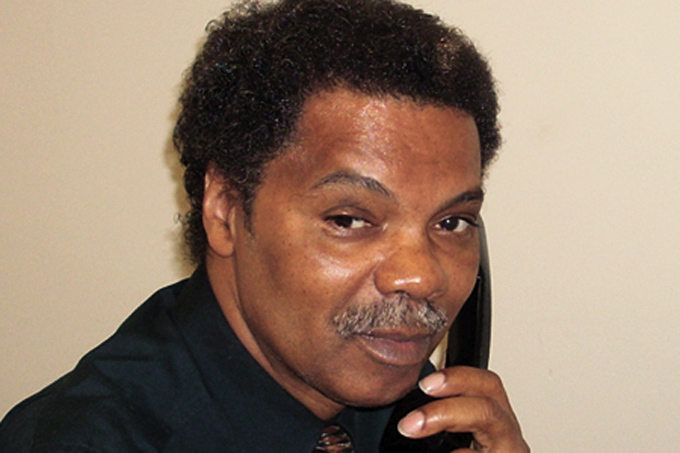

ULISH CARTER
Back in the 1960s and early ‘70s it was called Urban Removal and Black activists protested throughout the country to stop it. Some being successful while most were not.
The common practice was to tear down vacant houses without making an effort to either sell or renovate the building or putting anything in its place. This led to vacant blighted lots, a decrease in population in the Black communities, which reduced school attendance and the number of people in Black districts throughout the country which further reduced the power of Black district voting and tax income, which eventually led to the massive inner city school closings throughout the country.
This has helped the suburbs grow while the inner city declined and decayed.
Recently Tim Stevens and other activists issued a request to Pittsburgh and Allegheny County to halt its housing demolition program until the new mayor takes office and a discussion with the community about which houses should be demolished, and which houses can be saved can be held. Some type of constructive plan—not a massive multi-million dollar plan, but a block-by-block plan must be discussed. Because homeowners have never liked the idea of a blighted lot or vacant house next to their house for years while the politicians get their multimillion-dollar plan together.
It’s odd because in talking to all three candidates all agreed that a halt is the right thing to do, and a closer look should be taken to determine how a community could be developed. To me this is just common sense. There should be some kind of plan before you start tearing houses down.
Stevens and group made a very valid point that I’ve been trying to make the past 30 years, and that is why tear a house down just because it’s vacant and the city owns it? The city or URA owns most of the vacant houses and lots in the city because they acquired them through delinquent taxes or people just walking away from the building because of the lack of money to repair it or people dying.
For example a family lives in a house for years, as the kids grow up and move to other cities or other parts of the city, then the parents die. The kids don’t want the house—they have a house, and if they are low-income some either can’t afford the repair or the inheritance tax, which means the house sits for years and is eventually demolished, even though there are thousands of families who would love to have the house if the city and banks worked with them.
I hear the cost of tearing a house down is around $50,000. Well, $50,000 would be all many of these houses would need. URA use to have a wonderful program of working with citizens to get them into one of these, in many cases historic houses. Anyone who has visited Manchester, Mexican War District or Allegheny West can see this program first hand. All the beautiful houses, even though divided into apartments inside, still look the same outside. Many of the people in Allegheny West actually kept the houses as one unit and the ceilings high.
Practically all the new houses I’ve seen start at $132,000 to $180,000, which prices most middle and low income working people out of the housing market. Whereas there are many much better looking and better built old houses that can be purchased from the city or URA for almost nothing, with a cost of $50,000 to $100,000 renovation.
Why the city reverted back to tearing down houses without anything to replace them is a mystery to me. And why there is just now becoming a backlash is a bigger mystery, because much of the damage has been done. I haven’t seen this in any of the White communities or suburbs.
Many during the ‘60s felt that Blacks were being moved out of this prime property near Downtown high-paying jobs, so that the Whites working at these high-paying Downtown jobs could move in. No more sitting in traffic for hours. Just hop on a bus and you are there. But I know this could not have been the case. The city and politicians would never do that. So it had to be some other reason. But I can’t figure it out.
I am interested to know what the new mayor is going to do to fill these vast numbers of vacant lots, all over the city in Black communities.
Please don’t say more green space. People need places to live and the city needs more tax dollars, not more greenery, such as gardens, and flowers. Don’t get me wrong some places look nice with the extra space between the houses which allows more off street parking, by giving people space for garages or just off street parking.
Whites are beginning to realize they can save, not only by the price of the homes but the cost of getting to and from work, and they are moving into Black communities. I’m seeing more and more White faces in what was once all or predominantly Black communities, while professional Blacks are running to the suburbs.
Two of the major problems in rebuilding our inner cities are keeping medium to high income Blacks in, while moving the Black on Black crime out.
The idea of teaching young people how to renovate homes is another great idea in which I will address some other time.
(Ulish Carter is the managing editor of the New Pittsburgh.)
Your comments are welcome.
Follow @NewPghCourier on Twitter https://twitter.com/NewPghCourier
Like us at https://www.facebook.com/pages/New-Pittsburgh-Courier/143866755628836?ref=hl
Download our mobile app at https://www.appshopper.com/news/new-pittsburgh-courier