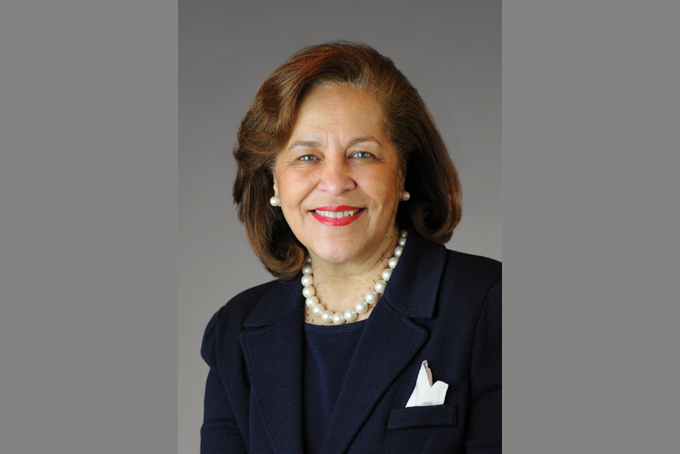

MARSHA JONES, CHIEF DIVERSITY OFFICER AT PNC
At a press conference on May 23, Allegheny County Executive Rich Fitzgerald joined community and corporate leaders to announce a new initiative to increase economic opportunities for minorities in Pittsburgh. The initiative will specifically target the African-American population, which exhibits the greatest disparities in employment and wealth in the Pittsburgh region.
“We know that this is an important issue to make sure everyone is included in those great things that are happening across Western Pa,” Fitzgerald said.
The press conference was the result of the Corporate Equity and Inclusion Roundtable on May 13, where corporations gathered to determine how best to increase diversity.
“It was not about defining quotas. It was not about hard and fast rules,” Fitzgerald said. “We understand one size doesn’t fit all.”
At the press conference, Robert DeMichiei, senior vice president and chief financial officer of UPMC, announced how his organization plans to respond to the region’s disparities. He said UPMC plans to share their list of diverse suppliers with other companies, release statistics such as their diversity spending, and consider implementing a variation of the Rooney Rule, which require entities to interview one African-American applicant when hiring.
While only UPMC has publicly announced their commitments, one partner PNC Bank stated that it has a long history of embracing diversity in the workplace and helping minority children and youth.
“We already have the Rooney Rule in place. We’ve had it for many years,” said Marsha Jones, chief diversity officer at PNC. “We also have a commitment to (underserved children) called ‘Grow Up Great’, which is a $350 million commitment.”
The initiative’s collaborators think the business case for diversity will make other corporations want to jump on board. They point to predictions, such as one made by the United States Census Bureau, that Whites will be the minority by 2043, as indicators of the importance of embracing diversity in the sustainability of a business.
“It will become more of an expectation for corporate industries to take this on,” said Tim Stevens, chairman of the Black Political Empowerment Project, who is the driving force behind the initiative. “This is no longer a conversation of maybe we should do it; we must do it. That’s the difference with where we are today and where we used to be.”
Other participants in the initiative include the Chester Engineers, Jones Day, the Allegheny Conference on Community Development, Vibrant Pittsburgh, Three Rivers Workforce Investment Board, Sustainable Pittsburgh, the Urban League of Greater Pittsburgh, the African American Chamber of Commerce of Greater Pittsburgh, the Jewish Federation of Pittsburgh, Community College of Allegheny County, Highmark Inc., and the Pittsburgh Penguins.
Fitzgerald said another Corporate Equity and Inclusion Roundtable event will be scheduled for next year. In the meantime one of the initiative’s action teams plans to meet again on June 17 to look at the data and best practices of companies who have strong diversity programs.