Angelina Jolie is used to creating a buzz in the entertainment world, but now she has crossed over into the health care field with her recent announcement in a New York Times op-ed article. On May 14, in the op-ed “My Medical Choice,” Jolie announced that she had underwent a preventative double mastectomy after undergoing genetic testing and finding that she had a mutation of the BRCA 1 gene, which significantly increases her risk of developing breast cancer.
In her op-ed, Jolie wrote, “My doctors estimated that I had an 87 percent risk of breast cancer and a 50 percent risk of ovarian cancer, although the risk is different in the case of each woman. Only a fraction of breast cancers result from an inherited gene mutation. Those with a defect in BRCA1 have a 65 percent risk of getting it, on average. Once I knew that this was my reality, I decided to be proactive and to minimize the risk as much I could. I made a decision to have a preventative double mastectomy. I started with the breasts, as my risk of breast cancer is higher than my risk of ovarian cancer, and the surgery is more complex.”
Jolie underwent the mastectomy, which is the partial or complete surgical removal of one or both breasts, in her case both, then had reconstructive surgery.
While many are praising her for her preventative measures, others disagree with her actions, calling them extreme.
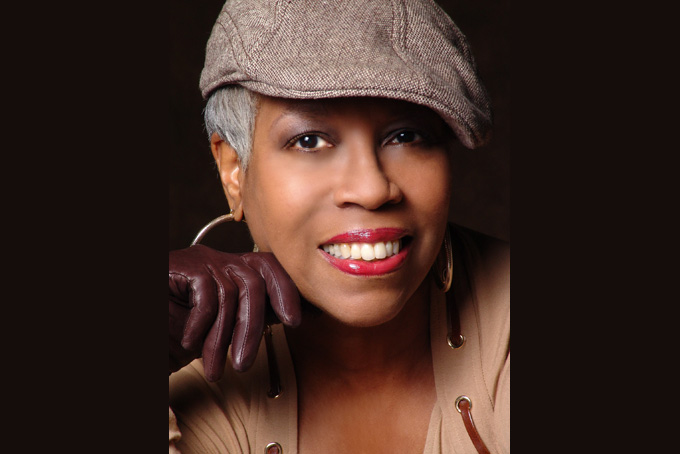
DEBBIE NORRELL
“I was a little surprised that she would take such measures to have that surgery with no diagnosis,” said Debbie Norrell, a New Pittsburgh Courier columnist, but more importantly a more than 20-year breast cancer survivor. “I could see if she had been diagnosed with it in one or both breasts. I think it’s a very radical method and I wouldn’t advise it for everybody. And everybody couldn’t afford what she did.”
Norrell, who was diagnosed with breast cancer in 1989, said after being diagnosed, she read up on her options and opted for a lumpectomy, a surgical removal of a lump, then underwent several weeks of radiation and took Tamoxifen.
She said that as years go on, people are doing a lot of the things to treat this disease, but she’s happy with her decision. “I’m happy with my decision, the only this I wish I would have done is had reconstructive surgery.”
According to the Susan G. Komen Foundation website, breast cancer is the most common cancer among African-American women and although incidence in African-American women is lower than in White women, for women younger than 45, incidence is higher among African-American women. The site also states that in 2013, an estimated 27,060 new cases of breast cancer and 6,080 deaths were expected to occur among African-American women.

DR. MORRIS TURNER
Dr. Morris Turner, professor of Obstetrics and Gynecology at the University of Pittsburgh, said while the overall incidence for African-American women developing breast cancer is lower; the incidences of death are higher. He attributes it to African-American women not pursuing routine examines and mammograms like that of White women. He said it could be due to factors such as cost, not knowing where to go, or just not taking the time to go. So when African-American women do finally go to the doctor and the disease is diagnosed, the stages are more advanced.
Turner also said mastectomies amongst individuals of high notoriety are not a new thing. He referenced Nancy Reagan’s procedure in the late ‘80s to remove her breast, but unlike Jolie, she was diagnosed with cancer.
While other celebrities have undergone mastectomies, celebrities such as African-American comedian and actress Wanda Sykes who underwent a double mastectomy in 2011 after being diagnosed with ductal carcinoma in situ in her left breast after a reduction surgery, Jolie is the first one to do it for preventative measures.
When asked if this preventative measure is something he would recommend to his patients, Turner said, “If they have a strong family history, then I would discuss it with them (along with all their options), but not necessarily recommend it. The (mutated BRCA1) gene doesn’t mean you’ll get breast cancer, but it does put one at a high risk of developing it.”
Celebrities, especially Jolie, are the inspiration for many trends, such as hair, fashion, etc., but can the same be said for preventative mastectomies?
Turner said that although he anticipates an increase in requests for genetic testing, he does not foresee an increase in requests for mastectomies. “Based on statistics and tradition, I don’t see a lot of Black women stepping up and saying, ‘cut off my breasts.’”
Not only are individuals now talking about Jolie’s preventative measures, but also the genetic testing she underwent. The genetic test for breast cancer is a testing of the BRCA1 and BRCA2 genes, according to the National Breast Cancer Institute (NBCI); they are human genes that belong to a class of genes known as tumor suppressors. A mutation of these two genes has been linked to hereditary breast and ovarian cancer. Having the mutated genes greatly increases one’s risk for the disease.
This is a test that’s expensive, not covered by most insurance companies and that most “everyday” people cannot afford. Turner said genetic testing is expensive and a fairly new process for insurance companies. He added that with a name like Jolie behind this, insurance companies might be forced to think about readily covering the test.
The NBCI states that along with prophylactic surgery, removing the at risk tissue to reduce the chances of developing cancer, when most people find they are positive for the mutated genes they use surveillance- using cancer screening measures, such as self examinations and mammograms; risk avoidance-avoiding certain risk behaviors associated with the development of the cancers; chemoprevention-use of a natural or synthetic substance, to reduce their chances of developing the disease.
Turner and Norrell both agree there are alternatives to the extreme measures that Jolie took to prevent or decrease the risk of one’s development of the disease. Turner said they are early detection, getting regular exams and mammograms; decreasing the consumption of alcohol and smoking, which are factors that can increase one’s chances; and controlling one’s weight, because obesity increases one’s risk.
“We (as Black women) are always taking care of someone else,” Norrell said. “We need to take better care of ourselves,”
As survivor, Norrell said her “outlook is good. I hope I will remain cancer free and that I am able to (continue to) count the years in the survivor column.”
(For more information on genetic testing, visit www.cancer.gov/cancertopics/genetics/directory)
Follow the New Pittsburgh Courier on Twitter https://twitter.com/NewPghCourier
Like our Fan Page us on Facebook https://www.facebook.com/pages/New-Pittsburgh-Courier/143866755628836?ref=hl
Download our mobile app at https://www.appshopper.com/news/new-pittsburgh-courier