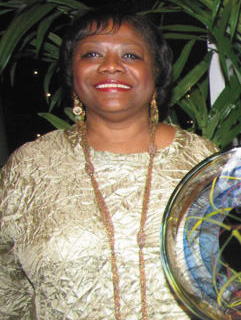

ESTHER BUSH
This month’s issue on infant mortality is a continuation of the monthly series started last year focusing on health disparities in the Pittsburgh region. The series is a partnership among the New Pittsburgh Courier, Community PARTners (a core service of the University of Pittsburgh’s Clinical and Translational Science Institute—CTSI) and the Urban League of Greater Pittsburgh. Jessica Griffin Burke, PhD, MHS, associate professor of behavioral and community health sciences at Pitt, sat down with Esther L. Bush, president and CEO of the Urban League, to talk about this month’s topic.
by Jessica Griffin Burke, PhD, MHS
JGB: Ms. Bush, I know from working with you that issues related to infant and child health are very important to you. What are your thoughts about the topic this month?
EB: The numbers about the scope of the disparities in infant mortality in Allegheny County are staggering, overwhelming and, frankly, unacceptable. I’ve been in Pittsburgh for a long time; and, unfortunately, the entire time that I’ve been in this wonderful city those numbers have been the same. It’s time for us to work together, as a community, to do something to improve maternal health and to reduce poor pregnancy outcomes.
JGB: What can or should we do differently now to deal with this issue?
EB: As I said, we need to work together. That means that researchers need to work with community members to better understand the roots causes of these stark disparities. Dr. Dara Mendez’s work exploring how neighborhood context matters for health is very important. Where you live can definitely affect your health. Dr. Mendez’s work with the Birth Circle doulas and women gives us some clue about where to begin addressing issues related to how a neighborhood may contribute to low birth weight and preterm birth. The answer to reducing disparities in infant mortality likely lies in our ability to think creatively and to explore options that have not been considered until now.
JGB: It seems as if Dr. Lisa Bodnar’s work also falls into the category of issues that haven’t been well investigated yet. What do you think of her work suggesting that vitamin D may be contributing to the disparities in infant mortality we see here in Pittsburgh?
EB: Well, I do know that it’s cold and gray here in the winter months and that we don’t see the sun much! I didn’t know about the potential connection between vitamin D deficiency and poor pregnancy outcomes. While I understand that she is still conducting necessary research, it’s possible that a vitamin D supplement could help. I look forward to learning more as her research continues.
JGB: Let’s go back to what you were saying about making progress in our efforts to reduce infant mortality and, specifically, the disparities that exist. How does that progress happen?
EB: I think progress can occur through creative, collaborative approaches. I was really encouraged to read about the Inter-Conception Care (ICC) project, involving the Allegheny County Health Department Child Death Review Team and UPMC Family Health Centers. The ICC model makes sense. We need to work to make sure that all mothers, children and families are healthy in their homes and neighborhoods. Then they can care for themselves and their children and will be ready and healthy for future pregnancies. This approach should extend beyond the clinic. In the end, I believe we’ll be able to successfully improve birth outcomes in Allegheny County if we remember to think about moms as women who need help facing challenges. Also, we must engage with health care providers and policy makers to make positive changes.
JGB: I absolutely agree. We can do it. What makes Allegheny County different is that it’s a smaller area than other urban areas. The dynamic is different, and I think we can do some things here because of our size that you can’t do in larger cities. I look forward to our continued collaboration.
EB: I want to encourage others to learn more, ask questions and get involved in research. People can call the Community PARTners Core for more information about participating in research at 412-624-8139. They can also call the contacts listed in this month’s segment to learn how to participate in the highlighted studies.