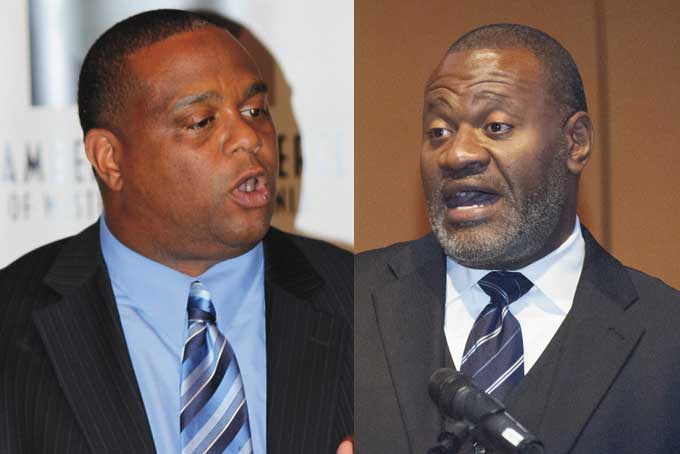

ED GAINEY and JAKE WHEATLEY
State House Republicans, spurred by Majority Leader Mike Turzai, R-McCandless, have long complained that Pennsylvania residents should, like people in Ohio and West Virginia, be able to go to the convenience store to buy beer and wine, and that the state should not own liquor stores.
“We are moving the sale of wine and spirits to a place that is more convenient for the consumers, for the citizens of Pennsylvania, while maintaining responsibility throughout the state,” said Turzai on the house floor prior to the vote.
Except that is not true. Though HB 790’s passage in state house March 20 an historic first; no liquor privatization law has ever passed either house, if passed by the state senate, it would actually make it impossible to sell beer and wine at a convenience store or anywhere else.
Not only that, even though the bill prohibits anyone buying a license to sell liquor or wine, or both, from also selling beer, the only people who would be permitted to buy private liquor or wine licenses during the first 12 months after enactment, are licensed beer distributors.
House Democratic Leader Frank Dermody, D-Cheswick, gave perhaps the most succinct evaluation of the bill calling it chaotic.
“People want convenience. This legislation delivers chaos,” he said. “The amended bill is even more convoluted than the scheme that the governor proposed.”
The lack of convenience, however, seemed a lesser concern to house Democrats generally, who largely objected because the bill would cost thousands of union jobs. Though state Rep. Jake Wheatley, D-Hill, and currently a candidate for mayor of Pittsburgh, echoed that concern, he was more adamant that enacting such a bill would “flood the city with liquor stores.”
“The liquor control chairman admitted that licenses could double from about 600 to 1200 statewide, and that it contains no provision for local control to protect against an oversaturation of liquor stores,” he said. “That would be devastating to our quality of life.”
The committee referring the bill to the floor estimated privatization would produce more than $170 million in annual tax revenue and more than $1 billion from the sale of both liquor and wine licenses.
In Pittsburgh the price for a wine-only license would be $187,000. A license to sell distilled spirits would cost $262,500. Someone wishing to sell both would pay the combined total fee of $449,500.
And though Gov. Tom Corbett championed the move as a way to augment education funding, the final bill did not earmark any income for education, instead dictating it go to the general fund.
State Rep. Ed Gainey, D-East Liberty, said the governor’s support was misguided.
“To suggest that education funding would be linked to the idea of selling the state’s liquor stores; the proposal on its face is wrong,” he said. “Why would we sell a money-making asset for the state when we’re talking about underfunding education because we don’t have enough money?”
The state senate, Corbett and Turzai acknowledged, is likely to make changes. State Senate Majority Leader Dominic Pileggi, R-Delaware, said no one expects the senate to move the house legislation to the governor as it stands.
Several senate bills aimed at changing the state-controlled system are already being floated. Sate Sen. Chuck McIlhinney, R-Bucks, said he would reintroduce his plan that essentially turns all liquor sales over to the beer distributors, and allows them to sell less than a case of beer at a time. It keeps the state as the wholesaler for all alcohol sales.
State Sen. Jim Ferlo, D-Highland Park, said he’d push a plan to “modernize” the current system with better pricing, flexibility in hiring, acquisition of in-demand products, direct shipment of wine, and reform in beer sales system-wide. He said his plan would increase revenue by $100 million annually.
The senate returns to work in Harrisburg on April 8.
(Send comments to cmorrow@newpittsburghcourier.com.)