
The words “cardiovascular disease” (CVD), also called heart disease, describe a range of problems, including heart failure, heart attack and stroke. It describes any abnormal function of the heart or blood vessels (heart and blood vessels carry oxygen to or from the heart). CVD is the leading cause of death for men and women in the US. Someone has a heart attack every 34 seconds. Each minute in the U.S., someone dies from a heart disease-related event. Clearly, heart disease is a serious public health issue facing all Americans.
It’s important to note that there’s a difference in how African Americans suffer from CVD compared to non-African Americans. For example, African Americans are two to three times more likely to die from CVD than Whites of any age. They have almost twice the risk of first-ever stroke compared with Whites. The annual rate of first heart attacks is also higher for African Americans than for Whites.
African Americans are affected by CVD and stroke at a higher rate than Whites in the U.S. When it comes to risk factors for CVD, often the focus is on the common risk factors, such as high blood pressure, high cholesterol, diabetes, smoking and a family history of heart disease. African Americans may be at higher risk for developing some of these risk factors, like high blood pressure or diabetes, but these differences don’t completely explain why African Americans have a higher risk for heart disease and stroke. It’s important to continue studying racial differences because there are still many questions that need to be answered.
Hypertension is one of the most important risk factors for CVD. According to John Schindler, MD, assistant professor of medicine at the University of Pittsburgh, hypertension, or high blood pressure, is a very common problem that affects up to 70 million adults in the U.S. This means that about one in three people older than 18 has high blood pressure. High blood pressure is generally defined as an average systolic blood pressure greater than 140 mm Hg or an average diastolic blood pressure greater than 90 mm Hg. The first step in controlling high blood pressure is recognizing the problem. It is known as a “silent” disease because many people have no symptoms and aren’t aware they have the condition until after they have had a heart attack or stroke.
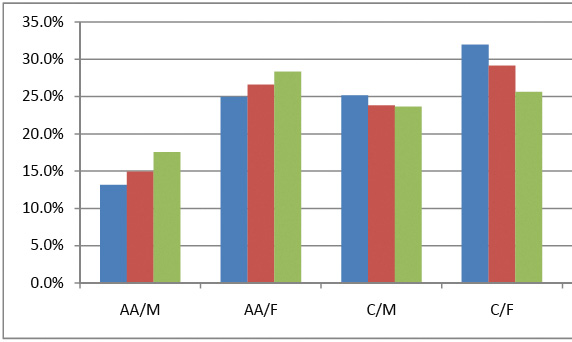
Unfortunately, in the African American community, hypertension usually affects people earlier in life than it does in other populations. It can also lead to worse outcomes, including kidney disease, stroke, blindness, dementia and heart disease. Recent information shows that one out of every two African Americans with the condition is currently being treated with acceptable results. But, that means that half of African Americans with hypertension either don’t know they have the condition or aren’t being treated effectively to get their blood pressure as low as it should be. In Allegheny County, the percentage of adults who were told they had high blood pressure increased from 27 percent to 33 percent between 2002 and 2009-2010. As seen in Figure 1, a significantly higher percentage of Black adults than White adults had ever been told they had high blood pressure.
What can people do to avoid conditions like CVD and hypertension? Sometimes people have risk factors that make them more likely to have CVD, such as family history, being male and being older. The first step, says Dr. Schindler, is to talk to your health care provider. If you are concerned about CVD or are actually having symptoms, talk to people who can look at your overall health and give the best advice. Treatment may involve medication. If it doesn’t, living a healthful lifestyle is always good. Dr. Schindler suggests completely cutting out tobacco use; getting daily physical exercise; eating foods that are low in fat, cholesterol and salt; maintaining a healthy weight and getting regular health screenings. Also, Dr. Schindler points out that communicating honestly with your health care provider is important. If a treatment isn’t working for you, let him/her know. If you visit your health care provider regularly, she or he can stay on top of what you need to be as healthy as possible.